Choosing the wrong fin tube type is an expensive mistake. A finned tube built for moderate heat can loosen, corrode, or lose fin-to-tube contact. This can happen long before its expected service life ends. It forces early replacement and unplanned downtime. Manufacturers and process engineers need to know how L-foot, G-foot, and extruded fin tubes differ. This knowledge helps them pick the right production method. This guide compares the three designs. It covers manufacturing process, temperature range, corrosion resistance, thermal efficiency, and cost. Then it explains which type fits which application.
What Is a Fin Tube and Why Does the Fin Attachment Method Matter?
A fin tube is a heat exchanger tube fitted with external metal fins that increase the surface area exposed to air or gas. This added surface area improves heat transfer without enlarging the equipment footprint. Air is a poor heat conductor compared to liquids. Fin tubes are used whenever a hot or cold fluid inside the tube must exchange heat with the air outside it. The fin attachment method controls three outcomes. First, it sets how efficiently heat moves from the tube wall into the fin. Second, it sets how high a temperature the assembly can handle before the bond weakens. Third, it sets how well the tube resists corrosion from moisture or chemicals in the air.
How Fin Attachment Affects Heat Transfer Efficiency
The attachment method determines how tightly the fin contacts the tube wall. Tighter contact means less resistance to heat flow. A loose or gapped connection creates a small air pocket between the fin and the tube. Air conducts heat poorly. Even a thin gap raises thermal contact resistance and cuts overall efficiency. Mechanically wrapped fins tend to loosen over repeated heating and cooling cycles. Fins in a machined groove keep continuous contact with the tube. So do fins that extrude from a metal sleeve. Both stay in contact even under thermal stress.
Common Base Tube and Fin Materials Used in Fin Tubes
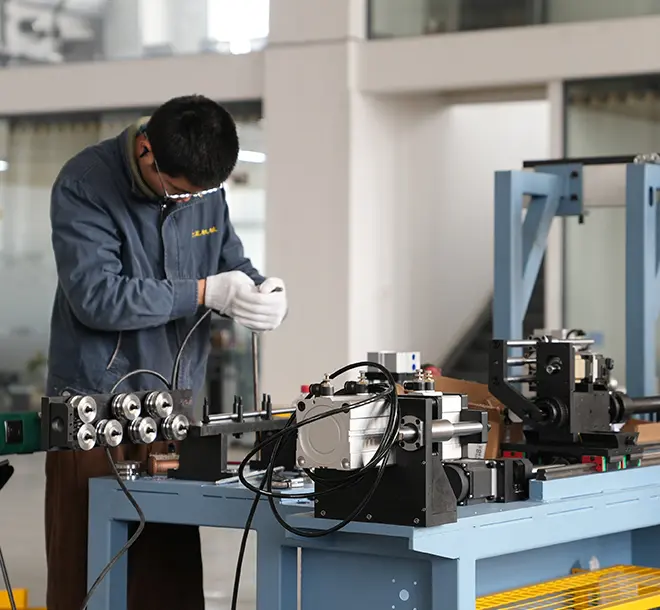
Fin tube performance depends on the base tube material and the fin material. Manufacturers choose each based on the operating fluid, pressure, and environment. Common base tube materials include copper, aluminum, carbon steel, and stainless steel. Common fin materials include aluminum, copper, and steel. Aluminum is the most widely used fin material because it conducts heat well and adds little weight. Steel and copper fins appear where aluminum would soften or corrode too fast. One example is high-temperature process equipment. Fin & finned tube forming machines are typically built to run several of these material combinations on one platform. This lets a manufacturer switch between copper, aluminum, and steel tubes without changing production lines.
What Are L-Foot, G-Foot, and Extruded Fin Tubes?
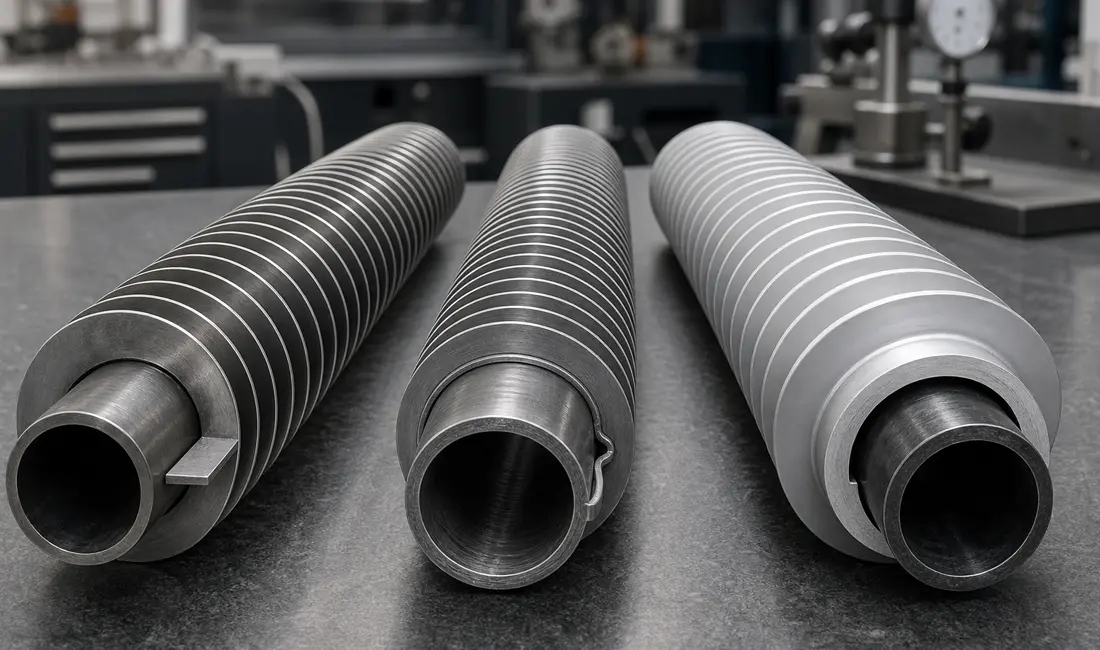
L-foot, G-foot, and extruded fin tubes are the three most common fin tube designs. Each type attaches the fin to the base tube through a different process. That process difference creates the gap in temperature rating, corrosion resistance, and cost. This guide covers that gap next.
What Is an L-Foot Fin Tube?
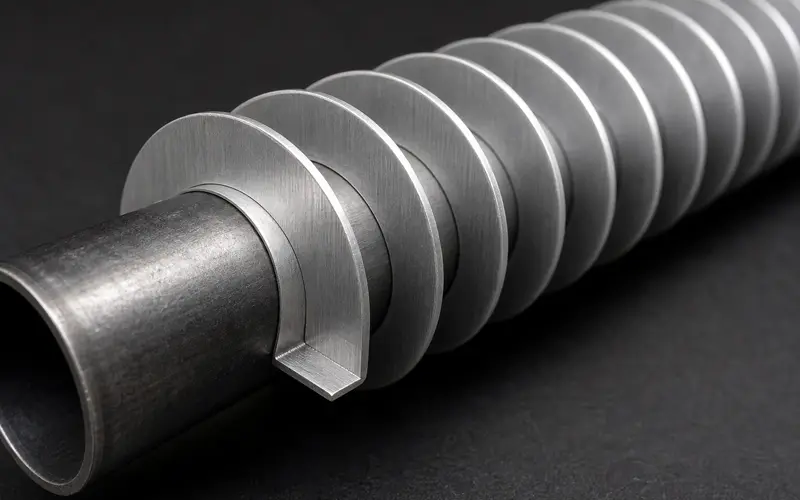
An L-foot fin tube is a finned tube made by wrapping a thin aluminum strip around the base tube under tension. One edge of the strip bends into an L-shaped foot that presses against the tube surface. This mechanical wrap-and-lock method needs no welding or machining of the base tube. That keeps production cost low. The fin foot only partially covers the tube. So the bond can loosen slightly as the tube heats and cools. The exposed sections of tube surface also stay more open to atmospheric corrosion than fully covered designs. BOBO’s double L-type aluminum fin winding machine runs this winding process. It handles round tubes from about 4 mm to 50 mm in diameter. It works across stainless steel, carbon steel, copper, and aluminum. Fin height and spacing are adjustable to match the finished coil design.
What Is a G-Foot Fin Tube?
A G-foot fin tube, also called an embedded fin tube, is a finned tube made by cutting a helical groove into the base tube wall. The fin foot is then mechanically locked into that groove. The tube metal is then rolled back over the fin foot to secure it. This groove-and-lock process creates tighter contact between the fin and the tube than a surface wrap. So the bond holds up better under thermal cycling and higher operating temperatures. The tradeoff is a more complex process that machines the base tube itself. This raises production time and cost compared to an L-foot design.
What Is an Extruded Fin Tube?
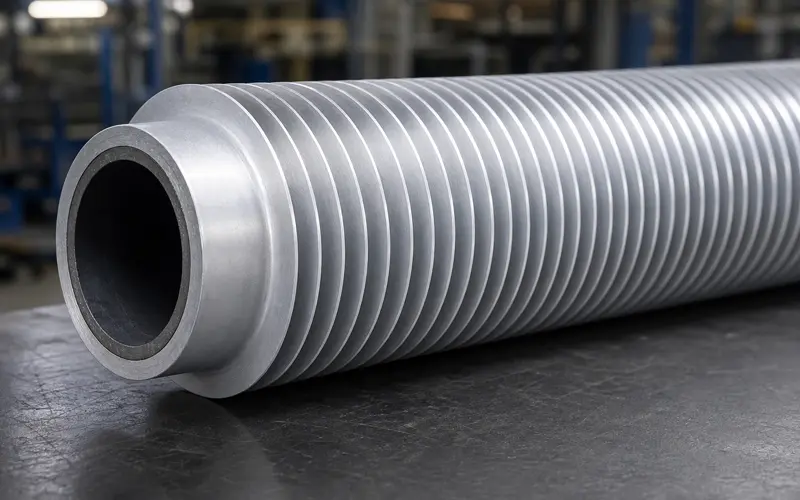
An extruded fin tube is a finned tube made by extruding a thick aluminum sleeve over the base tube. The fins form directly from that sleeve under high pressure. The aluminum sleeve fully encases the base tube. It leaves no exposed metal between the fins. The fin and the protective sleeve form from one continuous piece of aluminum. This gives the extruded design the strongest fin-to-tube bond of the three types. It also gives the best barrier against corrosive air. This performance comes at a higher production cost. It needs specialized extrusion equipment. BOBO’s fin tube extruding machine forms fins on tubes from about 18 mm to 70 mm in outer diameter. It runs single-pass jobs up to 15 meters long. Fin pitch is adjustable for different coil specifications.
How Do L-Foot, G-Foot, and Extruded Fins Differ?
L-foot, G-foot, and extruded fin tubes differ most in four practical areas: maximum operating temperature, corrosion resistance, thermal efficiency, and manufacturing cost. The table below summarizes these differences before each is explained.
| Attribute | L-Foot | G-Foot | Extruded |
| Typical max. temperature | Up to ~180°C | Up to ~300°C or higher | Up to ~280°C |
| Corrosion resistance | Moderate (tube partly exposed) | Good (tighter seal at groove) | Best (tube fully encased) |
| Thermal contact efficiency | Lower | High | Highest |
| Manufacturing cost | Lowest | Higher | Highest |
Operating Temperature Range Comparison
L-foot fin tubes generally handle lower operating temperatures than G-foot or extruded designs. The mechanical wrap can loosen as heat expands and contracts the metal. L-foot tubes are typically rated up to around 180°C. G-foot tubes have the fin locked into a machined groove. They tolerate much higher heat and are commonly rated up to 300°C or more. Extruded tubes fall in a similar high range, typically up to around 280°C. The limit comes mainly from the aluminum sleeve alloy, not the bond itself.
Corrosion Resistance Comparison
Corrosion resistance depends on how much of the base tube surface stays exposed to moisture and airborne contaminants. L-foot fins leave sections of the tube wall uncovered between wraps. So the base tube stays more exposed to atmospheric corrosion over time. G-foot fins improve on this. The groove-and-lock process creates a tighter seal around the tube. Extruded fins offer the strongest protection. The aluminum sleeve fully encases the base tube. This is why extruded fin tubes are the common choice for coastal, humid, or chemically corrosive air.
Thermal Contact Efficiency Comparison
Thermal contact efficiency measures how much heat passes from the tube wall into the fin without loss. It tracks closely with how tightly the fin touches the tube. L-foot fins have the highest thermal contact resistance of the three types. The wrapped foot only partially grips the tube surface. G-foot fins cut this resistance through their embedded groove connection. Extruded fins reach the lowest contact resistance and the highest efficiency. The fin material is continuous with the surrounding sleeve.
Manufacturing Cost Comparison
Manufacturing cost rises with the complexity of the fin attachment process. L-foot fin tubes cost the least. Wrapping a strip around a tube needs simpler tooling and no groove machining. G-foot fin tubes cost more. Cutting and rolling a helical groove adds machining time. Extruded fin tubes carry the highest cost. Forming fins from an extruded sleeve needs specialized high-pressure equipment. Buyers should weigh this upfront difference against expected service life. A lower price can be offset by earlier replacement in demanding conditions.
How to Choose Between L-Foot, G-Foot, and Extruded Fin Tubes?
Four factors drive this decision: operating temperature, environmental exposure, tube diameter, and budget. The sections below walk through each factor. Then they match it to a specific fin tube type.
Weigh Temperature, Environment, and Budget
Manufacturers should weigh operating temperature, environmental exposure, and budget together. A cheap fin tube that is underrated for the operating temperature will fail early. It will also cost more overall. Operating temperature sets the minimum performance threshold a fin design must meet. Environmental exposure, such as humid air, coastal air, or process chemicals, determines how much corrosion protection is needed. Tube diameter also narrows the choice in practice. Wrapping and extrusion equipment each cover a defined diameter range. Budget then decides among the options that already meet these requirements.
Choose L-Foot Fin Tubes for Moderate Heat and Lower Budgets
L-foot fin tubes are the right choice for moderate-temperature applications. Budget is often the main concern, and the surrounding air is not highly corrosive. Typical uses include HVAC evaporator and condenser coils, refrigerator and freezer condensers, and automotive radiator, heater core, and oil cooler tube processing. In these settings, L-foot fins trade lower thermal efficiency and moderate corrosion resistance for a lower production cost. That tradeoff is often acceptable.
Choose G-Foot Fin Tubes for High Heat and Thermal Cycling
G-foot fin tubes are the right choice for high-temperature process applications that experience frequent thermal cycling. Typical uses include industrial heaters and process equipment where operating temperatures regularly exceed what an L-foot design can handle. The tighter groove-locked bond keeps performing reliably. It holds up even as the equipment repeatedly heats and cools during normal operation.
Choose Extruded Fin Tubes for Corrosive Environments
Extruded fin tubes are the right choice where protecting the base tube from atmospheric corrosion is the top priority. Typical uses include industrial boiler and economizer fin tube fabrication, and heat recovery units in waste heat exchanger assemblies. These settings have sustained high air-side exposure. That exposure would degrade an L-foot design more quickly. The fully encased aluminum sleeve justifies its higher cost by extending service life in these harsher conditions.
Frequently Asked Questions
Can the Same Production Line Switch Between L-Foot and Extruded Fin Tubes?
L-foot and extruded fin tubes generally need different tooling. One process wraps a strip around the tube. The other extrudes an aluminum sleeve under pressure. A factory that wants both usually runs separate machines. It uses a winding machine for L-foot tubes and a dedicated extruding machine for extruded tubes. This is simpler than converting one line between methods.
What Tube Diameter Range Can Fin Tube Forming Machines Handle?
Tube diameter range depends on the specific machine and forming method. Winding machines built for L-foot fins commonly handle round tubes from about 4 mm to 50 mm in diameter. Extrusion machines built for extruded fins typically cover a narrower range, often around 18 mm to 70 mm in outer diameter. The extrusion process forms a thicker aluminum sleeve.
Which Base Tube Materials Work With Each Fin Attachment Method?
Wound L-foot processes commonly run on stainless steel, carbon steel, copper, and aluminum base tubes. Embedded G-foot and extruded processes typically run on copper, steel, or aluminum base tubes as well. The right choice depends on the operating temperature and the corrosion resistance the application needs.
Conclusion
Each fin tube type fits a different need. L-foot fins cost the least. They work well for moderate heat, like HVAC coils, refrigeration evaporators, and automotive radiator or oil cooler tubes. G-foot fins handle higher heat and repeated thermal cycling. This suits industrial process equipment. Extruded fins resist corrosion best. They are a common choice for boilers, economizers, and heat recovery units exposed to harsh air.
The right choice depends on four things: operating temperature, environment, tube diameter, and budget. Matching these factors to the fin design helps prevent early failure. It also points to the right forming equipment for the job. BOBO Machine builds this equipment, including L-type winding machines and single-pass extrusion machines. Contact BOBO Machine to match the right fin tube forming equipment to your production line.