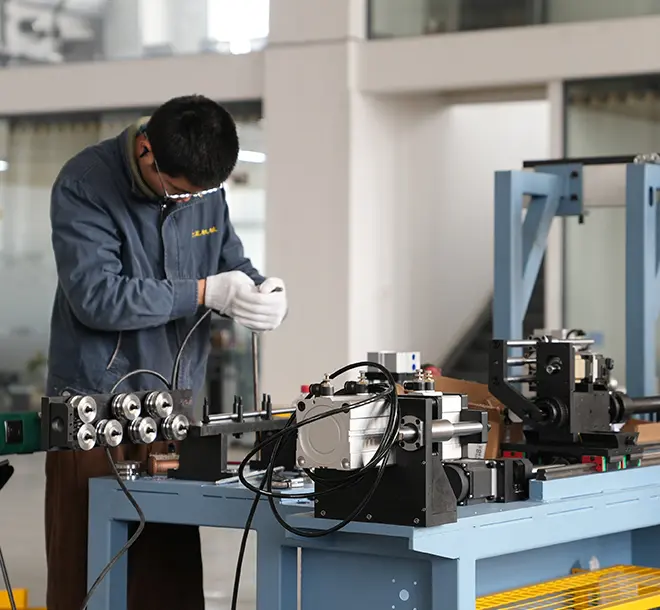
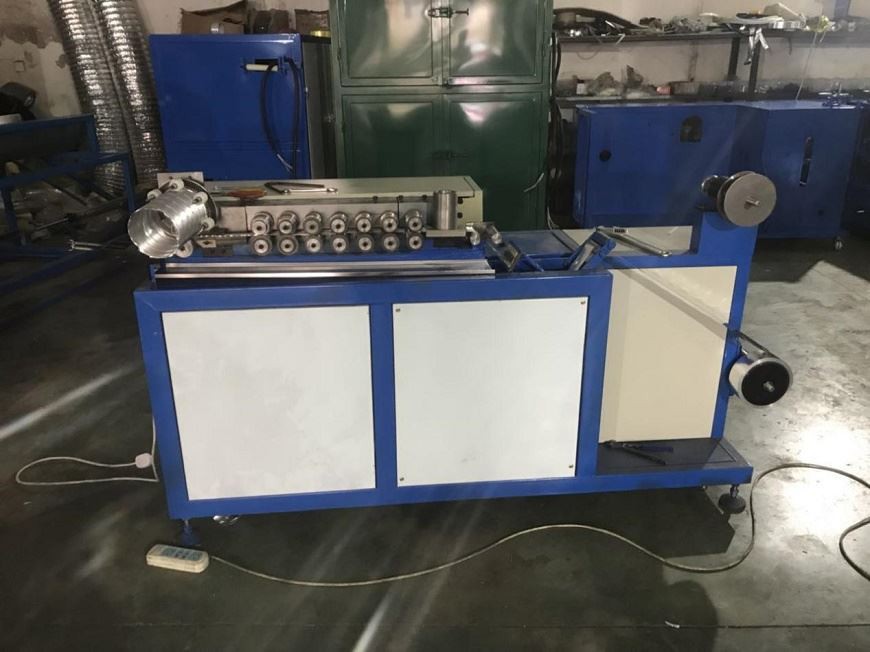
Double Layer Flexible Aluminum Duct Machine
Produce double-layer flexible aluminum ducts in unlimited lengths with one compact machine.
View machineFLEXIBLE DUCT & CLIP-HOSE PRODUCTION
Produce flexible duct in the construction you need.
BOBO supplies wire-reinforced foil and film duct machines, fabric clip-hose equipment, and semi-rigid aluminum or stainless steel duct formers. Choose the joining method and layer structure first, then match diameter, material feed and finishing to your production plan.
Wire-reinforced foil and film duct
Fabric clip hose and metal lock-seam routes
Model-specific cutting and compression options
Flexible Duct Machine
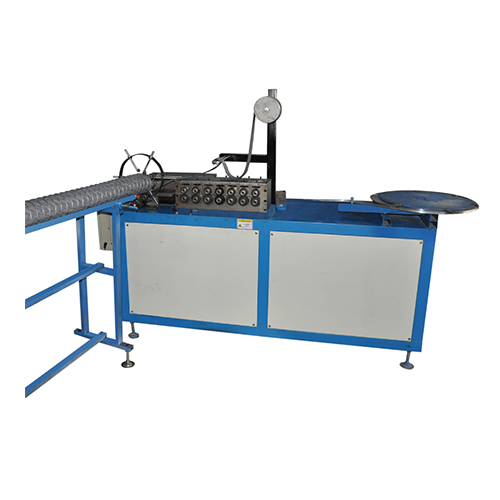
Fabric clip-hose forming machine
DEFINE YOUR DUCT WALL
Material layers, reinforcement and the joining method.
FIND YOUR MACHINE
Foil and film models combine strip with reinforcement wire; the AFD-600S uses hot-melt adhesive and independently controlled forming stations. Clip-hose equipment works with fabric and a metal strip, while semi-rigid machines form a corrugated metal wall. Compare layer count and seam profile within the selected route.
Produce double-layer flexible aluminum ducts in unlimited lengths with one compact machine.
View machine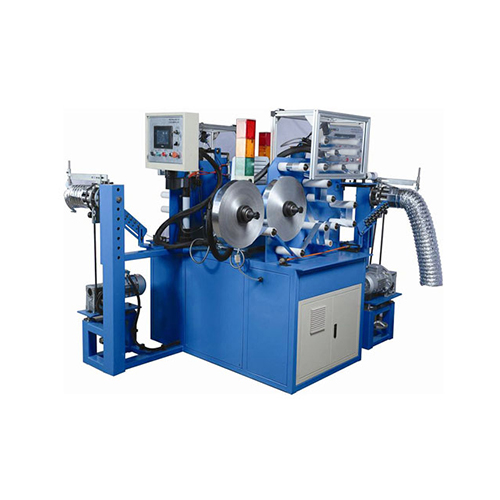
Dual-station flexible duct forming at 65 m/min for HVAC insulation pipes.
View machine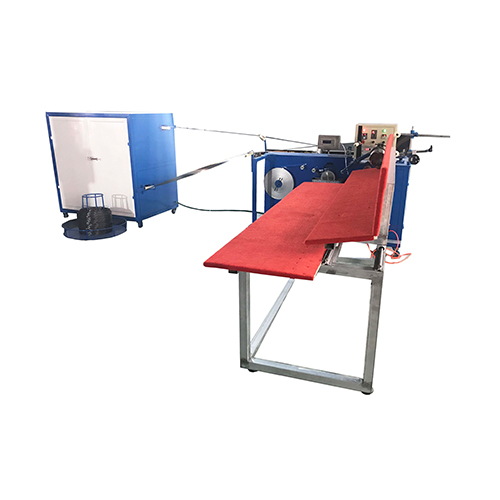
Produce flexible aluminum ducts from 80–600mm diameter at up to 35 m/min.
View machine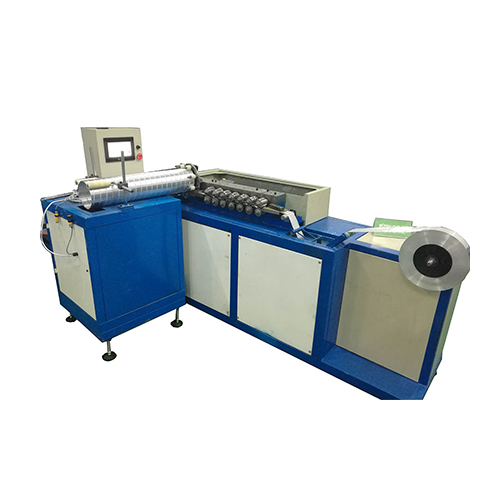
Produce air-tight semi-rigid aluminum ducts from 60–600mm at up to 8 m/min.
View machineProduce high-temperature flexible clip ducts from 80–600mm in a single setup.
View machine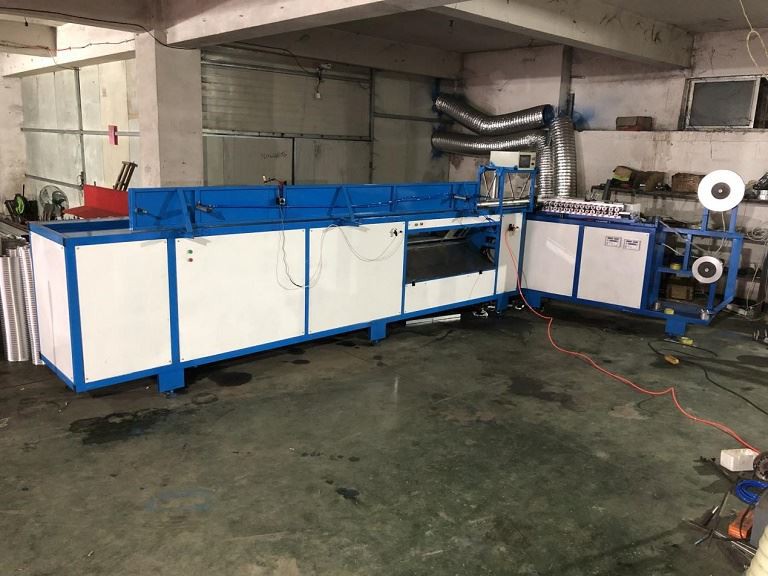
Produce perforated flexible aluminum ducts with interlocking seams at up to 5 m/min.
View machine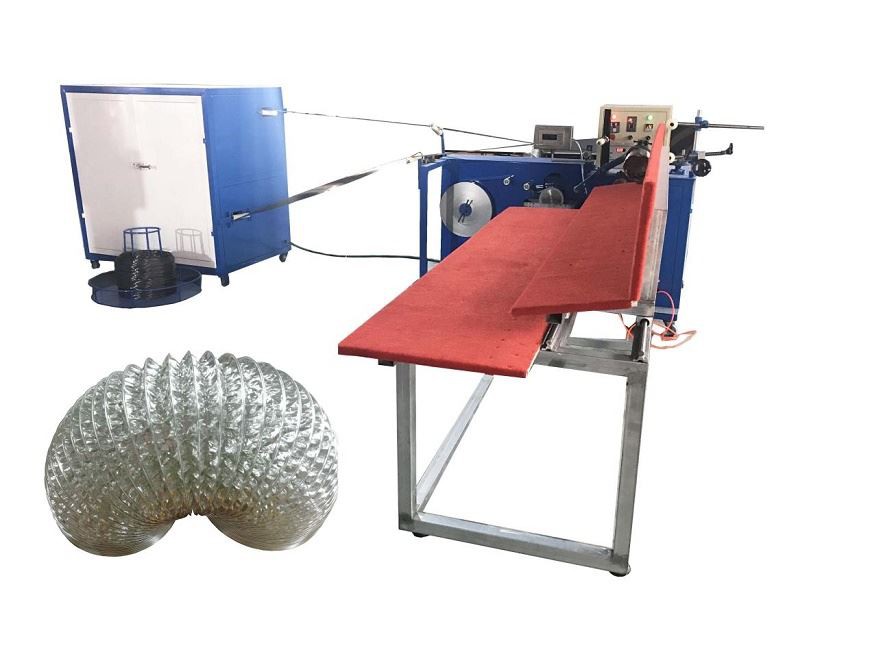
Produce flexible PVC and aluminum ventilation ducts continuously at up to 60 m/min.
View machine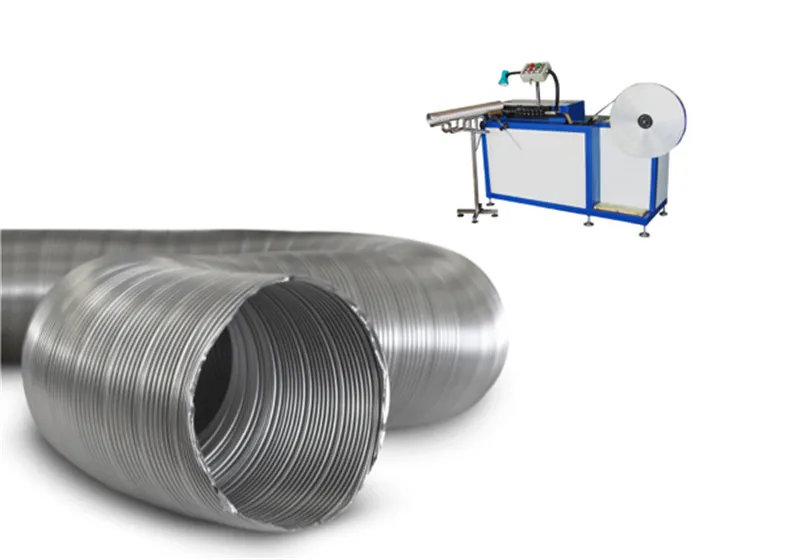
Produce high-quality semi-rigid stainless steel ducts in continuous, unlimited lengths.
View machineWorking ranges are model-specific. Confirm material, product dimensions and the required operation against the selected machine.
PARTS & APPLICATIONS
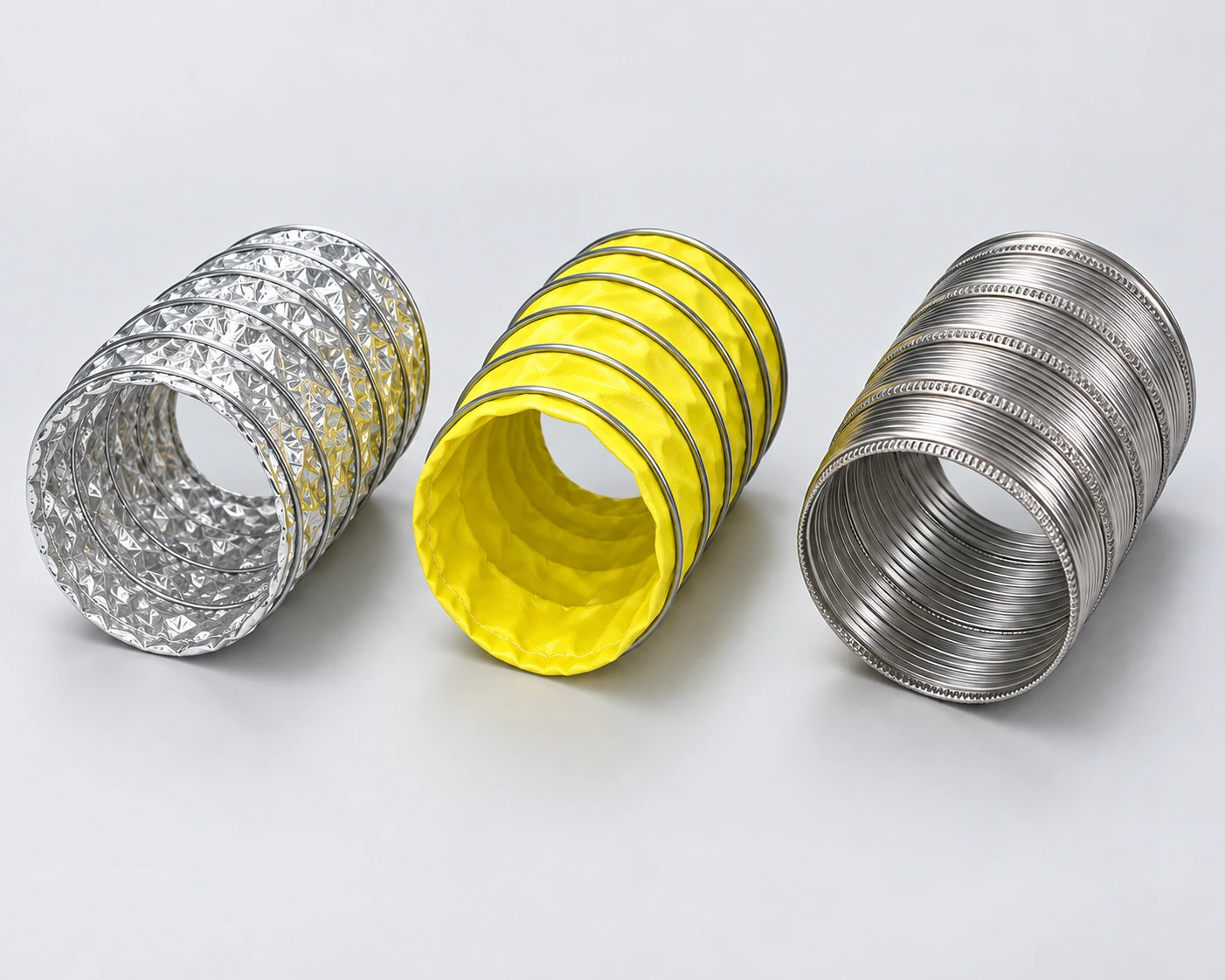
These products range from flexible foil or fabric walls to corrugated metal duct. The intended air-handling duty guides the material and wall design; machine selection follows that product specification.
01
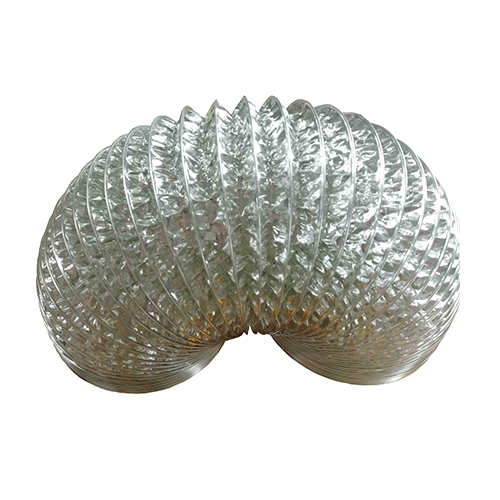
A spiral wire supports the flexible wall in these ventilation ducts. Aluminum composite film, metallized PET and PVC-based constructions call for the appropriate layer arrangement, wire and joining setup.
02
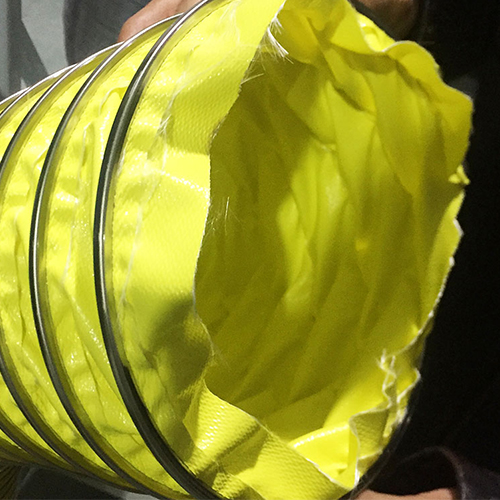
The clip-hose route combines a fabric wall with a metal strip. Fabric choice and clip geometry are central to an industrial air-transfer hose specified for its working environment.
03
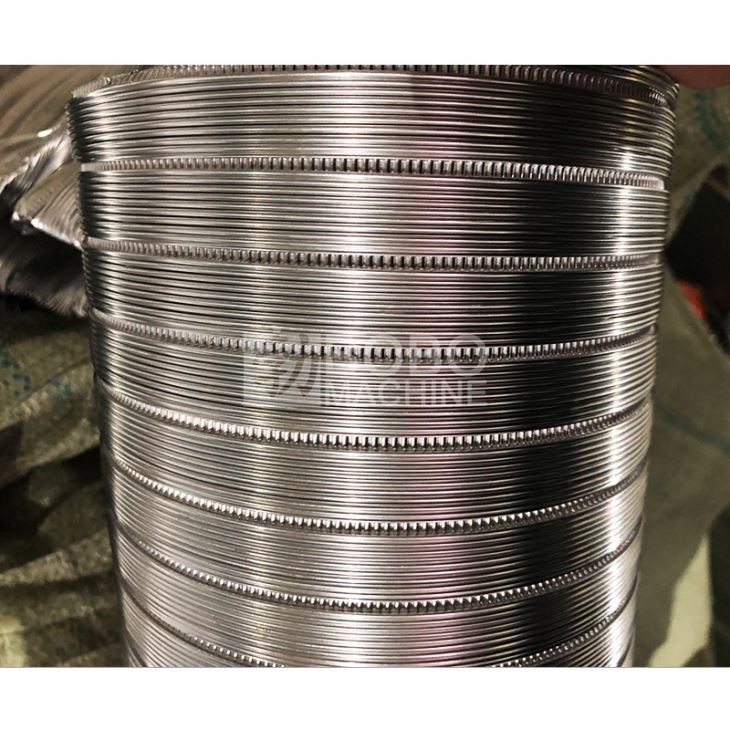
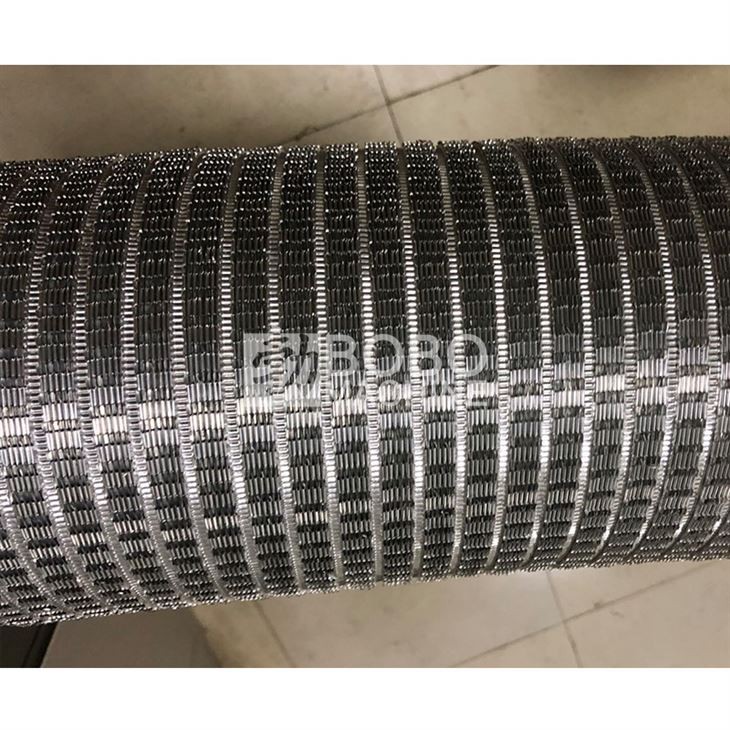
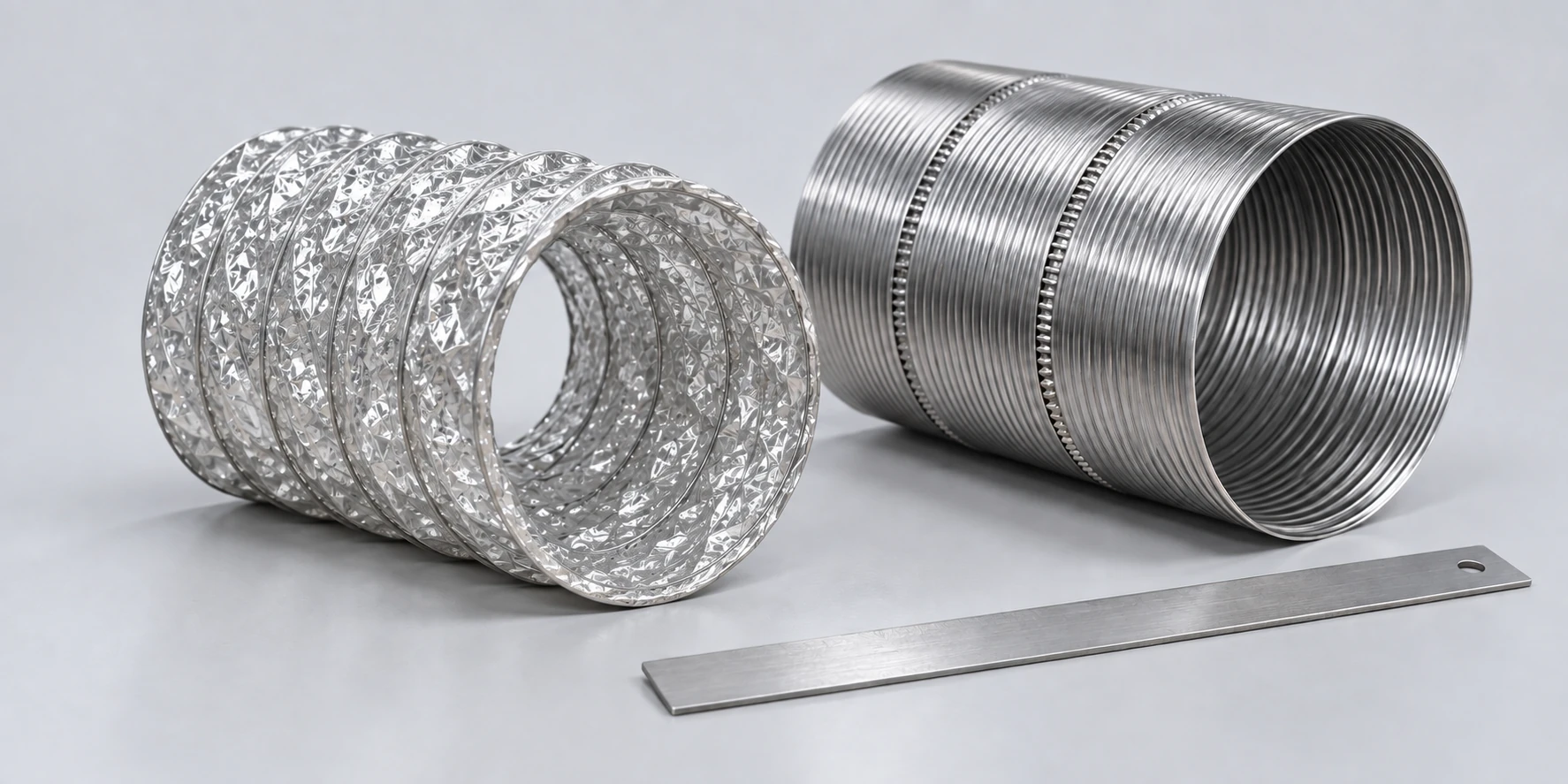
Corrugated metal walls serve ventilation and exhaust duct designs. Compare the required aluminum or stainless steel strip, layer construction and lock-seam profile with the selected former.
04
The perforated-duct range addresses perforated-wall sections for silencer-related duct designs. Define the perforation pattern and formed profile together, including how the strip is prepared before forming.
SELECTION GUIDE
Similar-looking flexible ducts can use different materials and forming methods. A wire-reinforced laminate, a metal-clipped fabric wall and a lock-seamed metal tube need different feed arrangements and tooling. Start with a cross-section or physical sample to establish the construction.
01
List each foil, film or fabric layer and its material specification. Identify the reinforcement wire, metal clip or lock seam that gives the duct its construction. Match adhesive and heating requirements to the chosen route.
02
Review finished diameter, corrugation or seam shape, strip width and thickness together. Establish the forming tools and adjustments needed for each size, and distinguish a change of diameter from a change of duct construction.
03
Compare output for the actual duct and include material loading, cutting and compression. Strip-feeding speed does not directly state finished duct output. Allow space and handling for the required extended and packed lengths.
A duct-forming machine produces the wall structure. Insulation wrapping, jacketing and packing should be identified as separate stages where the finished product requires them.
YOUR FINISHED PART
Include the material, dimensions and acceptance requirements.
From technical review and testing to delivery and after-sales.
Work with BOBO on the strip or fabric specification, reinforcement and forming tools for the selected duct. Agree sample checks for diameter, wall construction and joint condition, then define the cutting, compression and handling scope. Include material changes, operator training and startup support in the delivery plan.
Material layers, wire or clip-strip review
Forming tools and diameter-change scope
Trial samples and joint inspection
Finishing, training and startup arrangements
BEFORE YOU CHOOSE
Use the duct construction and finishing requirements to separate machines that share a similar product name.
Wire-reinforced duct combines a foil, film or fabric wall with a spiral wire. Semi-rigid metal duct is formed from metal strip with corrugations and a mechanical seam. The two routes use different raw-material formats and forming arrangements; matching the diameter does not make their machines interchangeable.
The listed PVC machine forms duct from PVC, metallized PET or aluminum composite material with reinforcing wire. It belongs to the strip-and-film forming route. A specification for solid-wall or corrugated extruded plastic pipe requires a different production process.
The range includes different finishing arrangements. The perforated-duct model provides automatic length cutting, while compression is optional. Other models offer cutting or compression configurations to suit the job. Compare the supplied stations and the remaining manual handling alongside the forming machine.
The machine forms the selected construction. Temperature resistance, leakage, insulation and other finished-duct properties must be evaluated for the actual materials, joint and intended service conditions. Two metal layers alone do not establish an insulation rating, and a machine heating setting is not a duct operating-temperature rating.
Perforated duct requires both the hole pattern and the formed wall profile to be defined. Specify how the perforations will be made and whether that equipment is included with the forming and automatic cutting setup. Do not assume that an in-line punching unit is included.
START WITH A DRAWING OR SAMPLE
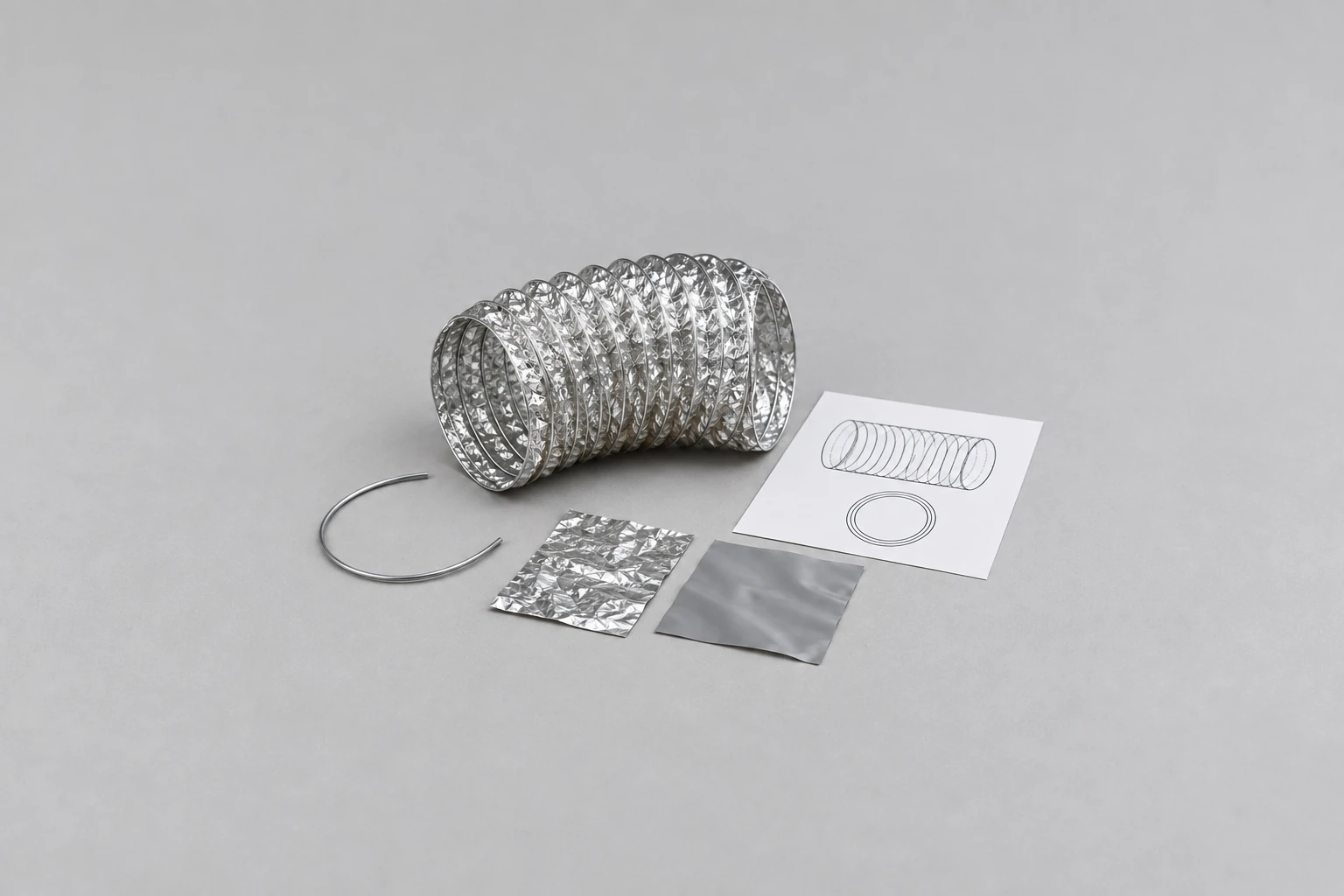
Share a cross-section, sample photos, finished diameter and length, together with the foil, film or fabric layers and any wire or clip strip. Include joint details, material widths and thicknesses, size changes and the required output.
Note the intended duty and product test requirements, plus any cutting, compression, insulation or packing equipment already available.
Flexible Duct Machine / BOBO MACHINE