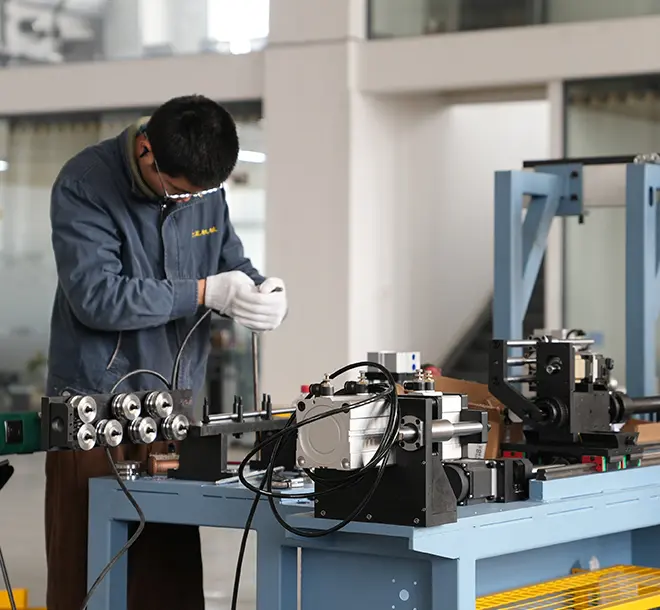
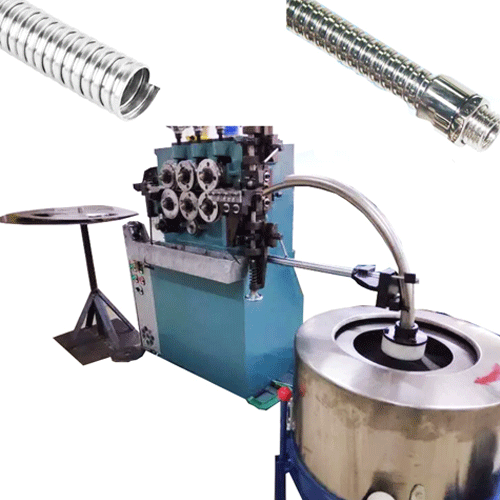
Flexible Hose Machine
Six-axis metal flexible hose forming from Ø3.5mm to Ø28mm in one integrated machine.
View machineHOSE FORMING & PROTECTIVE COVERINGS
Make the hose body, braid or protective sleeve your product needs.
BOBO supplies strip-forming machines for square-lock and interlock metal hoses, wire braiding machines for hose coverings, and equipment for multilayer heat-protection sleeves. These are distinct production routes: select the machine around the wall structure and protective function of the finished hose.
Square-lock and interlock strip forming
Separate wire braiding equipment
Multilayer heat-protection sleeve forming
Metal Flexible Hose Machine
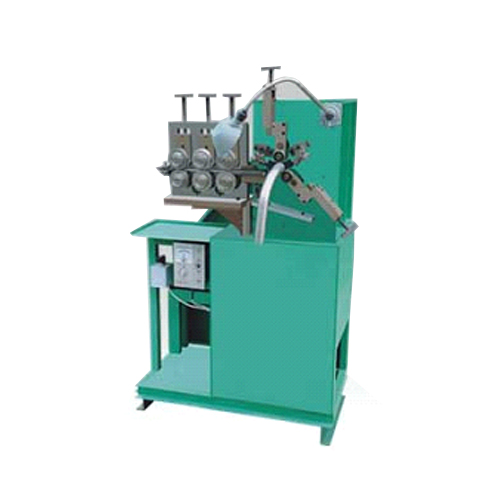
Interlock metal hose forming machine
DEFINE YOUR HOSE CONSTRUCTION
Lock profile, braid or sleeve layers, and finished diameter.
FIND YOUR MACHINE
The strip-forming machines shape and lock metal edges to create a flexible hose body. The braider works with wire to make the outer braid, while the heat-sleeve machine forms foil-based layered material. Within the strip-forming range, compare lock profile, strip dimensions and the tooling supplied for each hose size.
Six-axis metal flexible hose forming from Ø3.5mm to Ø28mm in one integrated machine.
View machine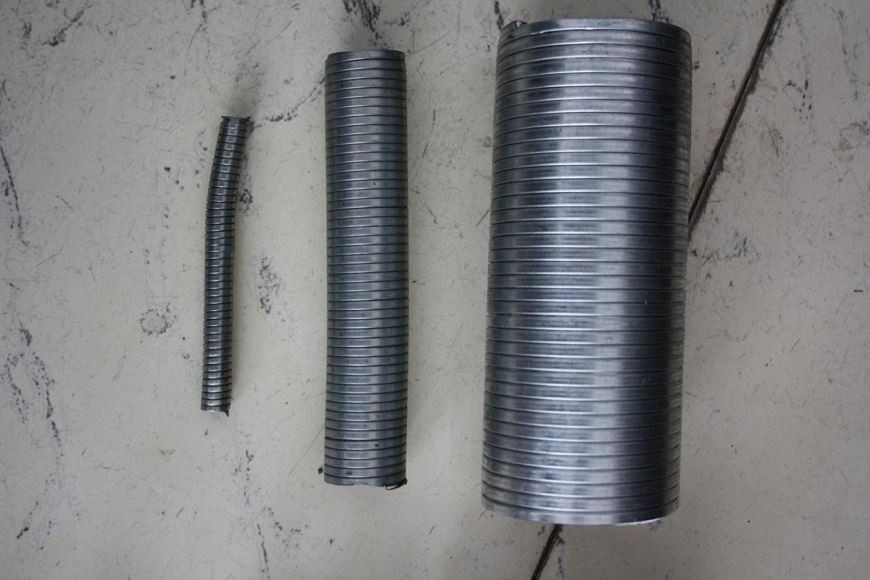
Continuous double-swage forming of interlocked flexible steel pipe at high output rates.
View machine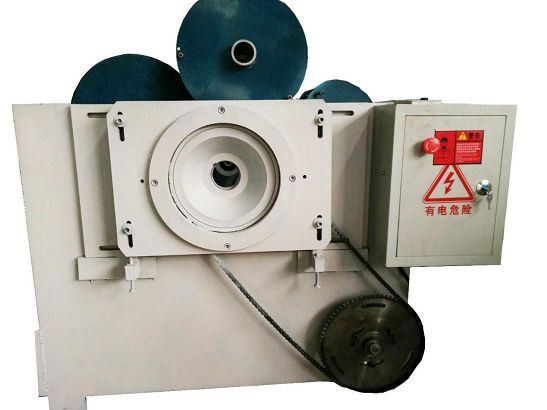
Produce multi-layer heat reflective sleeves for automotive, aerospace, and industrial protection.
View machineForm interlock flexible metal hoses from flat strip in a single continuous pass.
View machine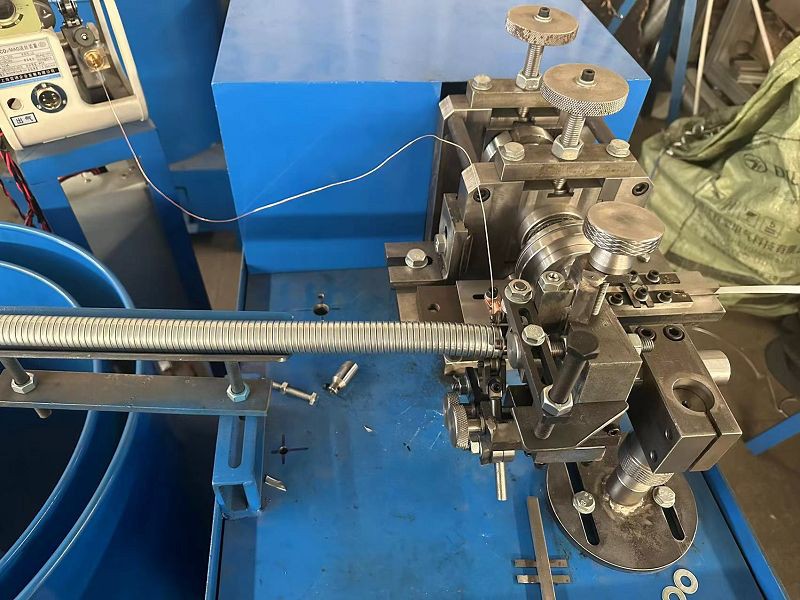
Continuous square-lock flexible metal conduit production with low power and minimal labor.
View machine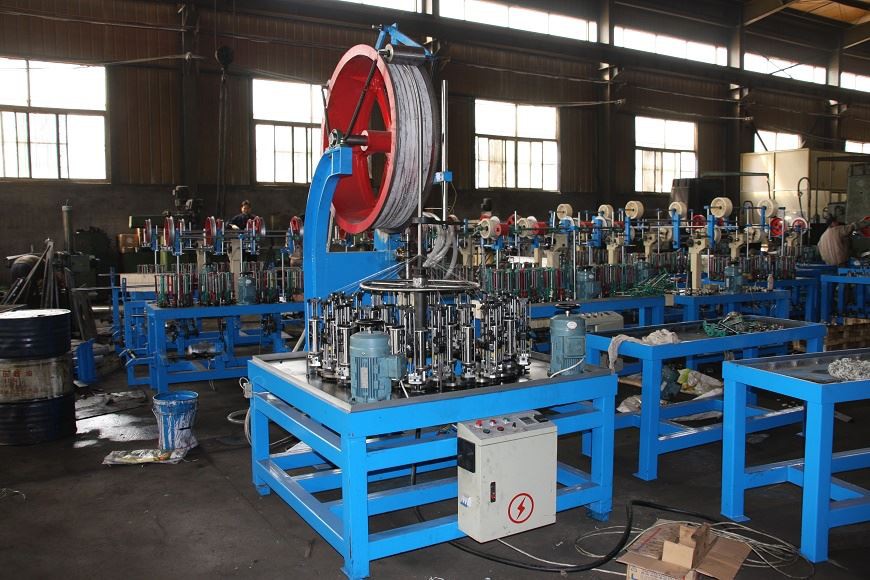
High-speed wire braiding machine built for continuous flexible hose production.
View machineWorking ranges are model-specific. Confirm material, product dimensions and the required operation against the selected machine.
PARTS & APPLICATIONS
Electrical conduit, sanitary hose outer casings and thermal sleeves place different demands on the wall structure. Match the forming route to the part that provides mechanical protection, the braid or the heat shield.
01
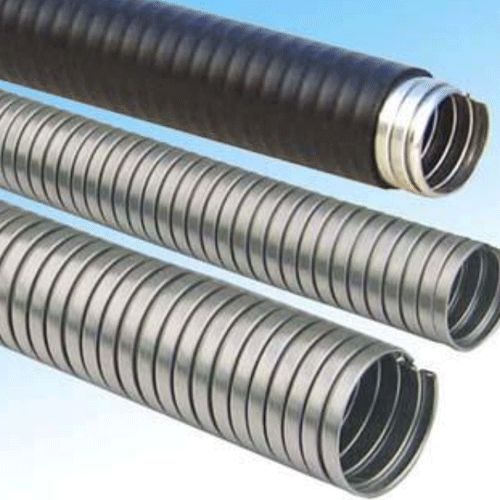
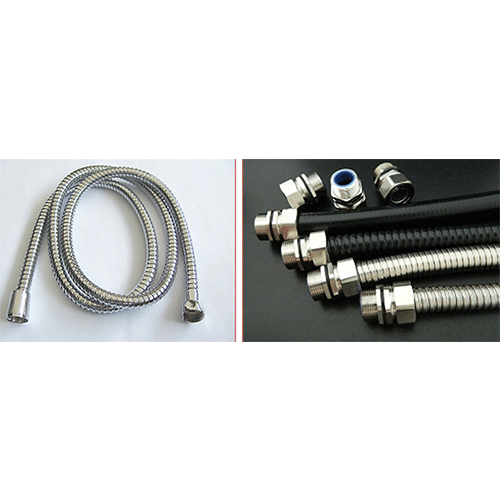
Stripwound metal conduit provides an outer covering around electrical wiring and cables. Hose diameter, lock profile and flexibility should suit the cable route and the intended installation.
02
Form metal outer casings for sanitary hose assemblies. The casing, inner water-carrying tube and end fittings have separate roles and should be specified as a complete assembly.
03
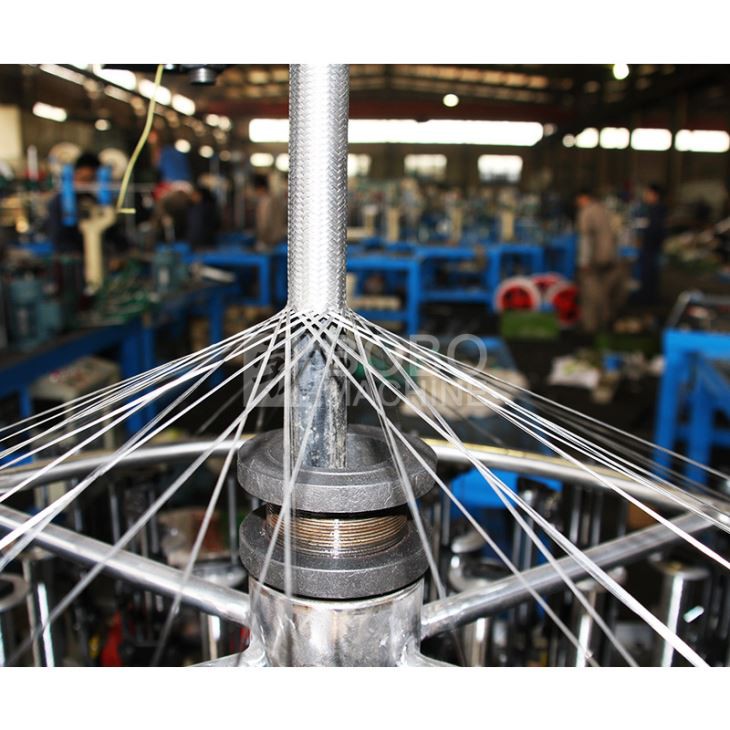
Stainless steel wire is interlaced around the hose to create an outer braid. The hose size and intended braid pattern guide the wire arrangement and braiding setup.
04
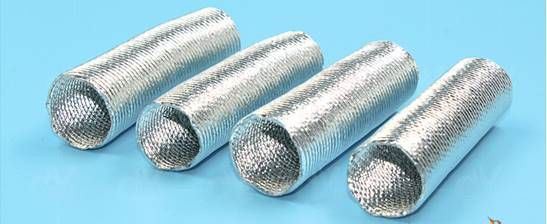
Foil-based multilayer sleeves cover hoses, control cables and wiring near heat sources. Choose the layer construction around the protected component and its operating environment.
SELECTION GUIDE
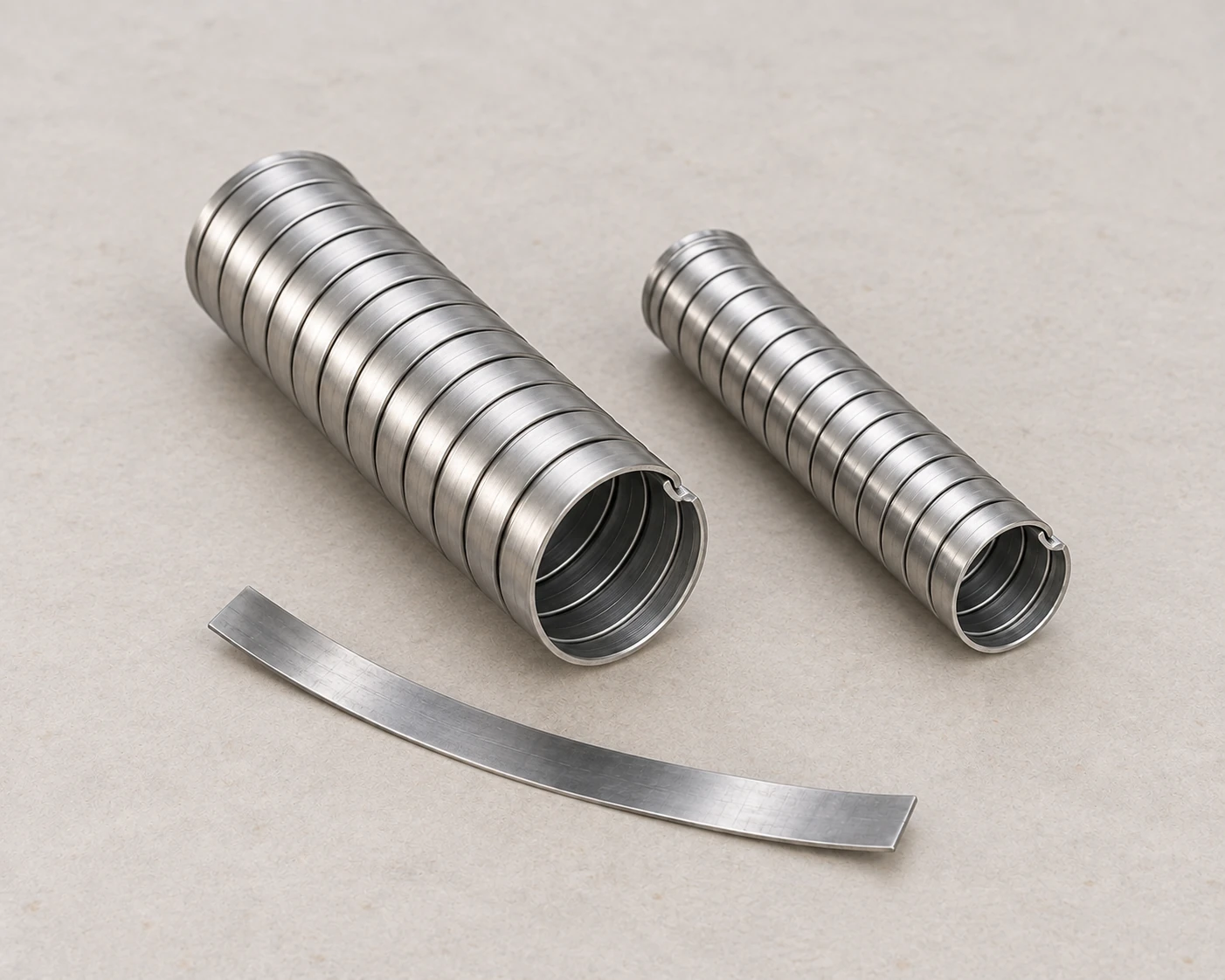
A finished diameter can describe several very different products. The lock profile and strip gauge define a stripwound hose; wire arrangement defines a braid; layer materials define a thermal sleeve. Choosing among these structures comes before comparing machine output.
01
Start with a section drawing: a square-lock or interlock strip body, a wire braid, or a multilayer thermal sleeve. Each calls for different raw material and forming equipment, even when the finished diameters are similar.
02
For lock-forming, pair the strip width, gauge and grade with the lock profile and size tooling. For braiding, review wire size and braid pitch; for thermal sleeves, review the layer sequence and forming diameter.
03
List the sizes and batch lengths you will run. Include coil or bobbin replacement, tooling changes and how the flexible product will be collected. Evaluate output with those steps included, not from the drive speed alone.
For a finished hose assembly, identify the inner tube, outer covering and end connections separately. Producing one of these components does not include making or assembling the others.
YOUR FINISHED PART
Include the material, dimensions and acceptance requirements.
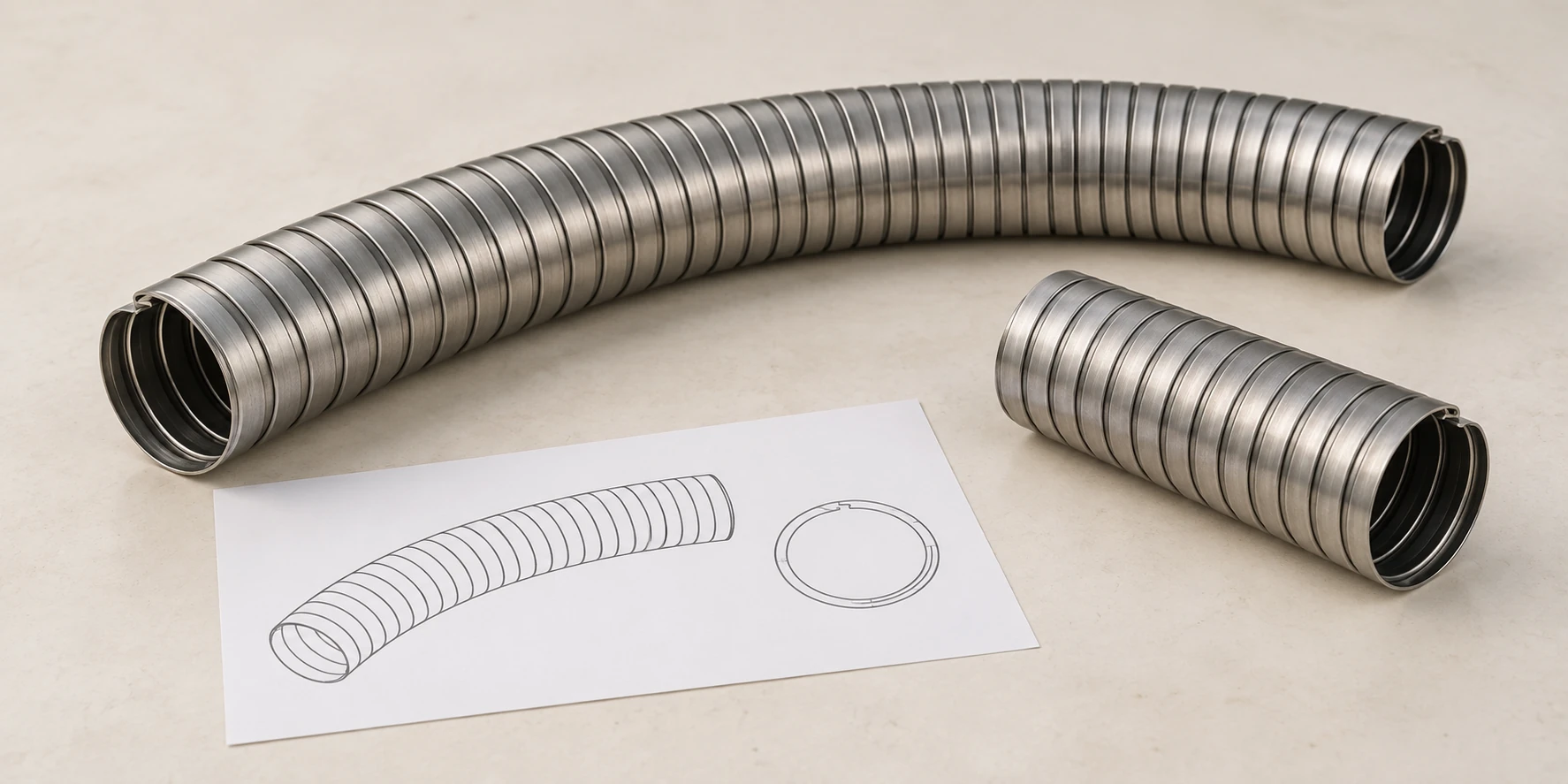
From technical review and testing to delivery and after-sales.
BOBO can work with your hose section and material specification to define forming tooling, braid configuration or sleeve layers. Agree which sizes to demonstrate, how to inspect the finished covering and what changeover work is included. Plan coil or bobbin handling, operator training and spare tooling with the selected machine.
Hose cross-section and raw-material review
Size tooling, braid setup or sleeve-layer scope
Sample dimensions, flexibility and surface checks
Changeover training and spare-part planning
BEFORE YOU CHOOSE
Clarify the hose construction and the role of each machine before treating similar-looking flexible products as interchangeable.
They form different mechanical joints between adjacent turns of metal strip. The square-lock range uses a single-hook profile; the interlock range uses a double-lock construction. Choose from the required cross-section, flexibility and mechanical requirements, then match the strip and tooling to that profile.
No. A stripwound hose has interlocked strip edges. An annular corrugated hose has a tube wall formed into successive rings. The lock-forming machines on this page make stripwound hose; a fluid-carrying corrugated hose requires its own tube-forming and corrugating route.
A protective metal covering alone does not establish a pressure-tight fluid path. The inner tube or hose wall, seals and end fittings must suit the medium and service conditions. Define whether you are making an outer casing or the fluid-carrying element before choosing production equipment.
No. The braider interlaces wire to produce a braid. The metal hose body is made by a separate process. Wire size, the number of wires gathered together, carrier arrangement and braid pitch must match the covering required; the braider does not replace a strip-lock hose former.
The foil and reinforcing layers, sleeve geometry and installation conditions all matter. The sleeve machine forms the specified layered construction. Thermal performance should be assessed on that construction under the intended exposure conditions, rather than applying one temperature or heat-reflection claim to every material combination.
START WITH A DRAWING OR SAMPLE
Include a drawing or sample showing inside and outside diameter, wall construction and required length. For stripwound hose, add metal grade, strip width and thickness, and lock profile. For braiding, add wire size and braid requirements; for thermal sleeves, list the layer sequence and materials.
State the application, required output, size changes and collection format. Identify any inner-tube, fitting or assembly operations needed beyond the selected machine.
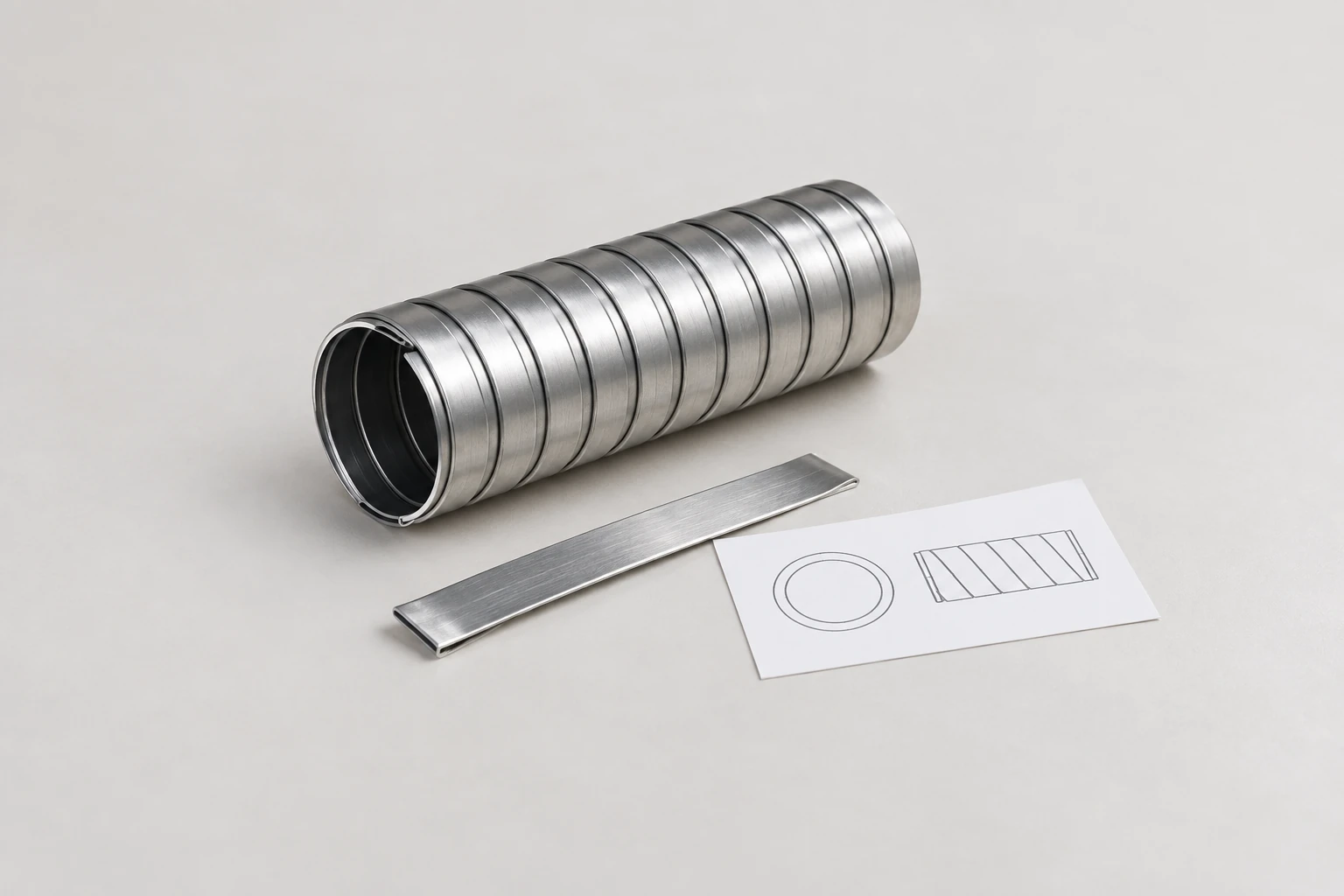
Metal Flexible Hose Machine / BOBO MACHINE