Corrugated metal hose looks simple. But it goes through a demanding process before it can handle real pressure and heat. The hose must flex without cracking. It must hold a seal at every joint. It must survive years of vibration. Manufacturers reach this result through three stages. These are forming, welding, and testing. This guide walks through each stage. It explains what happens and why it matters.
What Is Corrugated Metal Hose and How Is It Manufactured?
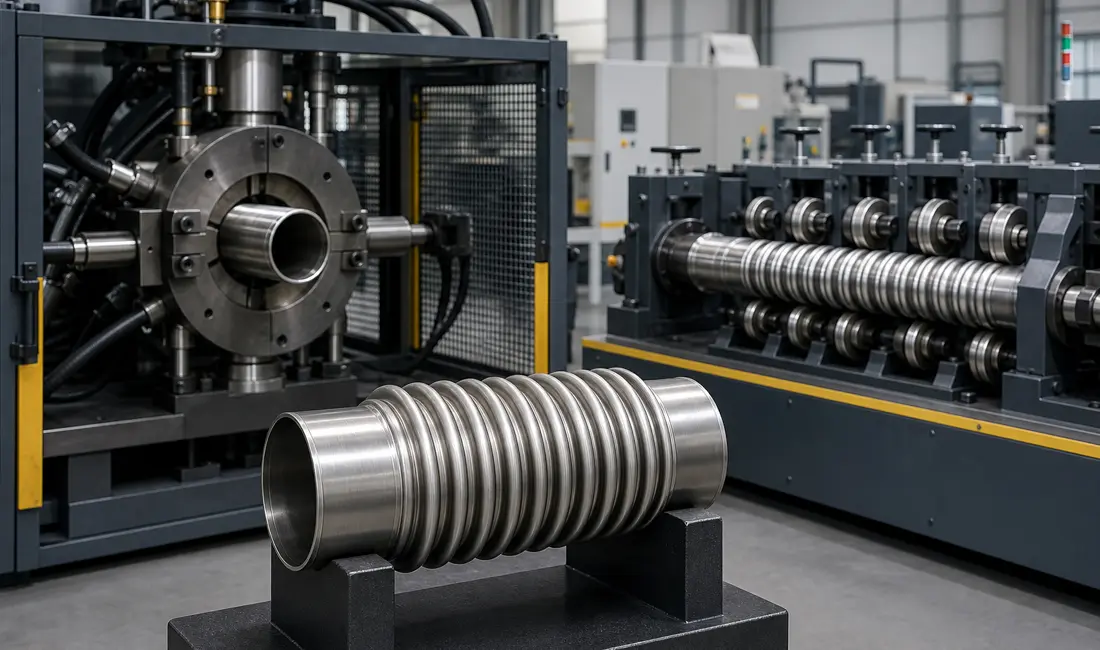
Corrugated metal hose is a flexible metal tube with a wavy, ridged wall. The ridges let it bend and absorb vibration. They also let it handle thermal expansion without breaking. The ridges work like an accordion. They let the hose flex while the metal itself stays strong. This design lets corrugated metal hose handle higher pressure and heat than rubber, plastic, or composite hose.
What Materials Are Used to Manufacture Corrugated Metal Hose?
Manufacturers build corrugated metal hose from corrosion-resistant metal strip or tube. Common materials include stainless steel, galvanized steel, aluminum, and copper. Stainless steel is the most common choice. It resists corrosion and holds up under high heat. Aluminum and galvanized steel cost less. They work well for lighter-duty conduit and cable protection. Copper adds flexibility and good electrical conductivity for wiring and plumbing. The right material depends on three things: the fluid inside the hose, the operating temperature, and the corrosion resistance the job needs.
What Are the Three Main Stages of Corrugated Metal Hose Manufacturing?
Corrugated metal hose manufacturing moves through three main stages. First, forming shapes a flat strip or smooth tube into a corrugated or interlocked profile. Second, welding and assembly add reinforcement and end fittings to the formed hose. Third, testing checks the finished assembly for leaks and pressure strength before it ships. Each stage builds on the one before it. A defect in forming can show up later as a weld failure or a failed pressure test.
How Is Corrugated Metal Hose Formed?
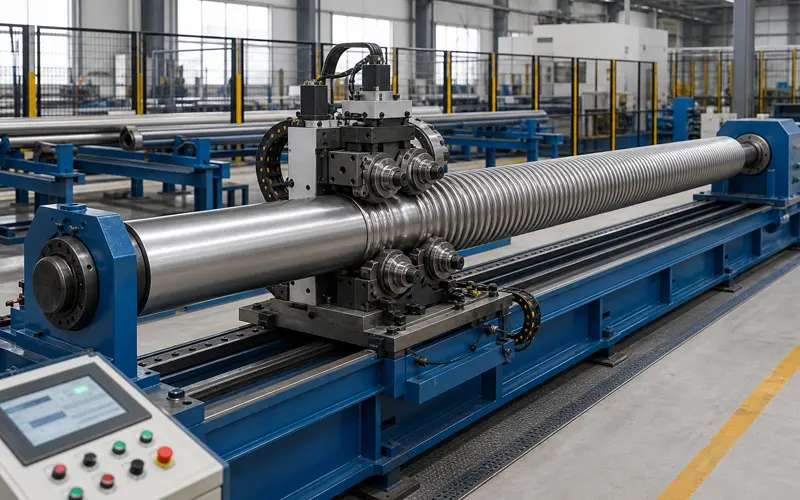
Forming turns flat strip or straight tube into a flexible corrugated shape. The method used sets the hose’s final strength, flexibility, and cost. Manufacturers rely on a few proven forming methods. Each one suits different hose types and production volumes.
What Is Mechanical Forming in Corrugated Metal Hose Manufacturing?
Mechanical forming is a corrugation method that uses rotating dies or rollers. These press ridges into a metal tube as it feeds through the machine. The tube passes between shaped tooling that squeezes the metal without heating it first. This method runs fast and needs less setup time. It suits high-volume production. But it can add more stress to the metal than gentler methods. This may shorten the hose’s fatigue life under repeated flexing.
What Is Hydraulic Forming in Corrugated Metal Hose Manufacturing?
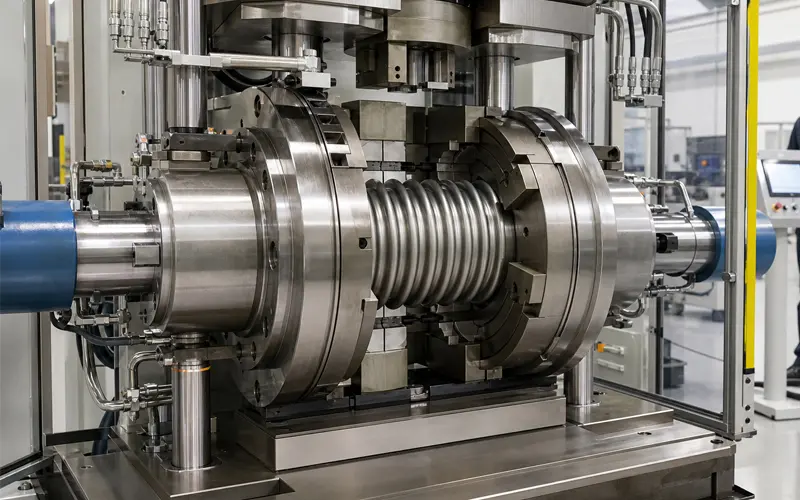
Hydraulic forming is a corrugation method that uses fluid pressure inside the tube. This pressure pushes the metal outward into a die that shapes the ridges. The internal pressure expands the tube evenly. This creates consistent corrugation depth along the hose. This method suits medium to high production volumes. It produces a smoother wave pattern than basic mechanical forming.
What Is Hydroforming in Corrugated Metal Hose Manufacturing?
Hydroforming is a corrugation method that combines fluid pressure with synchronized axial tube feeding. This shapes ridges with minimal twisting or residual stress. It avoids the torsional stress that other forming methods can cause. That lowers the risk of fatigue cracking. Hydroforming often costs more to set up. But it produces hose with a longer flex life. This matters most for hose with frequent bending or high-cycle vibration.
Annular vs Helical Corrugation: What Is the Difference?
Annular corrugation forms a series of separate, closed rings around the tube. Helical corrugation forms one continuous spiral ridge, like a screw thread. Annular hose flexes more easily and handles tighter bends. It is common for assemblies that need frequent movement. Helical hose offers higher pressure resistance and a smoother interior flow path. It suits longer, straighter runs with less bending.
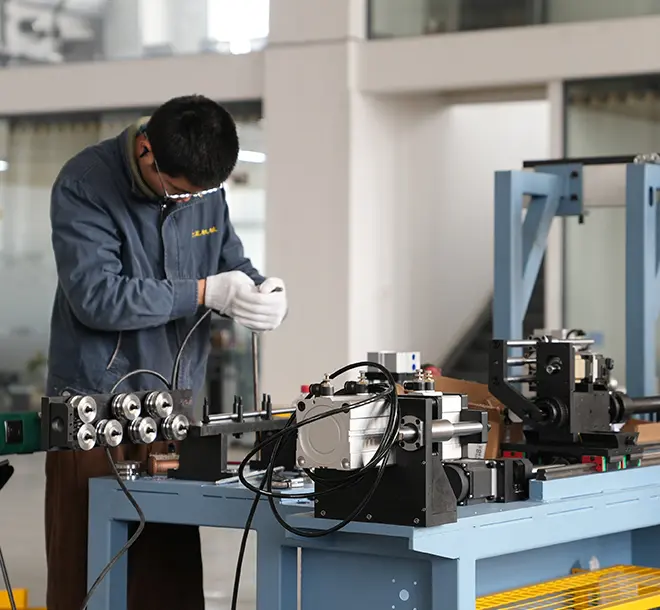
Strip-based interlock forming is a related but different approach. Instead of corrugating a smooth tube, this method winds a flat metal strip into a helical, self-locking profile. The strip edges lock together to form a ridged, flexible wall. BOBO’s flexible hose machine uses this interlock approach. It runs stainless steel, galvanized steel, aluminum, and copper strip through six rounds of press-buckle shaping. This produces hose with an inner diameter from about 3.5 mm to 28 mm and a tolerance of ±0.1 mm. This process suits electrical conduit, shower hose, gas hose, and precision instrument sheathing.
How Is Corrugated Metal Hose Welded and Assembled?
Welding and assembly turn a formed hose into a complete, pressure-rated product. This stage adds reinforcement and connection points. It determines how well the hose holds pressure and resists pulling apart under load.
How Is Wire Braid Added to Corrugated Metal Hose?
Wire braid is a woven metal sheath, usually stainless steel. It wraps around the hose to restrain it under pressure and add tensile strength. Without braid, a pressurized hose would stretch and elongate. The braid wires interlock in a diagonal pattern. This lets the hose flex while it still resists pressure. On BOBO’s wire braiding machine, operators can adjust wire count from 4 to 10 wires per strand. They can also set wire diameter from 0.10 mm to 0.25 mm and braiding pitch from 20 mm to 160 mm. This range covers fine-pitch shower hose reinforcement and heavier industrial conduit reinforcement.
How Are Braid Collars Welded in Corrugated Metal Hose Assembly?
A braid collar is a metal ring that joins the hose and its braid at each end. Welders typically use TIG (tungsten inert gas) welding to fuse the hose, the braid wires, and the collar into one cap weld. This cap weld becomes the base for the next weld. That weld attaches the end fitting. Proper collar placement also protects the last few corrugations near the hose end. Heat from welding can weaken corrugations that sit too close to the joint.
How Are End Fittings Welded to Corrugated Metal Hose?
End fittings are threaded or flanged connectors. They attach to the hose after the braid collar weld. This joins the hose to the rest of a piping or equipment system. The welder aligns the fitting with the cap-welded joint. Then the welder fuses the two together in a second TIG weld pass. This two-weld sequence keeps the joint straight and centered. A poorly executed fitting weld is a common failure point in a finished hose assembly.
How Is Corrugated Metal Hose Tested for Quality?
Testing confirms that a finished hose assembly holds pressure and resists leaks. This happens before the hose ever reaches the customer. Every corrugated metal hose assembly should go through at least one leak test. Many also need one or more pressure tests.
What Is Leak Testing in Corrugated Metal Hose Manufacturing?
Leak testing is a quality check that pressurizes the hose. It looks for escaping gas or liquid at the seams and welds. The most common method submerges the pressurized assembly underwater and watches for bubbles. A more sensitive method uses a mass spectrometer. It creates a vacuum inside the hose and floods the outside with helium. Tiny helium atoms pass through microscopic openings, and the instrument detects them. Dye penetrant testing offers another option. It reveals surface-level leaks and weld defects that other methods might miss.
What Is Pressure Testing in Corrugated Metal Hose Manufacturing?
Pressure testing exposes the hose to pressure above its normal working level. This confirms the hose handles real operating conditions without failing. Hydrostatic testing uses water and is common for field testing. Pneumatic testing uses air or another gas instead. Standard practice sets the maximum test pressure at around 150% of the hose’s rated working pressure. Going above this level can permanently deform the corrugations. Manufacturers should run this test on every assembly, not just a sample batch. A single weak weld can slip through if testing checks only part of production.
What Standards Govern Corrugated Metal Hose Testing?
ISO 10380 is the main international standard for corrugated metal hose design, materials, and testing. It sets requirements for leaktightness, burst pressure, fatigue resistance, and electrical continuity. Related standards support specific parts of the process. EN 1779 covers leak testing method selection. ISO 15614-1 covers welding procedure qualification for the hose and its fittings. Buyers who need documented compliance should ask suppliers which standards their testing program follows.
How Do You Choose Corrugated Metal Hose Manufacturing Equipment?
Choosing the right equipment means matching machine capability to your product mix and output goals. Two factors matter most. These are the diameter and material range the equipment can handle, and the automation level that fits your production volume.
Match Diameter and Strip Material to Your Product Line
Match the equipment’s diameter range and strip materials to the hose sizes and metals your product line needs. A machine built for one narrow diameter range will bottleneck a wider product mix. BOBO’s flexible hose machine, for example, covers an inner diameter range of about 3.5 mm to 28 mm. It runs stainless steel, galvanized steel, aluminum, and copper strip on one platform. This lets one line serve several product lines without a full tooling change.
Balance Automation Level With Production Volume
Balance your equipment’s automation level with your expected production volume. Over-automating a low-volume line adds cost without a real return. Lower-volume or custom orders often run well on standalone or semi-automatic machines. Higher-volume production benefits from integrated lines. These link strip feeding, forming, braiding, end fitting, and testing into one workflow. Review your target output before ordering equipment. This helps you avoid paying for automation you will not use.
Frequently Asked Questions About Corrugated Metal Hose Manufacturing
How Does Corrugated Hose Differ From Interlock Flexible Metal Hose?
Corrugated hose is formed by shaping ridges into a smooth tube. Interlock flexible metal hose is formed by winding a flat strip into a self-locking helical profile. Corrugated hose generally handles higher pressure, since its wall is one continuous tube. Interlock hose costs less to produce. It works well for cable protection and plumbing, where flexibility matters more than high pressure resistance.
Does Wire Braid Affect Hose Flexibility?
Wire braid restrains the hose under pressure. It has only a small effect on bending flexibility under normal conditions. In very short hose lengths, friction between the braid wires and the hose can add noticeable resistance to bending. Adjusting the braid pitch and wire count can help balance pressure resistance against flexibility.
What Data Should a Manufacturer Send When Requesting Equipment Quotes?
A manufacturer should send the hose type, target diameter range, strip material, and expected output volume. A drawing or sample of the finished hose speeds up the review. It lets the supplier confirm tooling compatibility before quoting. Noting the preferred automation level also helps the supplier recommend the right setup.
Conclusion
Corrugated metal hose gets its strength from three stages. Forming shapes the flexible wall. Welding adds braid and end fittings. Testing checks for leaks and pressure strength. A weak step at any stage can cause a failure later. BOBO Machine builds forming and braiding equipment for flexible metal hose production. Contact BOBO Machine to find the right equipment for your product line.