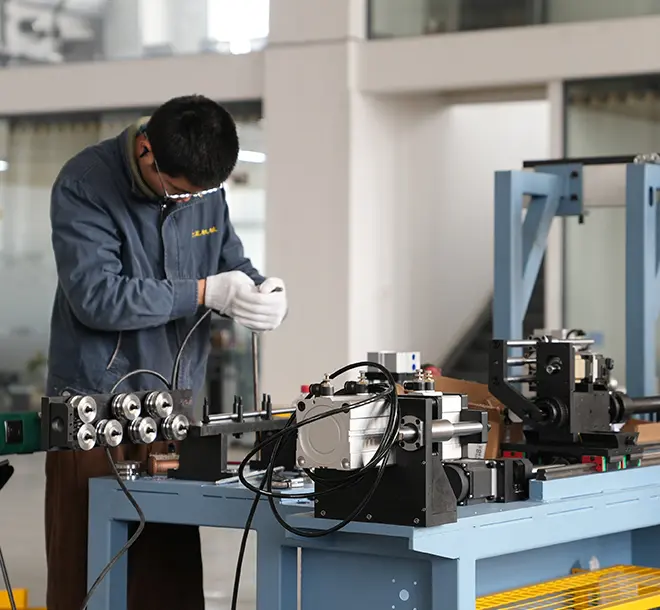
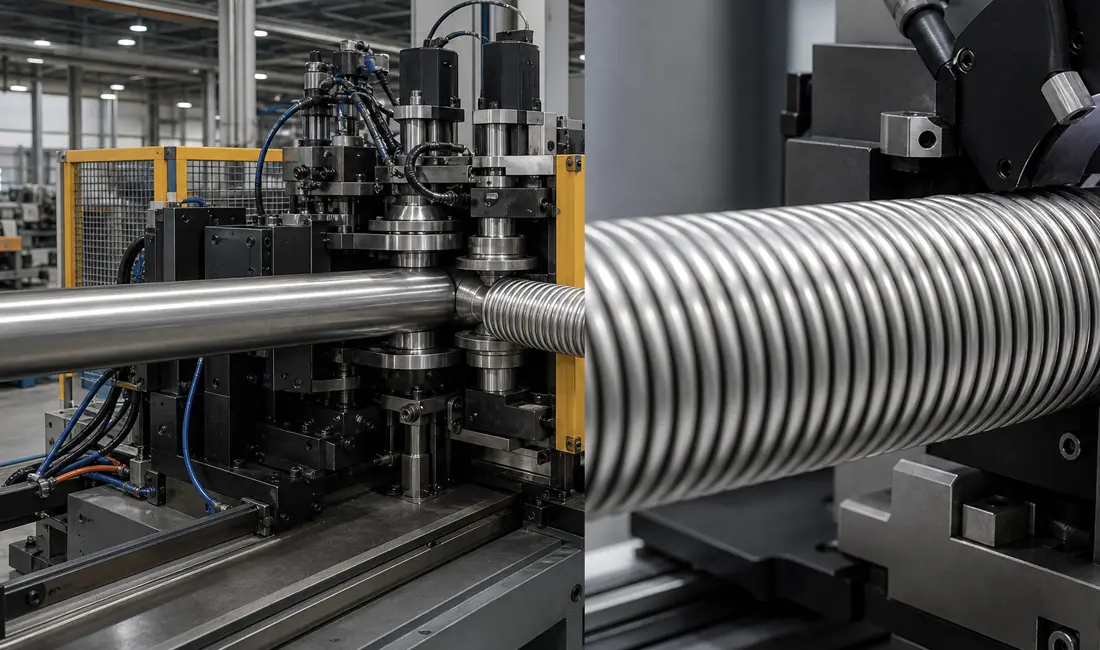
A post-tension duct has one job. It protects the steel tendon inside a concrete structure. It also keeps a clear path open for grout. A poorly formed duct fails at that job in a specific way. Its seams let concrete slip inside during the pour. The industry calls this problem bleeding. Bleeding can bond the tendon to the surrounding concrete before it is ever stressed. This cuts the prestressing force the structure depends on. This guide covers how post-tension duct forming works. It covers the quality standards that keep bleeding and other defects out. It also covers the equipment a manufacturer needs to meet those standards.
What Is Post-Tension Duct Forming and Why Does Duct Quality Matter?
Post-tension duct forming is a process that shapes steel strip or plastic sheet into a corrugated sheath. This sheath creates a protected void for a prestressing tendon inside concrete. The duct sits in the formwork before the pour. After the concrete cures, workers thread the tendon through the duct. They tension it, then pump grout into the remaining space. The duct’s job is to keep that path open and sealed through this whole sequence. A duct with weak seams or poor accuracy can fail in three ways. It can collapse under wet concrete. It can let grout leak out. It can block the tendon from sliding freely during stressing.
What Materials Are Used in Post-Tension Duct Forming?
Manufacturers most often form post-tension ducts from galvanized steel strip or corrugated plastic sheet. Galvanized steel is the traditional and most common material. It bonds well with grout. It also holds up under the stress of the concrete pour. Corrugated plastic ducts are usually made from HDPE or PP. They resist corrosion better than steel. They are common in tough environments such as marine structures, bridges exposed to deicing salt, and industrial sites. Some projects also use flat oval steel or plastic ducts. These fit tight structural sections where a round profile will not fit.
What Duct Shapes Are Used in Post-Tension Construction?
Round ducts are the standard shape along most of a tendon’s length. Their circular profile spreads pressure evenly from the surrounding concrete. Flat ducts are used at anchorage zones instead. Here the tendon fans out into multiple strands. It needs a wider, shallower shape to fit the anchor hardware. A single tendon run often uses round duct along its main span. It switches to flat duct only near the anchorage. This shape change usually happens through a separate flattening step, done after the round duct is formed.
How Does Post-Tension Duct Forming Work?
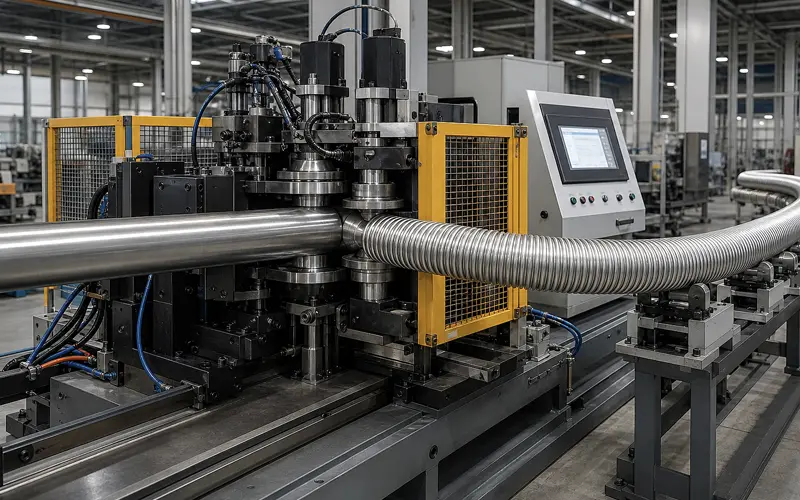
Post-tension duct forming turns flat steel strip into a corrugated tube. This happens through a sequence of rolling, shaping, and seaming steps. A typical production line feeds strip from a coil. It rolls the strip into a corrugated profile. Then it locks the edges together to form one continuous, leak-resistant duct.
How Is Steel Strip Formed Into a Spiral Corrugated Duct?
Spiral corrugated duct forming feeds a narrow steel strip through a series of rollers. These rollers press a wave pattern into the metal. The strip then winds into a helical tube. The strip unwinds from a coil and passes through corrugating rollers. It winds around a rotating former head at a fixed angle. This spiral winding builds the duct continuously. The machine can produce long lengths without stopping to add new sections. BOBO’s spiral corrugated posttension pipe machine uses this method. It produces both round and flat corrugated ducts for expressway, bridge, and airport post-tension projects.
How Are Duct Seams Interlocked to Prevent Grout Leakage?
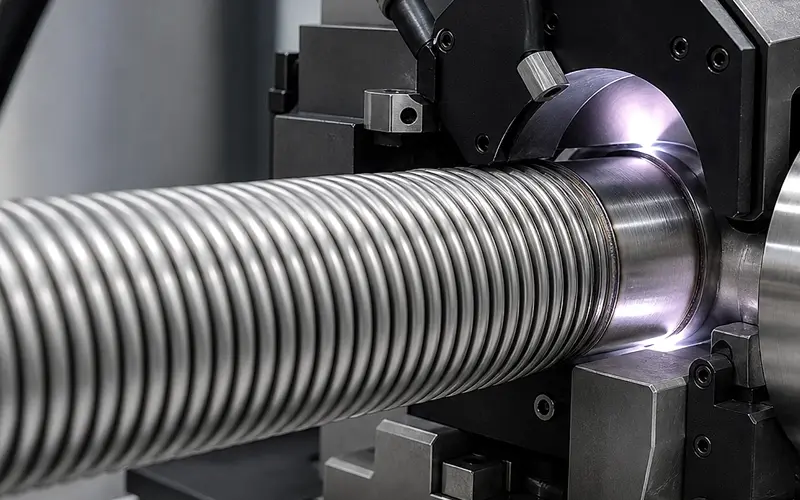
Duct seams interlock through a mechanical lock seam. This seam folds the edges of the corrugated strip together as the tube forms. As the strip winds into its spiral shape, the forming head folds one edge over the next. This creates a continuous seam that locks mechanically. It does not rely on adhesive or a separate weld. A properly locked seam holds tight against the pressure of wet concrete during the pour. A poorly locked seam is the most common cause of bleeding. Even a small gap lets cement paste seep into the duct and bond with the tendon.
How Are Round Ducts Flattened for Anchorage Zones?
Round ducts are flattened by feeding the finished corrugated pipe through a set of forming rollers. These rollers compress the round profile into a shallower, wider oval shape. The rollers adjust to set a specific finished height and width. Anchorage hardware at each project often calls for different flat-duct dimensions. This flattening step happens after the round duct is fully formed. It typically takes place close to the job site, since round duct is easier to transport on a coil than pre-flattened sections. BOBO’s posttension pipe flattening machine adjusts to produce flattened duct heights from 19mm to 40mm. It also covers widths from 40mm to 120mm, which matches the anchorage hardware used on most bridge and highway projects.
What Quality Standards Apply to Post-Tension Duct Forming?
Post-tension duct forming quality is judged by three things: dimensional tolerance, seam strength, and compliance with industry design standards. These checks catch the defects most likely to cause bleeding, tendon binding, or corrosion once the duct is cast into concrete.
What Diameter and Dimensional Tolerances Matter for Post-Tension Ducts?
Diameter and dimensional tolerances matter because a duct that is too big or too small causes real problems. An oversized or undersized duct can bind the tendon during stressing. It can also reduce the concrete cover needed for corrosion protection. Manufacturers check the duct’s outer diameter, wall thickness, and corrugation pitch against the project spec. They do this at set intervals during production. A duct that stays within tolerance keeps the gap around the tendon even along its full length. This matters for smooth tendon movement and even grout distribution.
How Is Duct Interlock Strength Tested?
Duct interlock strength is tested by applying load or pressure to a sample section. Testers check whether the seam holds without separating. One common check is a crush test. This presses the duct to confirm it holds its shape under the load of wet concrete. Another is a leak test. This pressurizes the duct with air or water to confirm the seam does not let fluid pass through. Manufacturers run these checks on production samples at regular intervals. They do not test every finished duct, since the tests are destructive or slow to run on a full production batch.
What Standards Govern Post-Tension Duct Quality?
The Post-Tensioning Institute (PTI) and fib, the International Federation for Structural Concrete, publish the main guidelines for post-tension duct design and quality. These standards set requirements for minimum wall thickness, corrosion protection, and duct performance under load. Project specifications usually reference one or both of these standards directly. Manufacturers producing duct for bridge, highway, or building projects need production processes that can prove compliance with the relevant guideline.
What Equipment Is Needed for Post-Tension Duct Forming?
Post-tension duct forming equipment needs to match the diameter range, duct shape, and production setting a manufacturer actually works in. Four factors decide which machine fits a given operation. These are diameter range, round versus flat capability, automation level, and whether the work happens in a plant or on a job site.
Match Duct Diameter Range to Project Requirements
Match a forming machine’s rated diameter range to the largest and smallest ducts a project needs. Running outside that range means investing in a second machine. BOBO’s spiral corrugated culvert pipe machine forms spiral corrugated pipe from 600mm up to 3600mm in diameter on a single line. Operators switch between diameters through the PLC touch screen. This avoids the cost of running separate machines for each size used across drainage culvert, foundation, and post-tension duct work.
Choose Round or Flat Duct Forming Capability
Choose equipment based on whether a project needs round duct, flat duct, or both. Most post-tension jobs need round duct for the main span and flat duct at anchorage zones. A dedicated flattening machine runs as a second step after round forming. This lets a single forming line supply both shapes without retooling the corrugating equipment itself. This two-step approach also lets the flattening step happen closer to the job site, since round duct travels easier than pre-flattened sections.
Evaluate Automation and Changeover Speed
Evaluate how much of the forming and diameter-change process a machine automates. Manual adjustments add downtime between production runs of different sizes. PLC-controlled machines let operators enter new diameter or profile settings from a touch screen. This replaces manually resetting the tooling by hand. Faster changeover matters most for manufacturers running mixed orders. A line often switches between several duct sizes or shapes within a single production week.
Consider On-Site or Plant-Based Production Needs
Consider whether a project needs duct formed at a fixed plant, on the construction site itself, or both. Large infrastructure projects often benefit from forming duct close to where it will be installed. On-site forming cuts transport costs. It also lowers the risk of damaging finished duct during shipping to remote bridge or highway sites. BOBO’s post-tension duct forming equipment works for both plant and site use. This gives contractors the flexibility to set up production wherever a project needs it most.
Frequently Asked Questions
Can the Same Machine Form Both Steel and Plastic Post-Tension Duct?
Steel and plastic post-tension duct generally need separate forming processes. Steel strip is corrugated and locked through metal rollers. Plastic duct is typically extruded or corrugated using different tooling suited to thermoplastic material. A manufacturer producing both duct types usually runs two dedicated lines instead of converting one machine between materials.
How Does Strip Thickness Affect Post-Tension Duct Forming?
Strip thickness affects both the forming process and the finished duct’s strength. Thicker strip resists crushing better. But it needs more forming force and slower feed speeds to shape without cracking. Thinner strip forms faster and costs less per length. It can also be more prone to collapsing under wet concrete. This happens if the wall falls below the project’s minimum thickness requirement.
Does Post-Tension Duct Forming Require On-Site Quality Inspection?
Most post-tension projects require some on-site inspection before the concrete pour. This holds true even when the duct was quality-tested at the manufacturing stage. Inspectors typically check for visible damage from transport or installation. They confirm the duct is properly supported and aligned within the formwork. They also verify that seams and connections between duct sections are sealed before concrete placement begins.
Conclusion
Post-tension duct forming turns steel strip or plastic sheet into a corrugated sheath. This sheath protects a prestressing tendon and keeps a clear path for grout. The forming process runs from spiral winding to seam interlocking to flattening for anchorage zones. Each step decides whether the finished duct holds up under wet concrete without bleeding or binding the tendon. Matching equipment to the right diameter range, duct shape, automation level, and production setting keeps a manufacturer able to meet PTI and fib quality standards on every run. BOBO Machine builds spiral corrugated duct forming and flattening equipment for post-tension, culvert, and drainage applications. Contact BOBO Machine to match the right duct forming equipment to a production line.