High-Pressure vs Low-Pressure Polyurethane Foaming Machines: Mixing, Cleaning, and Production Differences
Jump to section
PU foaming machines come in two pressure classes: high-pressure and low-pressure. The pressure class sets three things. First, how the machine mixes the two chemical parts. Second, how it cleans the mixing head between shots. Third, how precisely it controls each cycle. These three differences affect foam quality, cycle time, solvent use, and long-term cost per part. Two machines may look similar on the outside, but their working principles lead to very different results on the production floor. This guide breaks down those differences. It helps manufacturers pick the right machine for their product and output target.
High-pressure and low-pressure PU foaming machines are two classes of equipment that meter, mix, and dispense polyol and isocyanate to produce PU foam. Both handle the same two-part chemistry. Both produce rigid, semi-rigid, or flexible foam depending on the formula. The difference lies in how they mix, how they clean, and what level of control they provide.
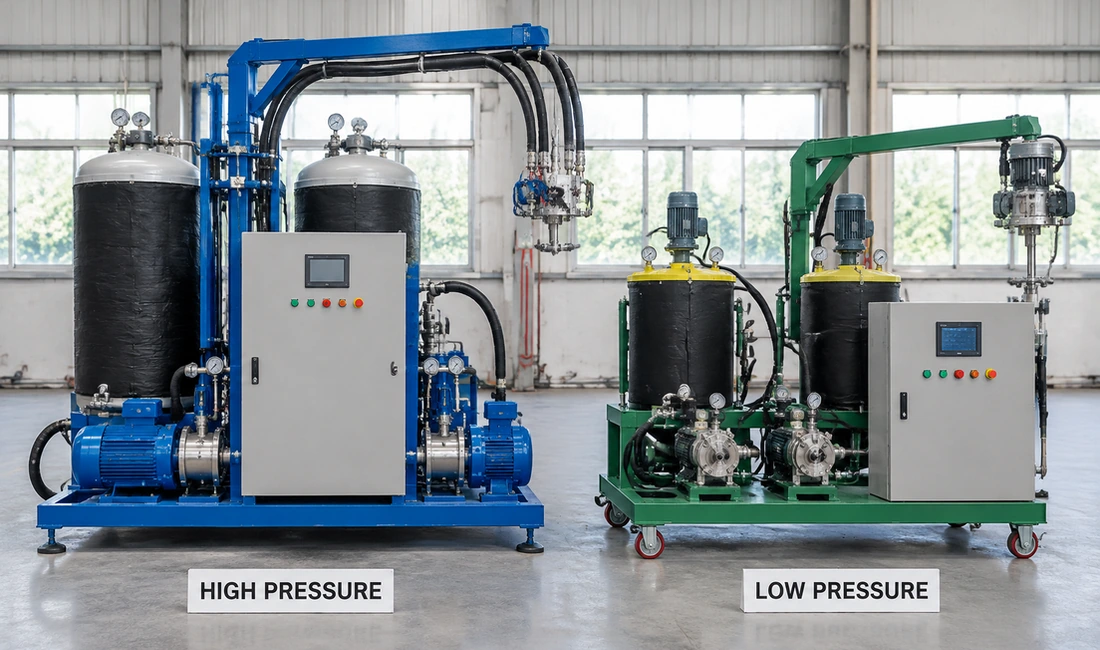
A high-pressure PU foaming machine is a dispensing system that mixes polyol and isocyanate through impingement. It forces both liquids into a small chamber at 10 to 20 MPa. The two streams collide at high speed inside a space just a few millimeters wide. The collision breaks both liquids into fine droplets and blends them in a fraction of a second. After each shot, a hydraulic piston pushes remaining material out of the chamber. No solvent is needed. This self-cleaning action is one of the defining features of high-pressure machines. Many units also include dual-zone heating to hold both polyol and isocyanate at the right temperature throughout the shift. Steady temperature keeps viscosity stable, which keeps the mixing ratio accurate.
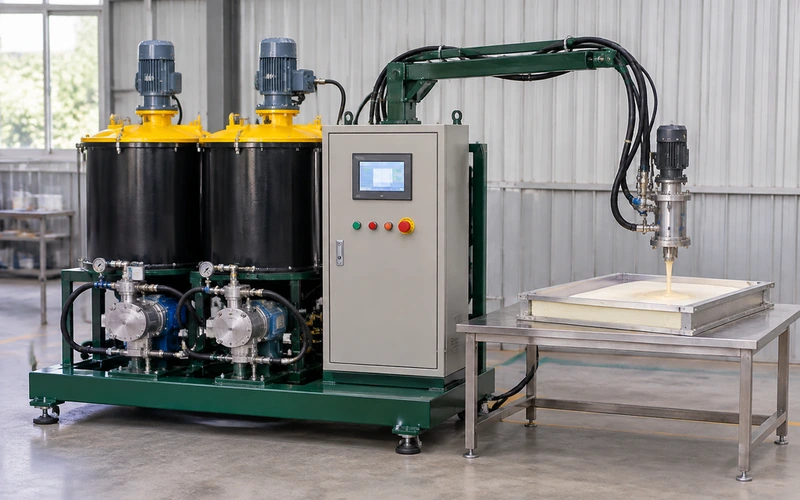
A low-pressure PU foaming machine is a dispensing system that mixes polyol and isocyanate using a mechanical stirrer inside a mixing chamber. The stirrer spins at high speed and blends the two liquids together by physical contact. Mixing quality depends on stirrer speed, blade design, and mixing time. The simpler design also means fewer high-cost parts. Replacing a worn stirrer blade costs far less than servicing a high-pressure pump or nozzle assembly. After each shot, the chamber must be flushed with a solvent to stop foam from curing inside. This flush step adds time to each cycle and creates chemical waste.
High-pressure and low-pressure PU foaming machines differ in three areas that affect daily output. These are the mixing method, the cleaning method, and the control system. The following sections cover each one.
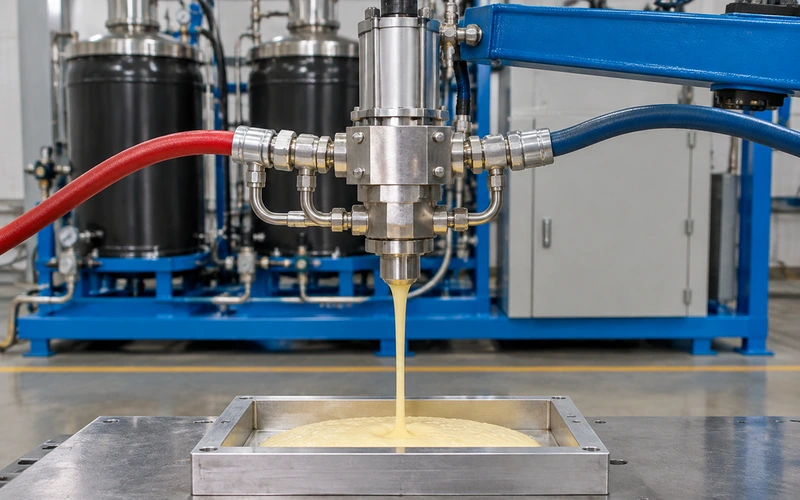
High-pressure machines mix by collision. The two chemical streams enter the chamber from opposite sides at high speed and smash into each other. This produces a very uniform blend in milliseconds. The foam that forms from this blend has consistent density across the entire mold cavity. In products like fridge cabinets, where the foam must be the same thickness and density in every corner, this level of mixing matters. Because the mixing happens through fluid energy rather than moving parts, there are no stirrer blades to wear out. The mixing head lasts longer and needs less upkeep.
Low-pressure machines mix by stirring. A motor-driven blade spins inside the chamber and folds the two liquids together. This works well for many products. But uniformity depends on how long the parts stay in the chamber and how fast the blade turns. Products that need tight density control get better results from impingement mixing. Fridge insulation and sandwich panel cores are common examples where shot-to-shot consistency matters most.
High-pressure machines clean themselves after every shot. A hydraulic piston pushes through the mixing chamber and forces out all remaining material. No solvent touches the chamber. This means zero chemical waste from cleaning, zero VOC emissions, and zero downtime for a flush cycle. For a high-pressure PU foam injection machine running hundreds of shots per shift, the time saved adds up to a clear gain in daily output.
Low-pressure machines need a solvent flush after every shot. The solvent dissolves any foam that starts to cure inside the chamber. This flush takes a few seconds per cycle. That sounds small, but across a full shift of hundreds of cycles, the total time adds up. A line running 300 shots per day loses real production time to flushing alone. The solvent itself is a running cost. Used solvent is chemical waste that needs proper disposal. In regions with strict VOC rules, the fumes from flushing may also need added ventilation or permits.
High-pressure machines typically use PLC-based control with a touch screen. Operators can set injection time down to 0.01 seconds. They can adjust mixing ratio across a wide range, often from 1:5 to 5:1. They can set pressure and store multiple recipes for different products. Switching from a dense structural foam to a standard fill takes a setting change, not a hardware swap. Repeat injection accuracy on a well-built system can reach ±1%. Every mold fill matches the last. In practice, that means fewer rejected parts, less foam wasted on over-fills, and more consistent product weight across a full production run.
Low-pressure machines usually rely on simpler electrical controls. The parameter range is narrower. Switching between formulas may need manual adjustment rather than a stored recipe. This is fine for manufacturers running one product type on one line. But for lines that handle several foam densities in the same shift, the narrow control range can slow down changeovers.
Manufacturers should choose based on three factors: daily volume, the balance between upfront cost and running cost, and the foam quality their product demands.
Start with volume. High-pressure machines are built for continuous, high-volume work. Self-cleaning heads, fast cycles, and PLC recipe storage all support a high daily shot count. Manufacturers filling hundreds or thousands of molds per day — fridge cabinets, freezer doors, insulation panels — get the most from this setup. The self-cleaning cycle alone can save enough time per shift to add dozens of extra shots. That translates directly into more finished units per day.
Low-pressure machines suit lower-volume or stop-and-start production. The equipment costs less. The learning curve is shorter. The setup works well for small batches or varied schedules. For prototype runs, sample work, or manufacturers just entering the PU foam market, a low-pressure machine is often the practical starting point.
High-pressure machines cost more to buy. But they cost less to run. There is no solvent to purchase. There is no chemical waste to dispose of. The higher output spreads fixed costs across more parts. For manufacturers running at scale — such as fridge or cold-room panel producers — the lower per-part cost usually pays back the higher initial spend.
Low-pressure machines cost less to buy. But running costs are higher. Solvent, waste disposal, and slower cycle time all add to the per-part cost. For low-volume operations, this trade-off still makes sense. The total solvent spend stays small and the capital saved matters more at that stage.
The product itself often settles the choice. Applications that demand tight density control and consistent cell structure favor high-pressure machines. Common examples include fridge and freezer insulation filling, sandwich panels, cold-room panels, and water heater shells. The mixing precision of a high-pressure system directly cuts reject rates in these products.
Applications where density tolerance is wider or batch sizes are smaller work well on low-pressure machines. Examples include small custom-molded parts, gap-fill insulation, and trial production. The flexibility and lower entry cost outweigh the higher per-part running cost at these volumes. Manufacturers evaluating which foam insulation application fits their line can use these three factors to narrow the decision before requesting quotes.
Can a manufacturer start with a low-pressure machine and move to high-pressure later?
Yes. The two types are separate systems, not modular upgrades. A low-pressure machine cannot be converted into a high-pressure one. But many manufacturers start on low-pressure to learn the PU process and build order volume. Once volume justifies the cost, they add a high-pressure line for the main production. The PU process knowledge gained on the low-pressure system carries over directly. Material handling, mold prep, and foam behavior are the same on both types. Some manufacturers run both side by side. They use high-pressure for volume products and low-pressure for short runs or specialty parts.
What foam formulas or fillers work better with low-pressure machines?
Low-pressure machines handle a wider range of raw material viscosities. They can also process formulas with abrasive fillers or solid particles. Common examples include glass fibers, calcium carbonate, and mineral powders. High-pressure nozzles have very small openings. Thick polyols or filled formulas can clog or wear those nozzles faster. If the plan calls for filled or thick systems, check that the material can pass through the head without blockage. Low-pressure stirring systems are generally more tolerant of these materials.
The decision comes down to a short chain. The target product sets the foam quality bar. Daily volume sets the cycle speed. The cost structure sets whether a higher upfront spend or a lower entry point fits better. Working through these three steps gives a clear equipment spec.
PU foam injection systems work best when metering, mixing, and dispensing are matched to the same foam type and output target. BOBO Machine builds both high-pressure and low-pressure lines for insulation, refrigeration, and panel production. Each part of the line supports the next.
For manufacturers ready to define the right setup, sharing the target product type, foam system, and daily output is the fastest starting point. That information leads directly to a matched equipment plan.