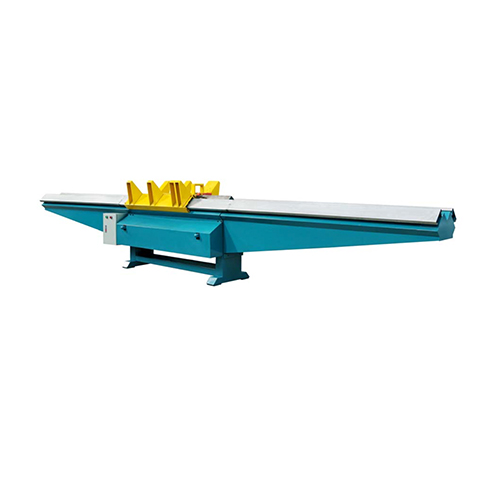
Duct Zipper
One-step duct seaming — replaces three traditional operations in a single pass.
View machineRECTANGULAR DUCT FABRICATION
Prepare the sheet, form the duct and finish the connections.
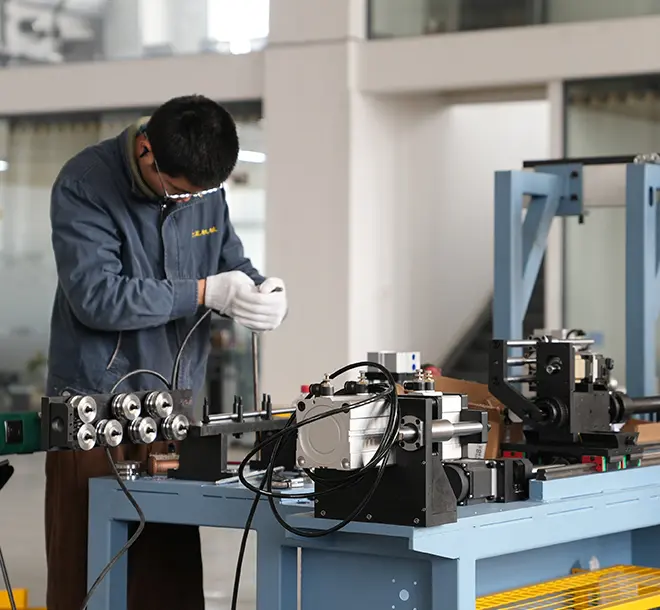
BOBO supplies coil-fed duct lines and individual machines for sheet folding, Pittsburgh lock forming, seam closing and TDF flange production. The range also includes corner-making and assembly equipment, S-cleat forming, sheet beading, plasma cutting and flexible duct connector production.
Coil-fed lines and individual duct stations
Pittsburgh seams, TDF flanges and S-cleats
Corner and flexible connector production
Rectangular Duct Machine
Duct seam-closing machine
DEFINE YOUR DUCT CONNECTIONS
Duct dimensions, sheet gauge and joint profile.
FIND YOUR MACHINE
For straight duct production, compare the preparation, edge-forming and folding stations included in each auto-line. For a specific workshop operation, look at the individual folder, beader, lock former, seam closer or corner assembler. C/S connection equipment and flexible connector lines serve separate joining-component tasks.
One-step duct seaming — replaces three traditional operations in a single pass.
View machine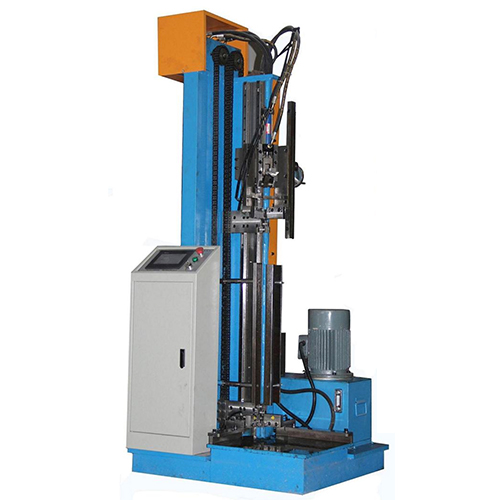
Lock TDF duct seams fast — in-plant or on-site, vertical or horizontal.
View machine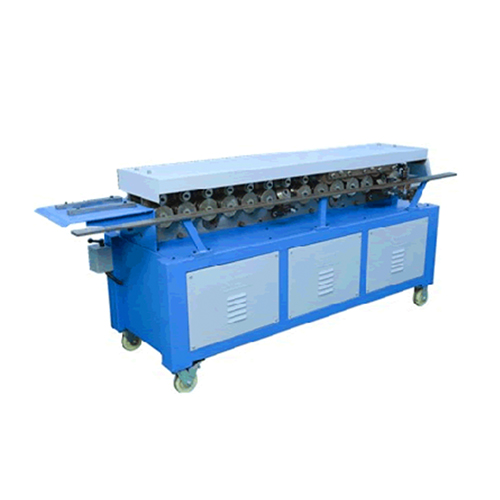
Form precise TDF flanges on sheet metal up to 1.5 mm in a single pass.
View machine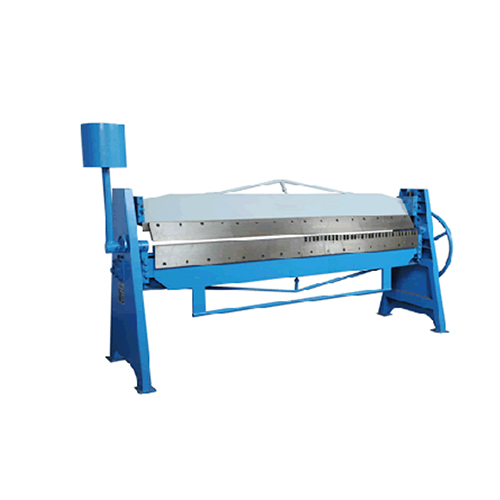
Precision box and pan folding for rectangular duct and sheet metal fabrication.
View machine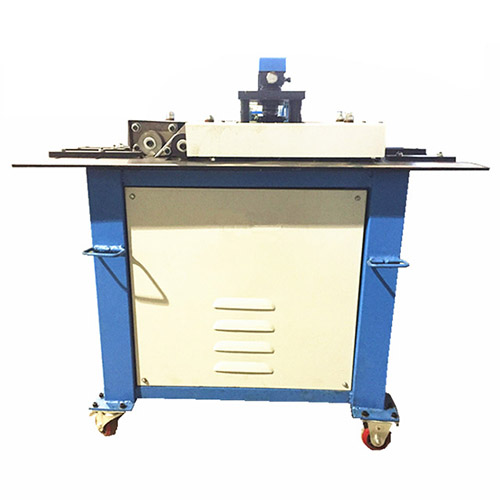
Reliable Pittsburgh lock forming for fast, consistent rectangular duct assembly.
View machine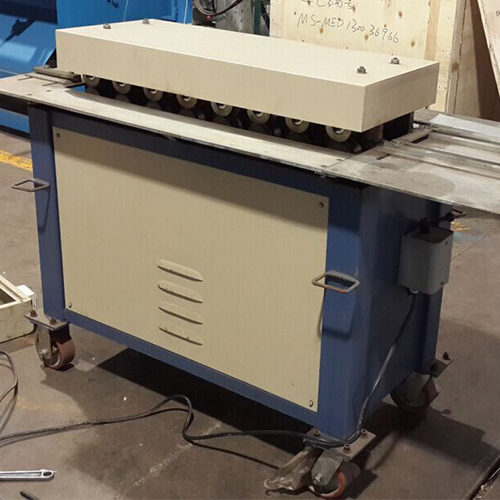
Reliable Pittsburgh lock forming for fast, airtight rectangular duct assembly.
View machine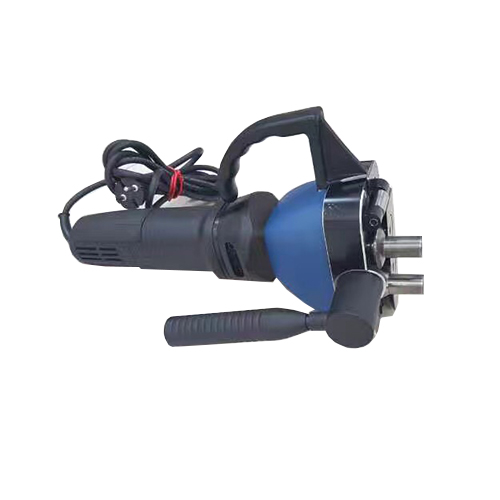
Close Pittsburgh seams in a single pass with a 500W portable electric tool.
View machine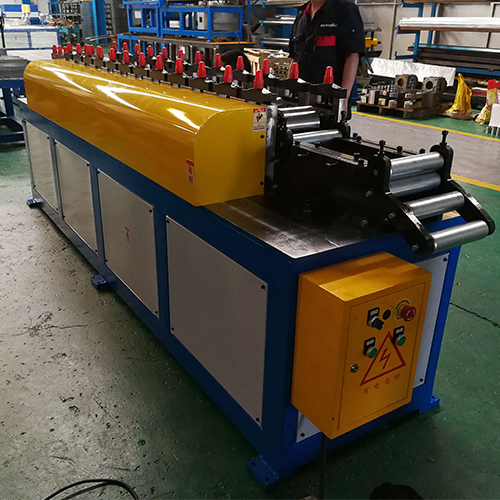
Reliable S cleat roll forming for consistent HVAC duct seaming at production speed.
View machine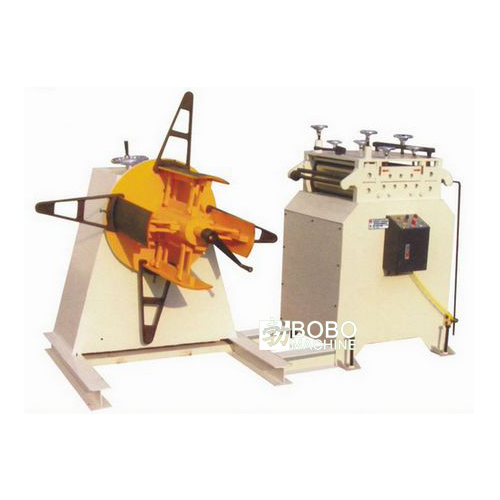
Automated TDF corner punching from coil at 45 pieces per minute.
View machineWorking ranges are model-specific. Confirm material, product dimensions and the required operation against the selected machine.
PARTS & APPLICATIONS
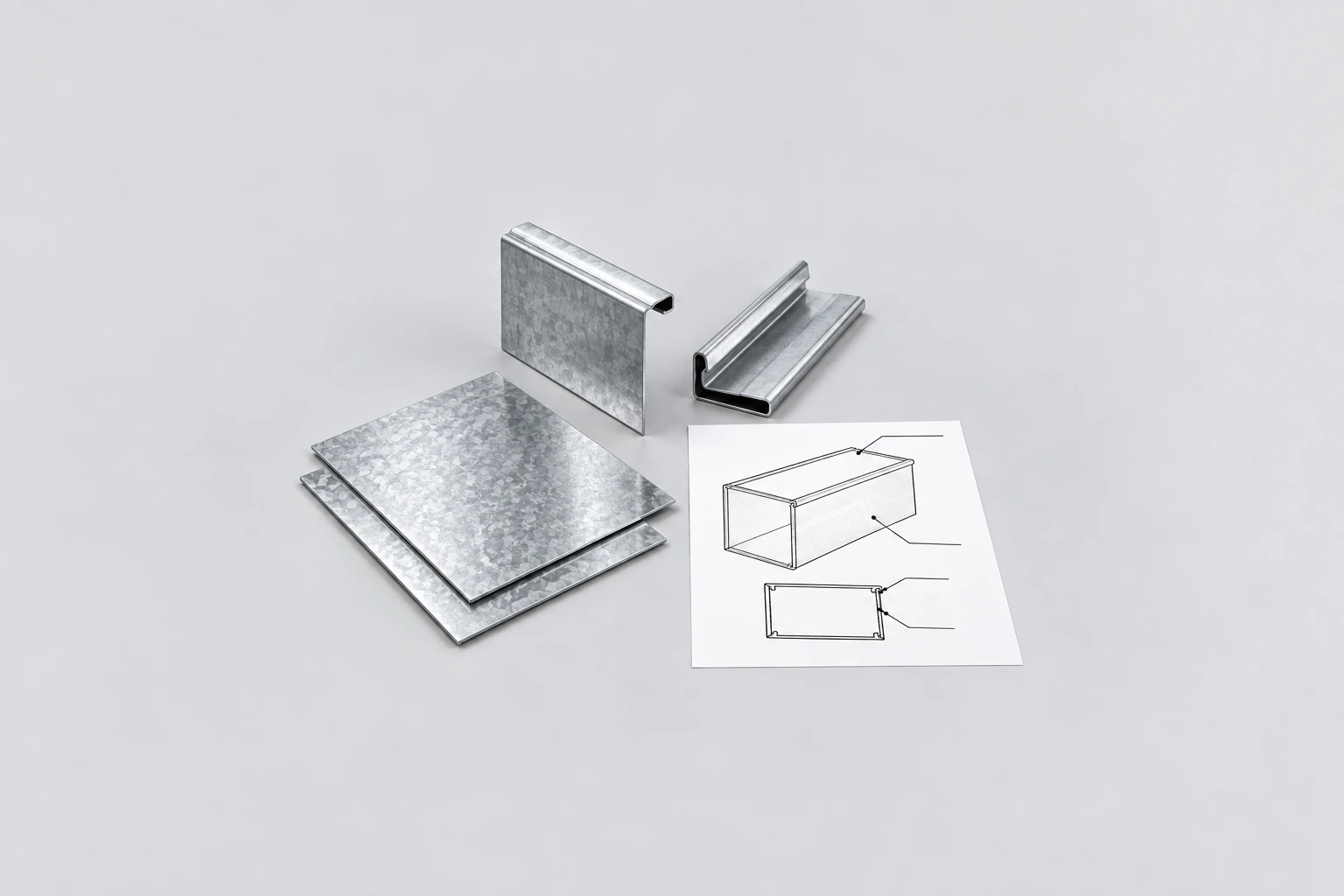
A rectangular duct needs both a longitudinal seam and an end connection. These examples show formed duct edges, connector profiles and corner parts, plus the fabric-and-metal strip used for flexible duct connections.
01
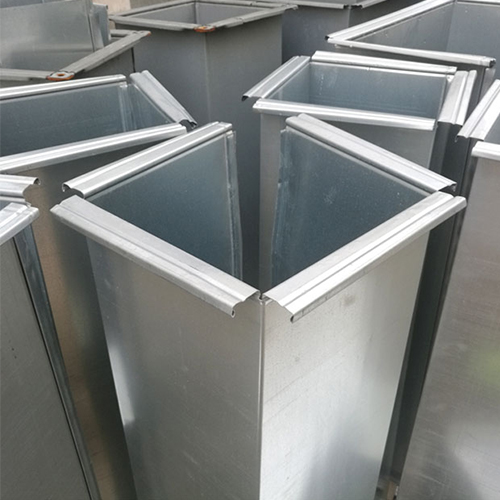
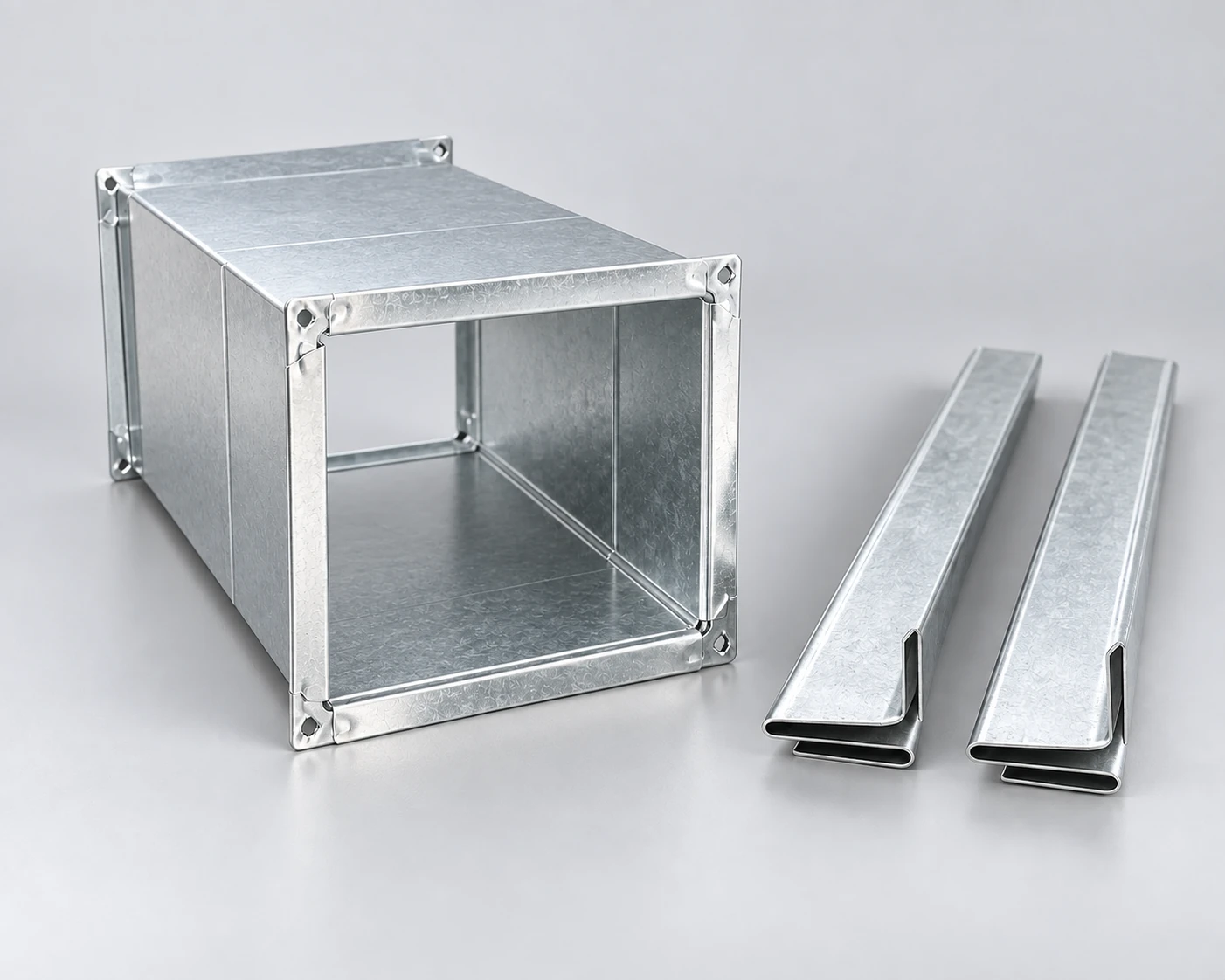
The sample duct sections show TDF profiles along their end edges. Sheet preparation, folding and seam closing form the duct body; flange forming provides the profile used for the end connection.
02
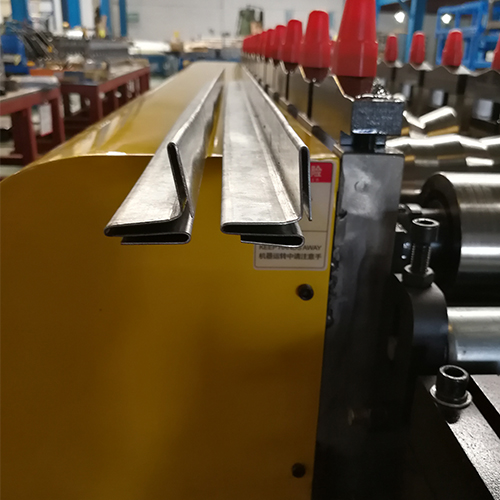
These formed metal profiles are used in duct connections. Match the profile section and sheet gauge to the specified joint, then select the roll-forming setup for that connector.
03
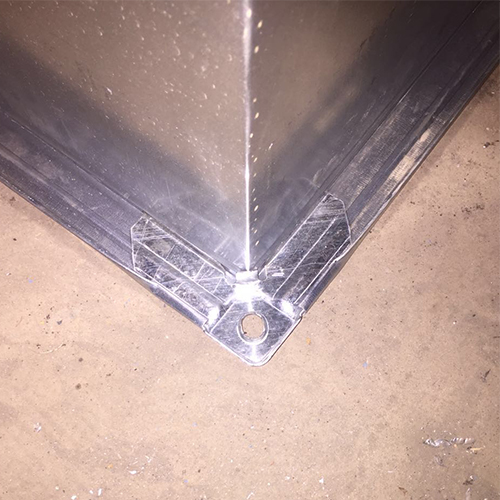
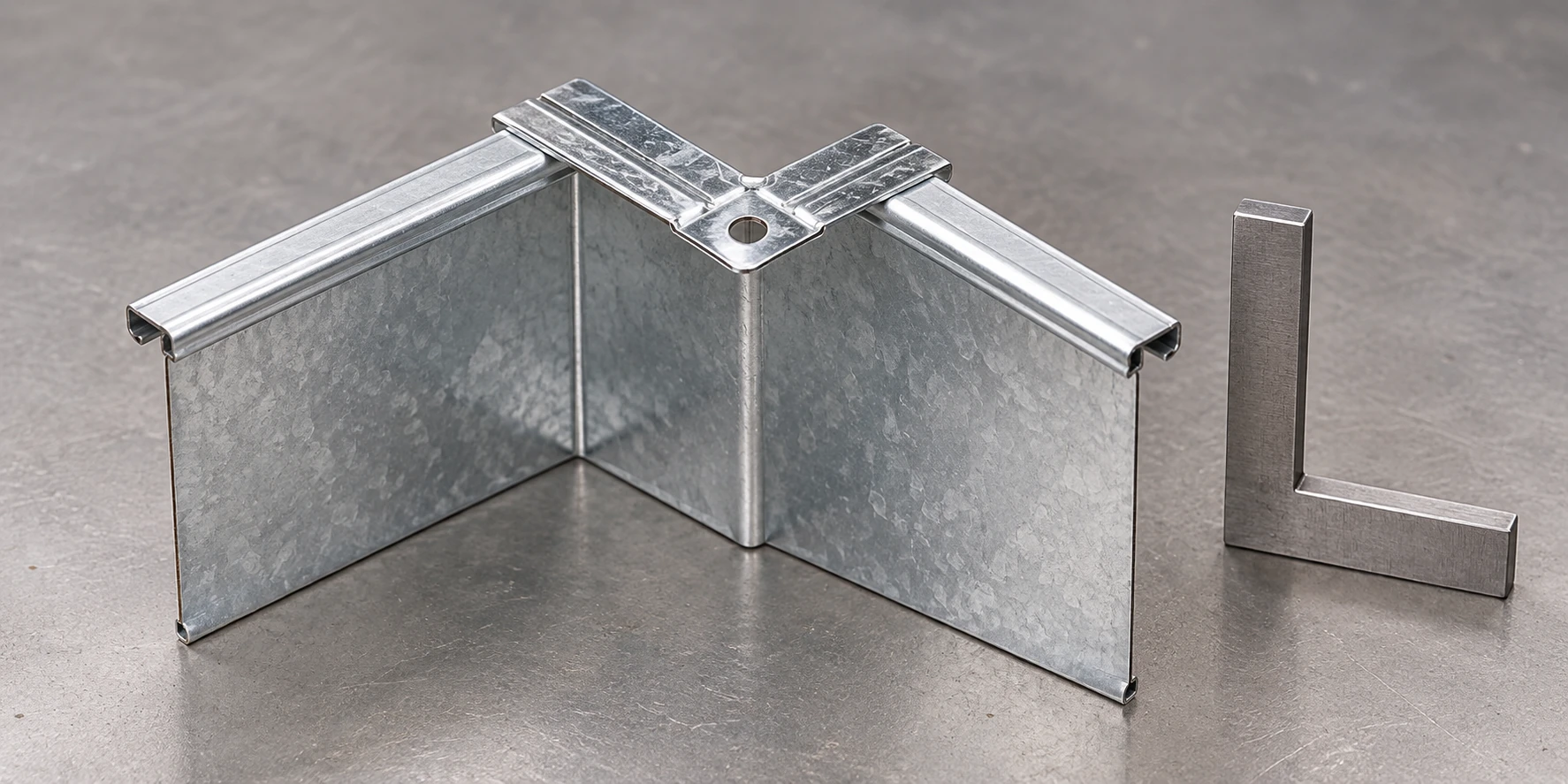
The fitted corner piece joins the flange edges at a duct corner. Corner-part production and corner installation use different machines, so the equipment choice depends on which task your workshop carries out.
04
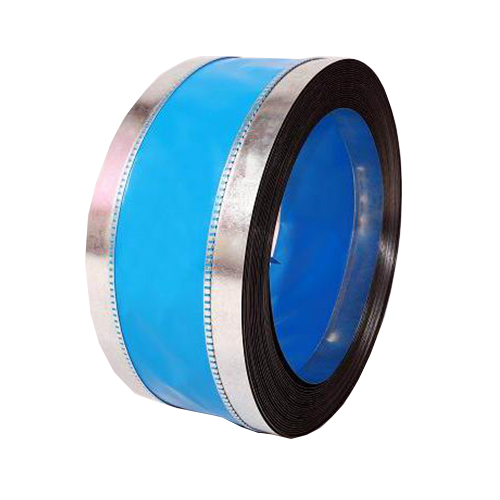
Fabric between two metal edges provides the flexible section of this connector strip. The production route includes a separate punching line and a roll-forming line that mechanically joins the fabric and strips.
SELECTION GUIDE
The duct cross-section does not tell the whole story. The longitudinal seam, end connection and sheet gauge determine which profiles must be formed and how the section will be assembled. Your mix of straight sections and fittings then determines the balance between coil-fed equipment and individual sheet-processing machines.
01
Distinguish the longitudinal seam from the joint between duct sections. A Pittsburgh edge, TDF flange and S-cleat require different profiles and assembly work. Use the connection drawings to establish which forming and finishing stations are needed.
02
Check material, gauge and working width together. Coil-fed preparation, individual sheet folding and connector-strip forming have different input requirements. Select each station for the material it will actually process, including any heavier corner stock.
03
List the included stations and the work that remains between them. Plan coil loading, panel transfers, seam closing and corner installation around the workshop layout. Compare output using the complete route and the expected mix of duct sizes.
Allow for the work after forming: moving the duct, closing its seam and installing corner parts can become separate handling and assembly steps. Include these steps when comparing finished output from alternative layouts.
YOUR FINISHED PART
Include the material, dimensions and acceptance requirements.
From technical review and testing to delivery and after-sales.
Work with BOBO on the station list, material flow and connection profiles for your duct range. Plan trials around representative sheet gauges and joint details, checking prepared edges, folded dimensions and assembly fit. Agree the supplied tooling, machine setup, training and after-sales arrangements as part of the project.
Connection profile and station-list review
Coil handling, transfer space and workshop layout
Trial parts and joint-fit inspection
Setup, operator training and spare-parts support
BEFORE YOU CHOOSE
Separate sheet preparation, profile forming and final assembly when comparing machine descriptions.
Auto-line II includes leveling, beading, notching and shearing. Auto-line IV combines sheet preparation with Pittsburgh lock forming and TDF flange making. Auto-line V includes Pittsburgh lock forming and hydraulic folding. Compare the proposed station list with the output you need at the end of the line; a line name alone does not establish that seam closing or corner assembly is included.
A lock former makes the mating edge profile. A seam locker closes a prepared joint after the duct edges have been brought together. The portable locker closes straight or curved Pittsburgh seams; the separate vertical and horizontal duct zipper models close seams on TDF duct assemblies. Match the closer to the prepared seam and the size of duct it must handle.
These are separate operations. The TDF former shapes the flange along the sheet edge. The corner punching line forms and blanks the corner parts, while the corner assembling machine installs them in a prepared duct flange. Specify whether you will buy corner parts or manufacture them when planning the equipment.
A coil-fed line groups repetitive preparation and forming operations for straight duct work. A shop that also makes varied fittings may need separate sheet cutting, folding and finishing equipment. Choose the combination around your product mix and existing machines, then include loading, transfers and assembly in the output calculation.
It produces a flexible connection strip with fabric between two metal edges. The BOBO system uses two separate lines for punching and roll forming; the roll-forming operation closes the seams that join the fabric to the metal strips. This is connector-strip production, with its own strip widths, fabric feed and tooling requirements.
START WITH A DRAWING OR SAMPLE
Include duct width, height and section length; sheet material and gauge range; and drawings of the longitudinal seam and end connection. Add the mix of straight sections and fittings, batch sizes and required finished output so BOBO can review the machine combination.
Also note whether you start from coils or cut sheets, which machines you already use and the available workshop space. For connector-strip production, include the two metal-strip widths, thickness and fabric specification.
Rectangular Duct Machine / BOBO MACHINE