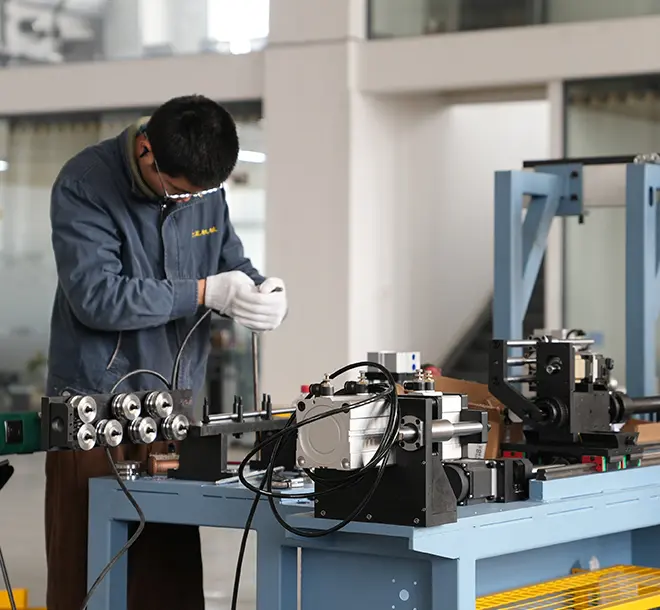
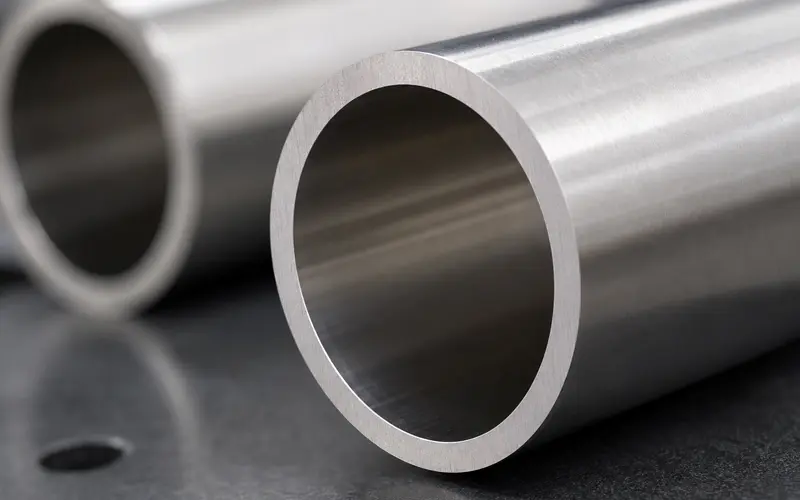
A tube with a rough, curled edge is not always a problem. In many shops, a worker deburrs it by hand and moves on. But in some applications, a burr is not a cosmetic flaw. It can cause a braze joint to leak or a sealed refrigeration circuit to fail.
The real question is not whether orbital cutting makes a cleaner cut. It almost always does. The real question is whether that cleaner cut changes the outcome of the job.
This article breaks down what orbital tube cutting does. It also covers how the process differs from a bandsaw, and how to tell if the extra precision is worth the extra cost.
What Is Orbital Tube Cutting?
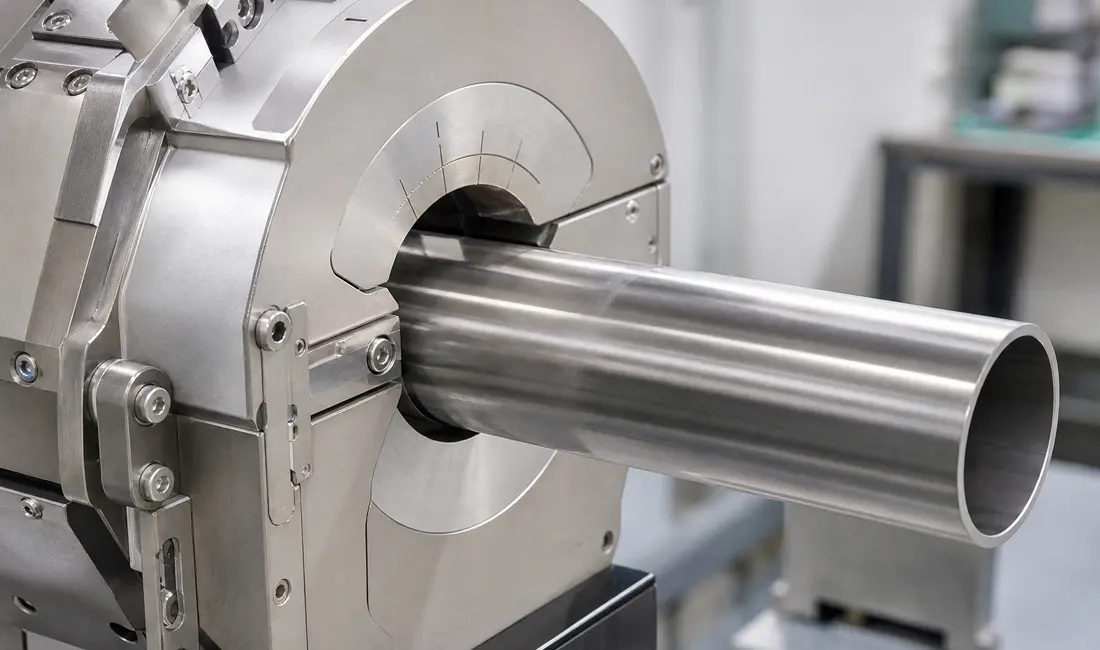
Orbital tube cutting is a chipless process that moves a rotating blade head around a tube held still in a clamp. It does not push the tube through a fixed blade. The tube stays still. The cutting head travels a full circle around it. That is where the name comes from. Equipment makers also call this same process chipless or rotary cutting.
How the Rotating Cutting Head Works
The cutting head clamps the tube with a self-centering, three-part die. The die is built like a lathe chuck. A small blade then advances in gradual steps as it rotates 360 degrees around the tube wall. Each pass removes a thin layer of material. It does not tear through the full wall at once. This keeps cutting force low and even. The tube does not go oval or flex the way it can under a saw blade pushed straight through. The result is a round, chip-free cut. There is almost no burr and no loose metal left inside the tube. The three-point die also makes it faster to switch tube sizes on high-mix lines. It supports the tube from three points instead of the usual two.
Tube Materials and Diameter Range It Covers
Machines in this class usually handle copper, aluminum, and Bundy tube from about 4mm to 20mm in outside diameter. Bundy tube is a thin, double-wall steel tube common in refrigeration and automotive lines. That range covers most tube sizes used in HVAC, refrigeration, and automotive thermal systems. Thin-wall tube shows the biggest advantage, since thin copper and aluminum walls deform easily under a saw blade. This step is also common before tube end forming. A clean, round starting edge makes it easier to hold tolerance through that next step.
What Causes Burrs in Traditional Tube Cutting?
A burr is a raised, rough edge of metal that forms along the cut line when a blade tears the material instead of shearing it cleanly. It shows up as a thin ridge, a curl, or loose metal at the tube opening. It usually needs a separate deburring step before the tube can move forward.
Bandsaw and Abrasive Cut-Off Cutting
A bandsaw or abrasive cut-off saw pushes a blade straight through the tube wall in one motion. This is still a common way to cut tube, including copper tube on lower-volume lines. It is fast and cheap. It works fine for many general fabrication jobs, such as brackets, mounting frames, and non-pressurized housings. Machine cost is low. Blades are cheap to replace. Operators need little training to run one well. But the blade tears through the material instead of shearing it in controlled steps. That is where burrs and rough edges come from.
Why Friction and Vibration Leave Burrs and Heat-Affected Zones
Friction and vibration cause burrs because the blade generates heat and stress as it cuts. Thin or soft tube walls flex under that pressure instead of separating cleanly. That heat can also leave a heat-affected zone: a narrow band of metal near the cut edge where hardness or grain structure changes. On copper and aluminum tubes, this same pressure can also mark or work-harden the surface right at the cut edge. That matters once the tube moves on to expansion or fin assembly. Loose chips are a separate concern. On a sealed refrigeration line, a stray chip left inside the tube can travel downstream and damage a compressor.
How Does Orbital Cutting Differ From Traditional Cutting?
Orbital cutting differs from traditional cutting mainly in how much control it gives over the cut edge, not just in speed. Both processes do the same basic job: they separate a tube. But they land in very different places on edge quality, roundness, and cost.
Edge Quality and Burr Formation
Orbital cutting leaves a smooth, chip-free edge because the gradual, rotating motion shears the material instead of tearing it. A bandsaw or abrasive saw is more likely to leave a rough or curled edge that needs grinding afterward. For tube headed into heat exchanger assembly, skipping that grinding step removes an entire station from the line.
Roundness, Concentricity, and Cut-End Tolerance
Roundness and concentricity describe how well the cut end keeps the tube’s original circular shape. Orbital cutting on a three-part clamping die usually holds a cutting tolerance around ±0.5mm per meter of tube. A bandsaw, or a poorly supported cut-off tool, can push the tube slightly out of round at the cut point. That becomes a problem when the next step is a tight-tolerance braze joint or a flare fitting, a cone-shaped mechanical joint common on refrigeration lines. An uneven or oval tube end makes it harder to get a consistent seal.
Heat-Affected Zone and Tube Deformation
Heat-affected zone and deformation are both lower with orbital cutting. The process removes material gradually instead of forcing a blade through in one pass. The tube stays cool. The clamping die supports the wall evenly. Thin-wall copper and aluminum tube keeps its round shape instead of going slightly oval under blade pressure. That matters directly for tube-to-fin contact on evaporator and condenser assemblies.
Cycle Time and Cost Per Cut
Cycle time favors orbital cutting on tube that would otherwise need a separate deburring pass. But the machine itself costs more upfront than a bandsaw. A single orbital cut on small-diameter copper or aluminum tube can take just seconds. Production lines built for high volume can sustain around ten cuts a minute on one-meter lengths. Still, the real comparison is not cut speed alone. It is total time per finished, ready-to-braze end, including any cleanup after the cut. A bandsaw cut might finish faster on paper. But once a worker adds a deburring pass and a visual check, the two methods often land close together on total labor time. Blade wear tells a similar story. A chipless cutting blade removes material gradually instead of under constant load. Tooling cost per cut tends to stay more predictable across a long run.
What Determines Whether Burr-Free Cutting Is Necessary?
Whether burr-free cutting matters depends less on the tube itself and more on what happens to it next. Three factors decide this in most shops: the joining method, how sensitive the application is to loose particles, and the tube’s wall thickness.
Downstream Joining Method
The downstream joining method is often the deciding factor. Brazing and flare fittings both need a clean, round, burr-free tube end to seal properly and hold pressure over time. Tube ends might instead be joined with a compression fitting, a bolted flange, or a threaded connector on a low-pressure line. In that case, a bandsaw cut with a quick deburr is usually enough. The fitting itself makes up for minor edge flaws.
Application and Contamination Sensitivity
Application and contamination sensitivity push many shops toward chipless orbital cutting on sealed systems. This matters most on refrigeration and air-conditioning circuits. A loose metal chip or burr left inside the tube can travel through the circuit and damage a compressor. Open-air ductwork, structural framing, and other non-sealed assemblies rarely carry this risk. Traditional cutting stays the more practical choice there.
Wall Thickness and Tube Material
Wall thickness and tube material matter, because thin-wall tube deforms more easily under a saw blade. Soft materials like copper and aluminum also burr more readily than a thicker steel Bundy tube. A 6mm aluminum tube for an evaporator coil is a very different case from a 12mm steel Bundy tube cut for a brake line. Both start as round stock on a similar cutting line, but they carry different risks. As a rule of thumb: the thinner the wall relative to the tube diameter, the more a shop has to lose from uneven cutting pressure.
When Should a Shop Choose Orbital Cutting Over Traditional Methods?
A shop should choose orbital cutting when the cut edge itself affects the product’s performance, not just when it needs to look clean.
When Orbital Cutting Is Worth the Investment
Orbital cutting is worth the investment when tube ends feed directly into brazing or a flare fitting on a sealed circuit. It also pays off when loose chips would put a part like a compressor at risk. The same is true when thin-wall copper or aluminum tube would deform under a saw blade. This covers most evaporator and condenser production, and automotive thermal management lines such as heater cores, radiator tubes, and AC condenser lines. It also covers automotive brake or fuel line Bundy tube, where a leak-free joint is the whole point of the part. High-volume lines add one more reason to invest. Once a shop runs long coil-fed batches, consistent edge quality lowers the odds that one bad cut disrupts an automated brazing sequence.
When Traditional Cutting Plus Deburring Is Sufficient
Traditional cutting plus a quick deburring step is enough for many jobs. This includes tube ends going to mechanical fittings, general structural use, or standard fabrication, where a small burr does not affect fit or function. For general-purpose tube processing, including routine tube bending work on thicker-wall stock, a bandsaw and a deburring tool remain the more cost-effective combination. Spending on chipless cutting equipment for parts that will be bolted or clamped rarely pays back in a reasonable time. The fitting already tolerates the minor edge variation a bandsaw leaves behind.
Conclusion
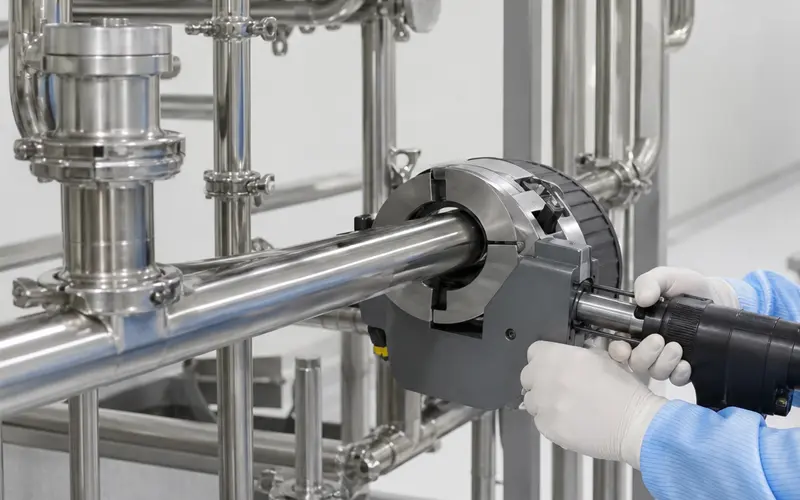
Burr-free cutting is not a universal upgrade. It is a targeted solution for jobs where edge quality directly affects seal integrity, contamination risk, or dimensional tolerance. The clearest way to decide is to trace the tube forward. The next step might be a braze joint on a sealed refrigeration circuit, or a flare fitting on a pressurized line. In that case, orbital cutting pays for itself in fewer leaks and less rework. If the next step is a mechanical fitting or general fabrication, a bandsaw and a deburring pass usually get the job done at a lower cost.
Fabricators weigh this decision across many product lines. These range from heat exchanger tubing to automotive AC lines to appliance refrigeration coils. The right cutting method often varies by part, not by shop-wide policy. Drawings, sample tubes, or a target diameter and wall thickness are usually enough. BOBO Machine’s engineering team can use them to recommend a suitable tube cutting setup for a given production line.
Frequently Asked Questions
Can chipless tube cutting run directly off coil stock?
Yes. Most production lines feed straight from a coil, straighten the tube, and cut it to length in one pass. This setup is common on high-volume copper, aluminum, and Bundy tube lines, where cutting feeds directly into bending or end forming.
What cut lengths can these machines handle?
Programmable cut lengths on this class of machine typically range from around 50mm up to several meters, set through the control panel. Operators can switch lengths between parts without manual retooling.
Does chipless cutting remove the need for inspection?
Not entirely, but it reduces it. The cut is repeatable and chip-free, so most lines only need periodic spot checks. That is lighter than inspecting every tube end for burrs before it moves to brazing.