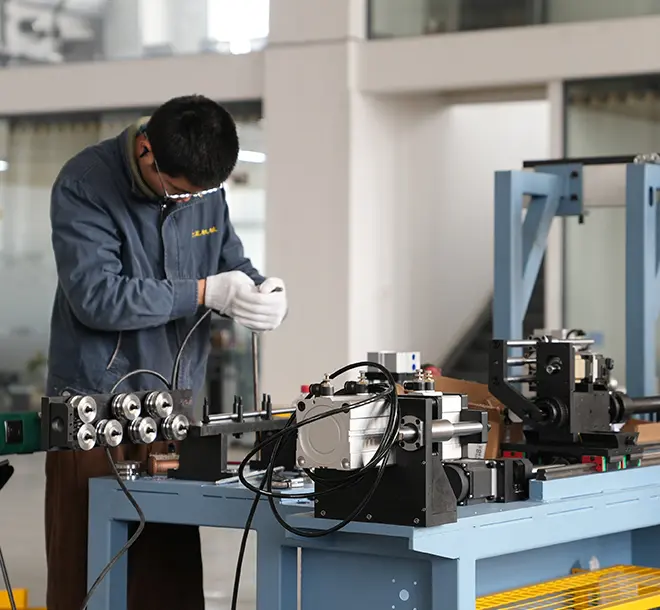
Tube Cutting Methods Compared: Saw, Laser, Plasma & Orbital Cutting
Jump to section
Tube fabrication starts with one decision: how to cut the tube to length. That choice shapes tolerance, edge quality, and cycle time. It also affects how much rework the welding or forming step needs later. Saw cutting, laser cutting, plasma cutting, and orbital cutting each separate metal in a different way. Each method also fits a different mix of material, wall thickness, and production volume. A manufacturer cutting thick structural steel tube has different priorities. Someone preparing thin-wall copper tube for a sealed refrigeration circuit needs something else entirely.
This guide compares all four methods side by side. It covers how each one works, where their precision and speed differ, and which factors should drive the final decision. It closes with a practical breakdown of when each method fits the shop floor best.
These four methods split into two families. Saw and orbital cutting are mechanical processes that remove material with a moving blade. Laser and plasma cutting are thermal processes that melt material along the cut path.
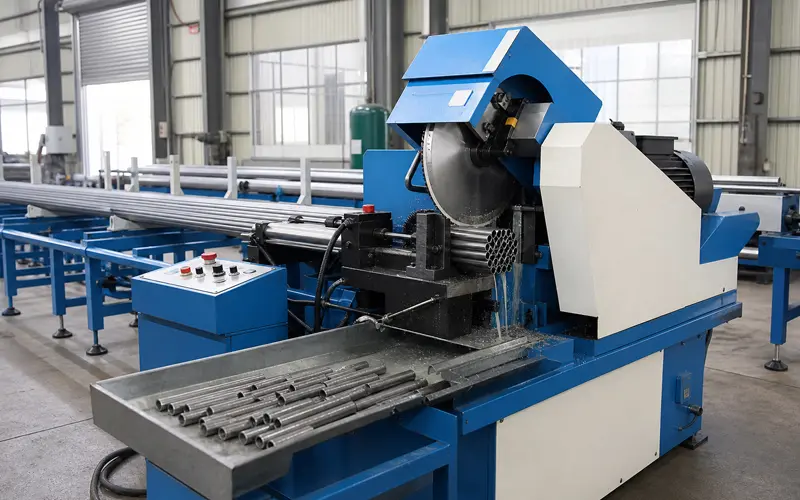
Saw cutting is a mechanical process that draws a rotating blade, circular or band-type, through the tube wall to sever it. It has been the default method for tube blanking for decades. It works on almost any metal and needs little specialized setup.
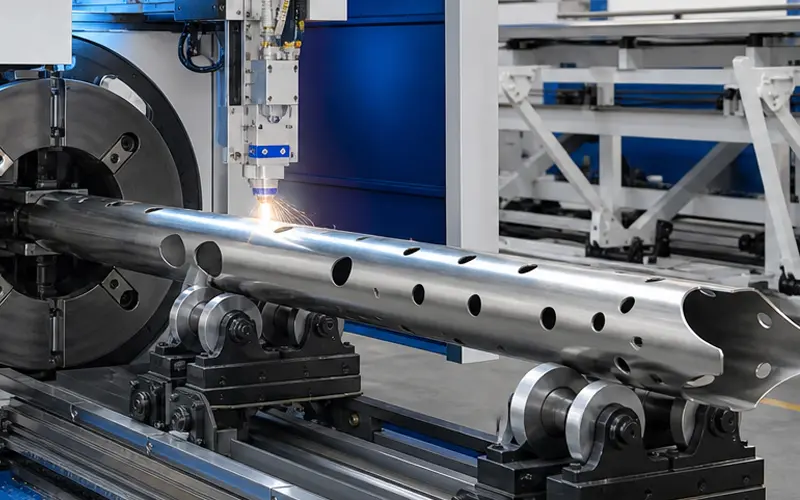
Laser cutting is a thermal process that uses a focused, high-powered beam to melt and vaporize metal along a programmed path. CNC software guides the beam. That lets a laser cut holes, slots, and complex profiles into round or shaped tube in a single setup.
Plasma cutting is a thermal process that uses a high-velocity jet of ionized gas to melt metal. The gas jet then blows the melted metal out of the kerf, the narrow gap left by the cut. Plasma moves through thick material fast, though its arc leaves a wider kerf than a laser.
Orbital cutting is a cold mechanical process that rotates a blade around a tube held in a fixed clamp. The result is a square, deformation-free end that is ready for welding without a separate facing step.
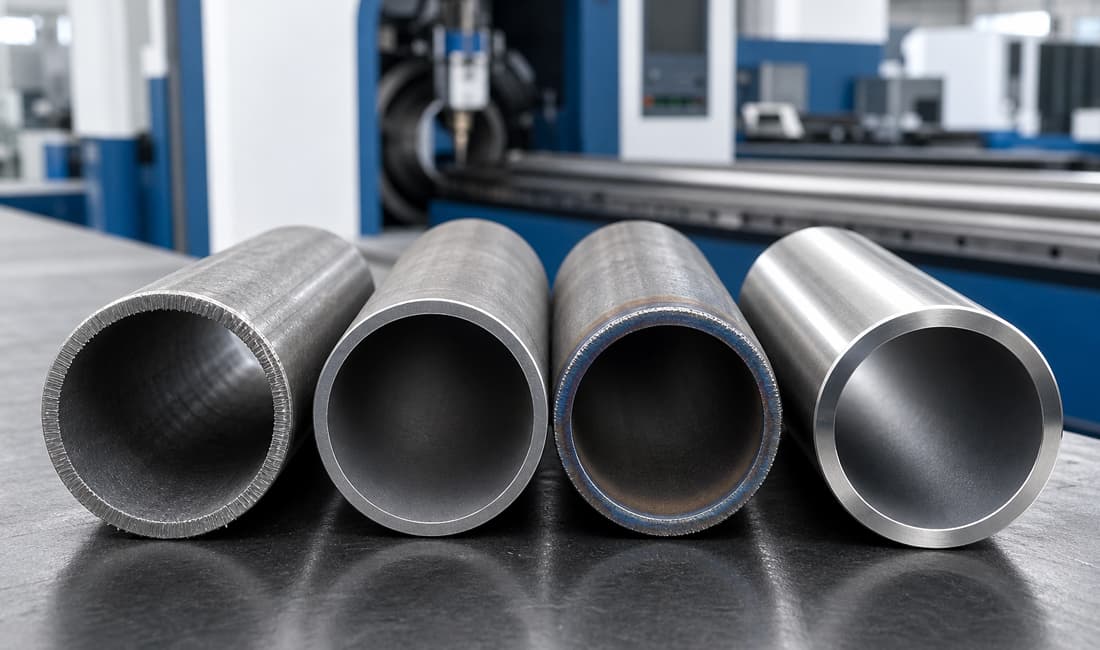
The four methods differ most in precision, heat exposure, workable size range, and cycle speed. Laser and orbital cutting hold the tightest tolerances. Plasma cuts thick material fastest. Saw cutting stays most economical for high-volume, standard-diameter work.
Laser cutting produces the tightest overall tolerances of the group, often within a few thousandths of an inch. The edges come out clean enough to skip secondary deburring. Orbital cutting is not chasing the same number. Its advantage is a square, round, burr-free end rather than a tight length tolerance. A chipless orbital machine typically holds a cutting tolerance around ±0.5mm per meter of tube. The real gain is not that number, though. It is a cut face that needs no rework before brazing or welding. The blade orbits a clamped, stationary tube, which removes the risk of manual misalignment. Saw cutting typically lands looser, in the range of a few tenths of a millimeter per cut. The exact figure depends on the machine and blade condition. That tolerance still suits most forming and brazing operations, but the cut edge usually needs a deburring pass afterward. Plasma cutting is the least precise of the four. Its arc heat and gas flow create the widest, least consistent kerf of the group.
Saw and orbital cutting are cold processes. They leave no heat-affected zone and no risk of thermal distortion at the cut face. Laser cutting leaves a narrow heat-affected zone, since the beam stays tightly focused. Plasma cutting leaves the widest heat-affected zone of the four, because its arc is broader and delivers more heat. A smaller heat-affected zone means a cleaner joint fit and fewer downstream defects. This matters most for tube headed straight into welding or brazing.
Saw cutting handles a broad range of diameters and wall thicknesses. It remains the standard choice for thick-wall structural tube. Laser cutting performs best on thin-to-medium wall tube, though higher-powered systems now reach thicker material. Plasma cutting is built for thick material. It commonly outperforms saw and laser on heavy structural sections. Orbital cutting generally works within a narrower diameter range, since the blade must physically orbit the tube. It excels, though, on the thin-wall, small-diameter tube common in HVAC and refrigeration lines.
Laser and plasma systems both support CNC automation and unattended cutting cycles, which reduces labor per part. Saw cutting automates well for straight, repetitive cuts on standard tube sizes. Orbital cutting is fast for individual weld-prep cuts, often finishing a cut in well under a minute. It usually runs station-by-station, though, rather than as part of a continuous high-volume line.
| Method | Precision | Heat-Affected Zone | Best Wall/Diameter Fit | Typical Speed |
| Saw | Moderate | None | Wide range, thick-capable | Fast, high-volume |
| Laser | Very high | Narrow | Thin to medium wall | Fast, automated |
| Plasma | Lower | Wide | Thick wall, large diameter | Very fast on thick stock |
| Orbital | Very high (edge quality) | None | Thin wall, smaller diameter | Fast per cut, single-station |
The right method depends on four practical variables. These are material and wall thickness, downstream tolerance needs, production volume, and equipment investment. Each factor is covered below.
Thin-wall, small-diameter tube used in HVAC and refrigeration lines suits laser or orbital cutting. Both methods avoid the deformation that a saw blade or plasma arc can introduce on thin material. Thick-wall structural or industrial tube is better suited to saw or plasma cutting. Both are built to move through more material per pass.
Cut quality matters most when the tube goes straight into welding or brazing. Orbital cutting, or a well-tuned saw, leaves no heat-affected zone and a square, burr-free end. That reduces or removes a separate facing step. A different need arises when the part itself needs holes, slots, or angled profiles cut into the tube wall. Laser cutting handles that complexity in the same setup that produces the length cut.
High-volume, standardized cut lengths favor automated saw cutting. It keeps per-part cost low once the line is running. Lower-volume or highly varied parts favor laser cutting instead. Reprogramming a CNC laser for a new profile takes far less time than retooling a mechanical saw or die.
Saw cutting generally needs the lowest upfront investment and the simplest maintenance. Laser and plasma systems cost more to install but reduce labor and secondary processing over time. Orbital equipment sits between the two. Its moderate investment pays off quickly for manufacturers running high volumes of weld-prep cuts. Equipment and tooling costs vary by tube size, material, and automation level. Most manufacturers work through this comparison with a supplier, using actual drawings and production targets rather than a fixed number.
Each method has a production scenario where it clearly outperforms the other three, based on material, tolerance, and volume.
Saw cutting fits high-volume, standard-diameter tube blanking, where cost per part matters more than ultra-tight tolerance. It is the common choice for cutting copper and aluminum tube to length. This usually happens ahead of bending or brazing in HVAC and refrigeration production. An automated copper tube saw cutting machine can hold tolerances tight enough for consistent downstream forming, running continuously without manual measuring.
Laser cutting fits parts that need more than a straight length cut. Holes, slots, or profiled openings can be machined into the tube wall in the same automated cycle. This matters in evaporator and condenser manufacturing. A laser system can cut multiple precision holes into a tube in seconds. That is the same principle behind a CNC laser cutting machine built for evaporator tube processing.
Plasma cutting fits thick-wall structural tube and pipe. It wins when speed on heavy material outweighs the need for a fine edge finish. It is common in general steel fabrication, construction, and heavy equipment manufacturing. In those settings, parts will often be machined or ground afterward regardless of cut quality.
Orbital cutting fits thin-wall tube that goes straight into a weld or brazed joint without room for distortion. Automotive fluid lines benefit from this, including Bundy tube used in brake and fuel systems. Precision HVAC heat exchanger tube benefits too, since both applications need the chip-free, deformation-free cut this method produces. That principle drives a chipless tube straightening and cutting machine built for copper, aluminum, and Bundy tube. It prepares tube ends ahead of bending or welding.
There is no single best tube cutting method, only the method that fits a given material, tolerance, and production volume. Saw cutting keeps high-volume standard tube blanking economical. Laser cutting adds precision and complex geometry in one automated step. Plasma cutting moves through thick material fast. Orbital cutting delivers the clean, deformation-free ends that tight welding and brazing operations need. Matching the cutting method to the actual part drawing keeps rework and scrap low. Defaulting to whatever equipment is already on the floor does not.
Manufacturers can send drawings or sample parts to BOBO Machine for a specific tube diameter, wall thickness, or production target. The engineering team can then review the process and recommend equipment and a line layout to match.
Yes. Many tube processing lines pair a saw or chipless station for length control. A separate laser or punching station then handles holes and profiles. This avoids relying on a single machine for every operation.
Yes. Reflective metals such as copper and aluminum can be harder to cut cleanly with certain laser setups than steel is. Soft, thin-wall non-ferrous tube also benefits more from chipless or orbital cutting than from plasma. Plasma is built for thicker ferrous material.