High-Pressure vs. Low-Pressure Spiral Duct: Gauge, Seam, and Manufacturing Differences
Jump to section
Spiral duct comes in pressure classes. The class sets three things: sheet metal gauge, seam type, and forming equipment. Low-pressure and high-pressure spiral duct look almost the same once installed. But the gauge, seam, and manufacturing steps behind them are not the same. This guide compares both classes. It helps buyers and process engineers pick the right duct and check if their production line can build it.
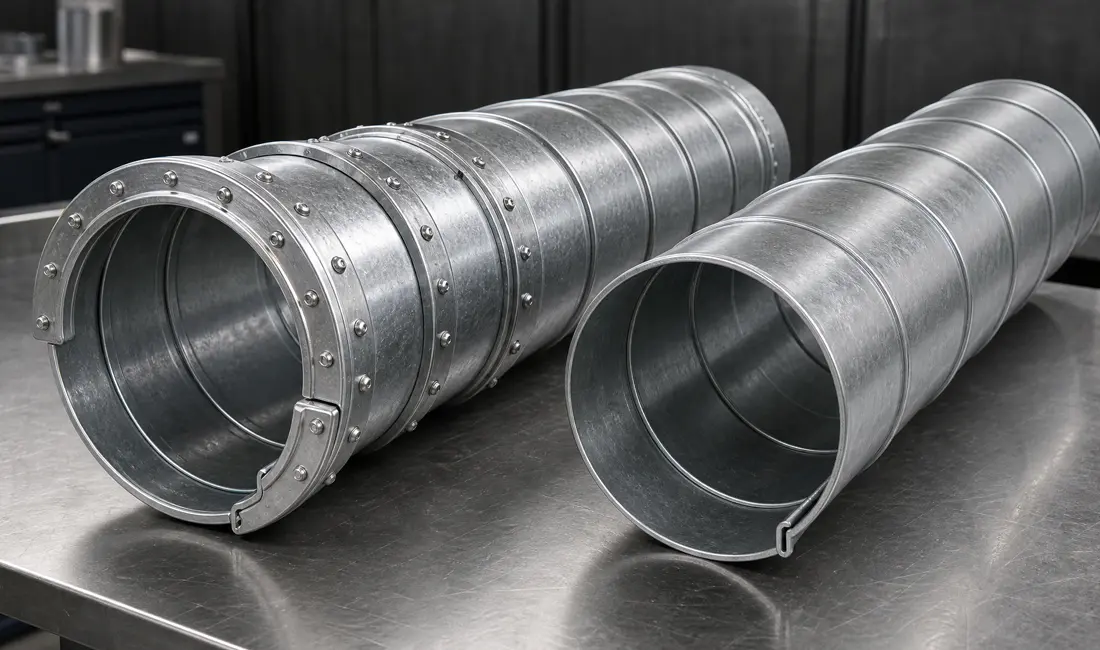
Spiral duct is a round ventilation pipe that is made by winding sheet metal strip into a spiral shape. The strip locks into itself and forms a helical seam. This creates a smooth, rigid tube with no straight joint. High-pressure and low-pressure spiral ducts are two versions of this same product. Both use the same forming process, but each is built for a different pressure and air speed.
Duct pressure class is a rating system that depends on static pressure and air velocity. These are the forces a duct must handle without leaking, bending, or collapsing. SMACNA duct construction standards set the reference ranges. Low pressure systems run at or below 2 inches water gauge, or about 500 pascals. Air speed stays under 2,000 feet per minute. Medium pressure systems run between 2 and 6 inches water gauge. High pressure systems run from about 6 up to 10 inches water gauge. Air speed here can reach 4,000 feet per minute or more. Engineers use these three ranges to pick the right gauge and seam for a duct.
Low pressure spiral duct is a duct class that uses lighter gauge steel and a standard mechanical lockseam. It only needs to hold pressure up to about 2 inches water gauge. High-pressure spiral duct is a duct class that uses heavier gauge steel and a reinforced or fully welded seam. It must handle higher pressure, faster air speed, and more vibration. The next three sections cover gauge, seam, and equipment in more detail.
Gauge requirements differ because thicker metal holds up better under pressure. Thin metal can burst under positive pressure or collapse under negative pressure. As pressure class rises, the strip must get thicker to stay safe. Duct diameter matters too. A wider duct flexes more than a narrow one under the same pressure. So SMACNA tables call for thicker material as diameter grows, even within the same pressure class.
Low-pressure spiral duct typically uses 26 to 22 US standard gauge steel, or about 0.5 to 0.8 millimeters thick. This keeps material and freight costs low. It still meets SMACNA rules for general HVAC supply and return air runs. That includes comfort ventilation and other systems at or below 2 inches water gauge.
High-pressure spiral duct needs heavier gauge steel, usually 20 to 16 US standard gauge, or about 0.9 to 1.6 millimeters. Some heavy industrial jobs push toward 2.0 millimeters. This extra thickness resists deflection at 6 to 10 inches water gauge. It also resists abrasion better. That matters in dust collection, process exhaust, and pneumatic conveying, where the airstream carries particles that wear down thin metal.
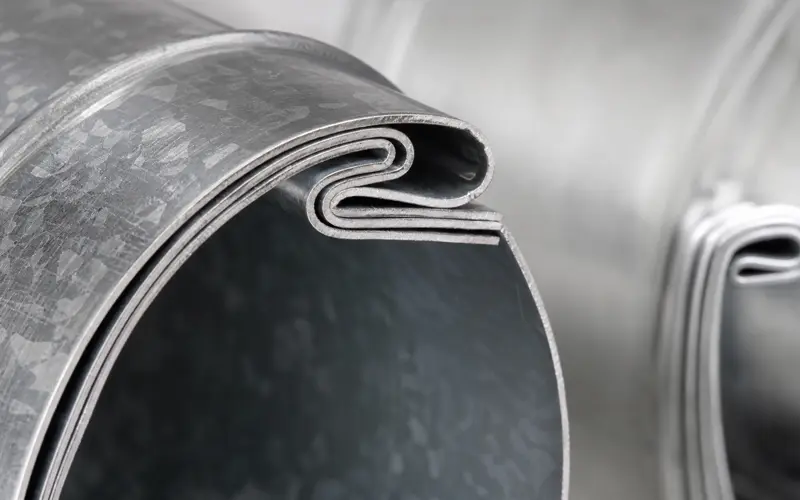
Seam types differ because the helical seam is the weakest point in the tube wall. As pressure and gauge rise, that seam needs reinforcement, or it needs to become a welded joint instead.
A mechanical lockseam is a helical joint that is formed by folding the strip edges together as they wind through the tube-forming machine. Forming and seaming happen in one pass. This lockseam holds on its own. It does not need extra welding or sealant in most low-pressure jobs. That is one reason low-pressure spiral duct is fast and cheap to produce.
High-pressure spiral duct usually needs a reinforced lockseam or a fully welded seam. A standard lockseam alone cannot stay airtight above roughly 4 inches water gauge. Fabricators strengthen the seam in three ways. Reinforcing beads stiffen it. Tighter closure tolerances close the gaps. Continuous welding from a spiral air duct welding machine fuses the joint solid.
A solid-welded seam becomes necessary near the top of the high-pressure range. That is usually above 4 inches water gauge on positive pressure runs. It is also needed when the gauge is too heavy for lockformer tooling to close well. Welded seams are the safer choice for oil mist extraction and fume extraction too. Any leak in those systems creates a safety or contamination risk.
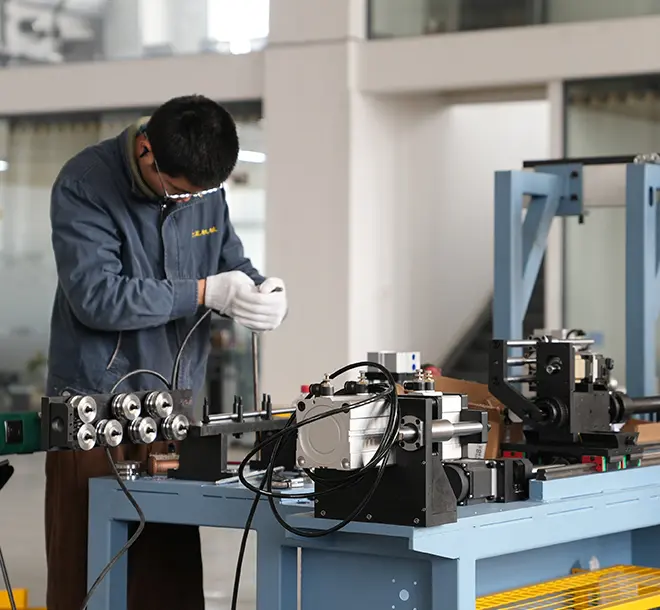
Manufacturing equipment differs in two ways: how thick a machine can form the strip, and whether the line can weld the seam. Both duct classes start on a spiral duct machine, but the tooling and extra equipment change once gauge and seam requirements rise.
Heavier gauge duct needs a tubeforming line built for it. The rollers, drive torque, and lock-closing pressure must handle thicker strip. A machine built only for light gauge will not close a proper lockseam on 18 or 16 gauge steel. Most standard spiral tubeformers handle strip up to about 1.2 millimeters. Some spiral tubeformer models are built with extended capacity, handling strip up to roughly 2.0 millimeters. This lets one line run both low-pressure and high-pressure duct. Fabricators just change the tooling instead of buying a second machine.
When seam integrity must go beyond what a lockseam can deliver, fabricators move to a dedicated spiral air duct welding machine. This is not an add-on station bolted after a standard tubeformer. It is a standalone heavy-duty line that forms the strip and arc-welds the seam in one integrated pass. A typical unit handles steel coil from 1.5 to 2.5 millimeters thick. It produces welded spiral pipe in diameters from about 75 to 400 millimeters, or roughly 3 to 16 inches. Because forming and welding happen inside the same machine, the seam geometry stays locked in place. That is what produces a consistent, leak-tight joint along the full length of the pipe.
In most cases, fabricators use two separate lines rather than one. A standard spiral tubeformer handles light and medium gauge lockseam duct for low pressure work. A dedicated spiral welding line handles the heavier gauge, welded-seam duct for high pressure work. Running two purpose-built lines gives better seam quality and higher throughput on each pressure class. It avoids forcing one machine to cover both ends of the gauge and seam range.
Buyers should match the duct class to three things: fan static pressure, air velocity, and application risk. Do not default to one gauge or seam type across an entire project.
Pick low-pressure spiral duct for systems at or below roughly 2 inches water gauge. This includes general HVAC supply and return air distribution, comfort ventilation in offices and retail spaces, and similar systems. Lighter gauge and a standard lockseam already meet the structural and leakage rules here. It is also the cheaper option in material and forming speed when high-pressure performance is not needed.
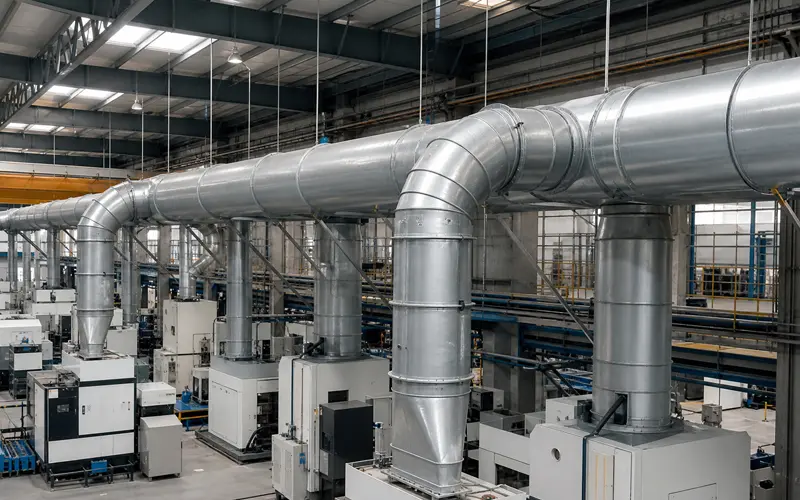
Choose high-pressure spiral duct for long duct runs, high-velocity air handling systems, industrial dust collection, and process exhaust. Pick it whenever fan static pressure goes above roughly 4 inches water gauge. Also pick it when any seam leak would create a safety or contamination risk. Automotive exhaust and fume extraction lines are common examples. The airstream there is hot, pulsing, or loaded with particulate. A light-gauge lockseam duct cannot hold up to that over time.
Weigh the system’s design static pressure and air velocity first. Then check duct diameter, how abrasive or corrosive the airstream is, and the leakage class the project needs. Once those are set, gauge and seam type follow directly from SMACNA tables. The last question is simple: can the current production line build to that spec, or does the tooling need an upgrade first?
Can a fabricator start with low pressure production and add high pressure capability later?
Yes. Many fabricators start with a standard tubeformer for low-pressure lockseam duct. Once high-pressure orders grow, they bring in a separate spiral welding line for the heavier gauge, welded-seam work. Starting with one line and scaling to two keeps the initial cost lower. It still meets both pressure classes as demand builds.
Do high-pressure and low-pressure spiral duct use the same leak testing standard?
No. Both classes are tested against SMACNA leakage limits, but high-pressure duct must meet a tighter leakage rate. Testing is also done at a higher static pressure to match how the duct will actually run. A duct built for 2 inches water gauge is not tested the same way as one built for 8 inches. The higher pressure test reveals seam weak points. A low pressure test would miss them.
Choosing between high pressure and low pressure spiral duct starts with one question: what pressure and speed will the duct see in service? That number sets the gauge. The gauge sets the seam type. The seam type decides if a standard tubeformer is enough, or if a separate welding line is needed. Check this chain before ordering. It helps avoid two common mistakes: picking a gauge that is too light, and trusting a lockseam at pressures that need a weld.
Evaluating whether to add a dedicated welding line for high-pressure work? Share the target diameter, gauge range, pressure class, and material. That gives a clear answer on capacity and the equipment needed.