Minimum Bend Radius for Stainless, Copper & Aluminum Tubes: Specification, Comparison, and Selection Guide
Jump to section
Bending metal tubes without cracking them means knowing the minimum bend radius for each material. Stainless steel needs about 1.5 to 2 times the tube’s outer diameter. Copper bends tighter, at 1 to 1.5 times the diameter, thanks to its ductility. Aluminum needs more room, at 2 to 3 times the diameter, since it cracks more easily. The wrong radius leads to cracked tubes, failed parts, and wasted material.
This article explains what minimum bend radius means and why it changes by material. It also covers how to read bend radius charts and how to pick the right radius for a project.
Minimum bend radius is the tightest curve that a tube can form without structural damage. The measurement sets the inside arc limit before the material cracks, wrinkles, or loses strength.
Minimum bend radius is measured from the inside curve of the bend to the center point of the arc. This distance is different from the centerline radius, which measures to the middle of the tube wall.
The standard formula expresses minimum bend radius as a multiple of the tube’s outside diameter (OD). Most stainless steel tubes need a minimum bend radius of 1.5 to 2 times the OD. A tube with a 1-inch OD needs at least a 1.5-inch to 2-inch inside radius.
Material type affects the minimum ratio. Soft copper tolerates tighter bends at 1 times the OD. Hard materials like Inconel need 2.5 to 3 times the OD or more.
Wall thickness changes the calculation too. Thicker walls resist collapse better and sometimes allow tighter radii. Thin-walled tubes need larger radii instead, to prevent folding.
The outside of an overly tight bend thins as the material stretches past its limit. This creates weak spots that can fail under pressure or vibration.
The inside of the bend buckles and wrinkles when compressed too much. Wrinkles disrupt flow in fluid systems and create stress points that can crack over time.
Tubes can collapse entirely when bent too sharply. The round cross-section flattens and blocks internal passage, which ruins the part and wastes material.
The internal finish also degrades below minimum radius. It can develop ridges that trap particles or cause turbulence in high-purity applications. Cracks in the material can spread through the tube too, causing complete failure during use.
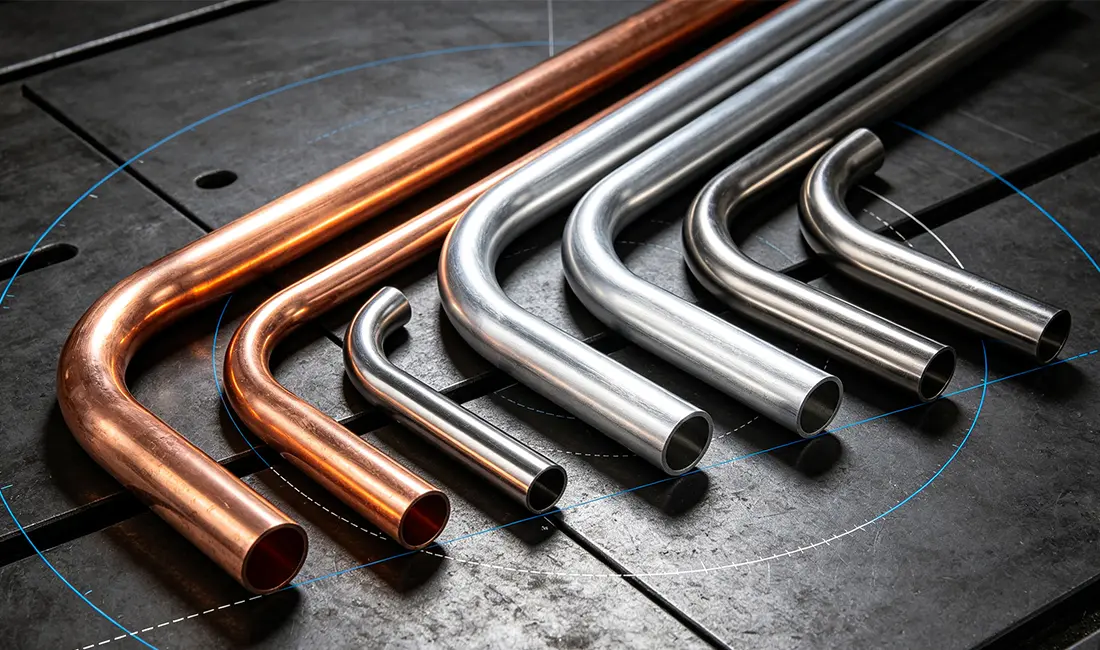
Stainless steel requires a bend radius of 1.5 to 2 times the tube diameter. Copper allows tighter bends, at 1 to 1.5 times the diameter. Aluminum needs 2 to 3 times the diameter, due to its tendency to crack.
Stainless steel tubes bend with a minimum radius of 1.5 to 2 times the outer diameter. The 300-series stainless steel achieves the tightest bends without cracking or wrinkling.
A 1-inch diameter stainless steel tube needs a minimum bend radius of 1.5 inches. This applies to austenitic grades like 304 and 316, which contain high levels of chromium and nickel.
Harder stainless steel grades need larger bend radii. Heat-treated or tempered stainless steel tubes may crack if bent too sharply. Standard tube bending practice also builds in an allowance for springback, typically 0.030 to 0.060 inches, since the tube opens back up slightly once the bending force releases.
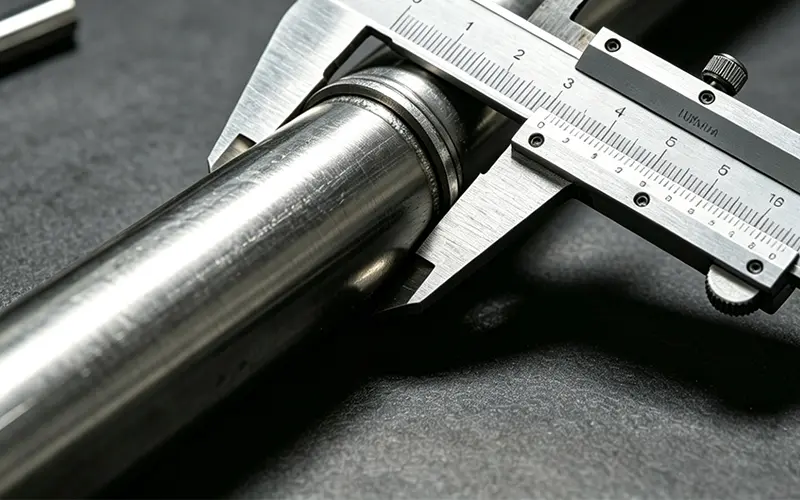
Copper tubes accept the tightest bend radii among common tube materials, at 1 to 1.5 times the outer diameter. The soft nature of copper lets it deform without cracking at smaller radii than steel or aluminum.
A 0.5-inch copper tube bends safely at a 0.5 to 0.75-inch radius. Annealed copper performs better than work-hardened copper in tight bends, and the material flows smoothly during bending with minimal wall thinning.
Aluminum tubes need a minimum bend radius of 2 to 3 times the outer diameter. The metal cracks easily when bent too tightly, since aluminum has lower ductility than copper and stainless steel.
A 1-inch aluminum tube needs a 2 to 3-inch bend radius to prevent failure. Grade 1100-H24 aluminum handles bending better than harder alloys like 6061-T6.
Wall thickness affects aluminum bend success a great deal. Thicker walls resist cracking better than thin-wall tubes at the same bend radius.
Tempered aluminum alloys often fail during bending operations. Annealing the tube before bending improves success rates, but it also changes material properties. Back-to-back bends in aluminum tubes need custom tooling, since a standard setup can collapse or deform the previous bend.
A minimum bend radius chart shows the smallest curve each tube material can handle without cracking or weakening. Charts organize data by tube diameter and wall thickness, giving specific values for stainless steel, copper, and aluminum. Tighter bends save space, but they need more force and specialized tooling.
The vertical axis lists tube diameters in millimeters or inches. The horizontal axis shows wall thickness measurements. The intersection point reveals the minimum bend radius for that combination.
Most charts express bend radius as a multiple of the tube’s outer diameter (OD). Copper tubes typically show a minimum radius of 1 to 1.5 times the OD. Aluminum alloys like 5052-H32 typically need 2 to 3 times the OD. Stainless steel varies by grade: austenitic types (304, 316) start around 1.5 times the OD, while work-hardening grades (301, 302) often need 2 times the OD or more for the same tight-bend result.
Wall thickness affects the minimum radius a great deal. Thicker walls resist collapse and wrinkling better, which can allow a slightly tighter radius. Thin-walled tubes need a larger radius instead, to avoid folding.
Charts also include tooling specs such as die radius and punch radius, which guide equipment selection for each bend.
Tighter bends reduce overall tube length and save installation space. A 1.5 times diameter bend takes up less room than a 3 times diameter curve, which matters in compact machinery and tight architectural spaces.
Standard bends, at 2 to 3 times diameter, need less forming pressure. This puts less stress on the material and extends tool life.
Tighter bends weaken the tube wall more. The outer surface stretches beyond safe limits on materials with lower ductility. Stainless steel grades like SUS301 crack easily below the standard 1.5 to 2 times OD range. Copper tolerates tighter bends due to superior ductility, while aluminum generally needs a radius as large as or larger than stainless steel to avoid cracking.
Flow restriction also increases with tighter bends. Fluid or gas passing through sharp curves meets more resistance, which reduces system efficiency in hydraulic and pneumatic applications.
The correct bend radius depends on tube material, wall thickness, and the application’s priority. Some applications need structural integrity above all else. Others need to save space instead. Larger radii prevent defects but need more space. Tighter radii save space but demand specialized tooling and techniques.
A bend radius of 2 to 3 times the tube’s outside diameter prevents most bending defects. This range works well where space is available and bend quality matters more than compact routing.
Tubes bent at these larger radii show minimal wall thinning on the outside curve, and the inside of the bend avoids wrinkling or collapsing. These benefits matter most in high-pressure systems, refrigeration piping, and food processing equipment, where tube failure creates safety risks.
Standard radius bending needs less specialized equipment. Most tube benders handle these dimensions without mandrels or custom tooling, which reduces setup costs and speeds production time.
Applications that benefit from standard radii include:
Space-limited applications need bend radii as small as 1 to 1.5 times the outside diameter. Automotive fuel lines, compact hydraulic systems, and dense control panels often need these tight bends to fit within constrained areas.
Tighter radii raise the risk of defects. Wall thickness on the outside of the bend can thin by 20 to 30 percent, and the inside radius may wrinkle or collapse if the wall is too thin relative to the diameter.
Material selection becomes critical at minimum radii. Soft copper bends tighter than stainless steel or aluminum alloys. Annealed tubes handle tighter bends than work-hardened tubes of the same material.
Engineers must verify that thinned walls still meet pressure ratings. Soft materials like annealed copper can approach the 1 times OD limit, while harder alloys need closer to 2 times OD or more to avoid cracking.
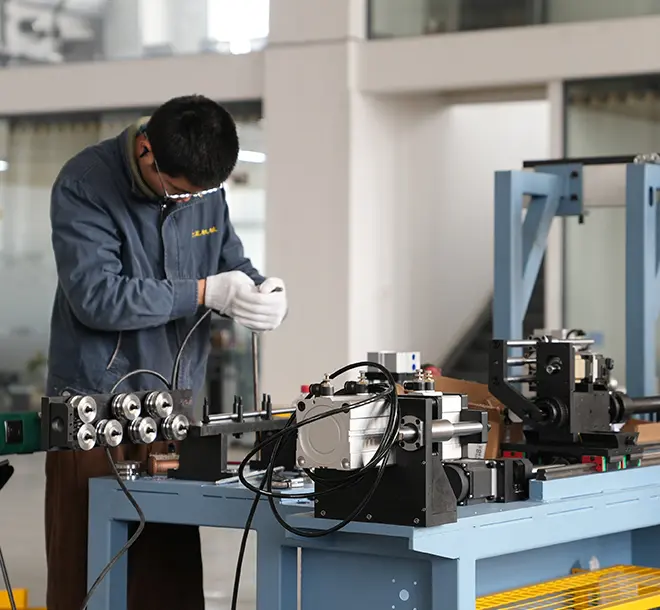
CNC tube benders help hold these tight radii without collapsing the tube, since programmed dies support the tube wall through the bend and correct for springback on their own. BOBO’s CNC pneumatic 3D tube bender calculates springback compensation on its own and positions each bending axis to match the programmed profile. Its three machine sizes cover tube diameters from 12.7mm to 40mm, which suits tight-radius work across small refrigeration lines and larger HVAC or automotive tubing.
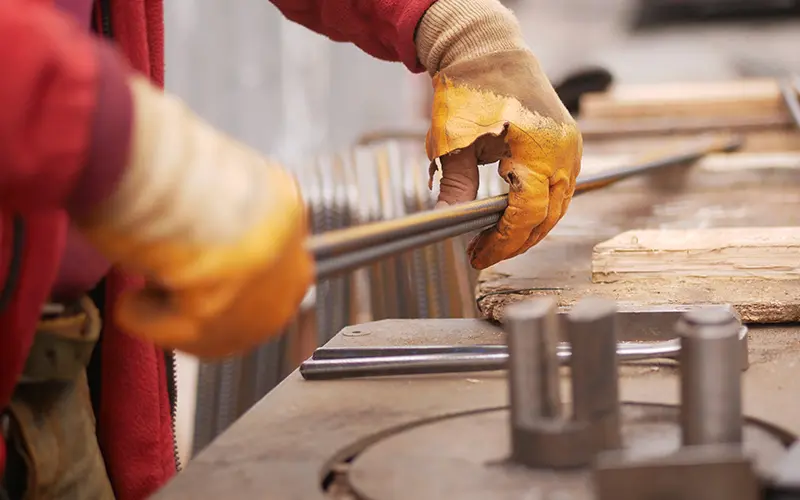
Mandrel bending stops the tube from collapsing during tight-radius bends. A steel mandrel sits inside the tube during the bend, supporting the inner wall and keeping the cross-section round.
Rotary draw bending offers the most control for tight radii. The tube clamps against a bend die while a wiper die prevents wrinkles on the inside radius. This method works for radii down to 1 times the outside diameter on soft materials.
Heat bending softens the material at the bend point, which suits metals that resist cold forming. Induction heating concentrates heat at the exact bend location. This technique suits stainless steel tubes that need radii below 1.5 times the diameter without a mandrel.
Bend angle does not change the minimum radius itself, but sharper angles add more strain over a shorter arc. This raises the risk of thinning at the same radius. Multi-bend parts with several tight-angle bends close together need extra care for this reason.
Yes. Bends placed close together may leave too little straight tube to clamp properly, which can force a switch to multi-stack tooling instead of a single die. Using one consistent radius across a part also simplifies tooling and lowers the risk of misalignment.
CNC tube benders hold bends close to the minimum rated radius for each material, since dies support the tube walls and prevent collapse. Hand bending needs a radius 1.5 to 2 times larger, since there is no die support. Mandrel benders achieve the tightest bends of all. CNC benders also hold tighter tolerances, around ±0.030 to ±0.060 inches, compared with ±0.125 inches or more by hand.
Minimum bend radius comes down to how much a tube material can stretch and compress before it fails. Stainless steel needs 1.5 to 2 times the tube diameter. Copper handles tighter bends, at 1 to 1.5 times. Aluminum needs the most room, at 2 to 3 times. Wall thickness, temper, and the bending method shift these numbers further. BOBO Machine builds CNC tube bending equipment with built-in springback compensation for tight-radius stainless, copper, and aluminum tube work. Contact BOBO Machine to match the right tube bending equipment to a production line.