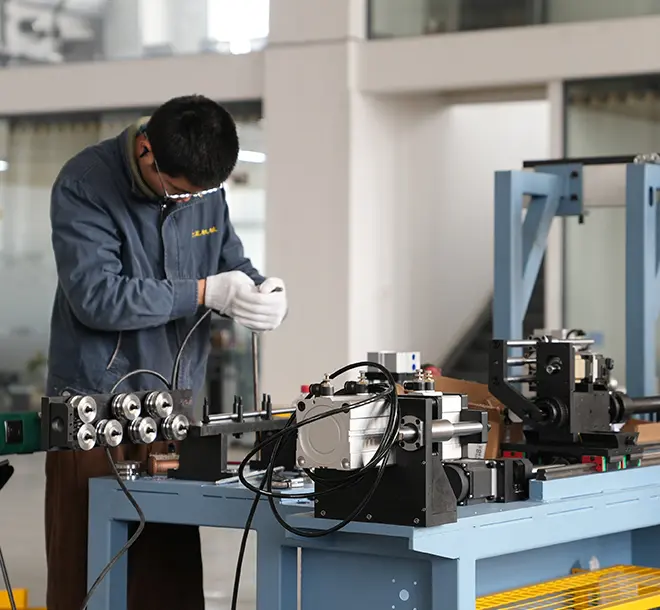
Tube End Forming Explained: Expansion, Reduction, Flaring & Beading in Practice
Jump to section
Tube end forming reshapes the end of a metal tube after cutting. It builds a connection, seal, or lock point. No separate fittings are needed. Four processes do this work: expansion, reduction, flaring, and beading. Expansion widens the end for a slip-fit joint. Reduction narrows it to fit a smaller part. Flaring angles it outward to form a seal. Beading adds a raised ring that locks on a hose. These methods cut part count and save assembly time. The wrong choice can cause a leak, a poor fit, or wasted cost. This guide explains how each process works, what factors guide the choice, and when to use each one.
Tube end forming is a manufacturing process that reshapes the end of a metal tube without adding separate parts. Manufacturers use four main processes for this: expansion, reduction, flaring, and beading. Each one creates a connection, seal, or mechanical lock directly on the tube.
End forming removes the need for separate couplings, adapters, and compression fittings. This lowers part count in assemblies like automotive exhaust systems and HVAC or refrigeration lines. Fewer parts mean fewer failure points. A formed tube end is one continuous piece, not a joint that can loosen, leak, or corrode over time. Assembly time and material costs also drop, since workers do not need to buy or attach a separate coupling.
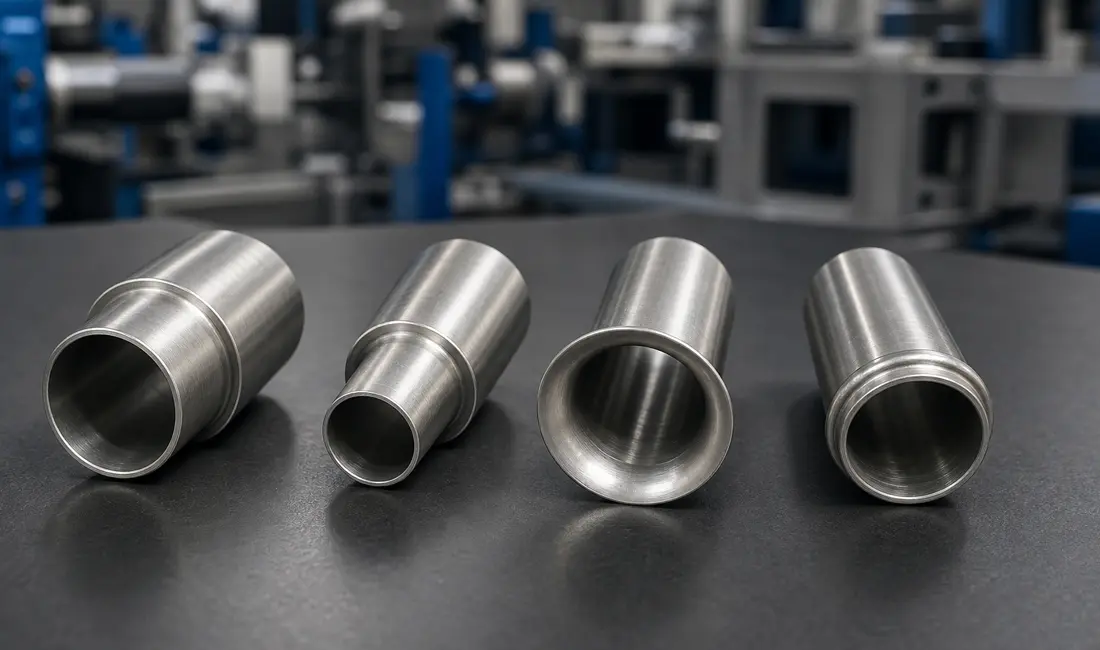
Expansion increases the tube’s diameter over a set length. This lets one tube slip-fit inside another of the same size. Reduction decreases the tube’s diameter at the end. The narrowed section then fits into smaller downstream components, or it creates a step transition within one tube. Flaring angles the tube end outward to form a sealing surface that mates with compression fittings. Standard flare angles are 37 degrees and 45 degrees. Beading forms a raised ring around the tube’s outer edge that locks hoses and fittings in place. It stops them from sliding off under pressure or vibration.
Tube expansion enlarges a tube’s end diameter to create a slip-fit connection. Tube reduction shrinks the end diameter so one tube can nest inside another.
Tube expansion is a tube end forming process that increases the outer diameter of a tube end. It forces material outward using ram forming or segmented forming. Ram forming drives a tapered die into the tube end, pushing against the inner walls to stretch the material outward. Segmented forming works differently. It uses adjustable rollers that press outward against the tube’s inner surface for precise control on bent tubes.
The expansion process reduces wall thickness as the material stretches. The amount of thinning depends on the expansion percentage and the material’s ductility. Manufacturers use a tube end forming and expanding machine for heat exchangers and refrigeration systems, where the expanded end forms a slip-fit joint.
Tube reduction, also called swaging, is a tube end forming process that decreases the outer diameter of a tube end. This lets it fit inside another tube of the same size. The process uses swaging or necking operations. Swaging machines use rotating dies that hammer the tube end inward. This compresses the material into a smooth taper or a shouldered step.
The reduction process increases wall thickness as material compresses. A 2-inch diameter tube reduced to 1.75 inches will have thicker walls in the reduced section. This added thickness strengthens the connection point. Common uses include insertion fits and structural stops, where the reduced end nests inside another component. A tube end forming and shrinking machine handles this reduction step without a separate adapter fitting.
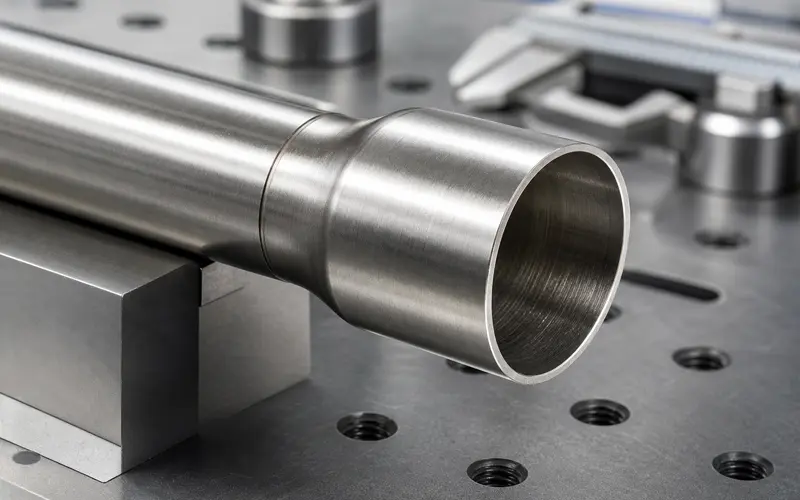
Expansion and reduction change tube ends in opposite directions. Expansion pushes material outward and thins the wall. Reduction compresses material inward and thickens the wall. A tube expanded by 15% might lose 5 to 10% of its wall thickness. A tube reduced by 15% gains thickness by a similar amount. The exact range depends on material hardness, wall thickness, and equipment capability. Softer materials like aluminum allow larger diameter changes than harder materials like stainless steel.
| Factor | Expansion | Reduction |
| Diameter Change | Increases OD | Decreases OD |
| Wall Thickness | Decreases | Increases |
| Typical Range | 2-20% larger | 2-20% smaller |
| Primary Use | Slip-fit outer connections | Nested inner connections |
Flaring creates an angled opening at a tube’s end to form a seal with compression fittings. Beading forms a raised ring around a tube’s outer surface to lock hoses or fittings in place.
Tube flaring is a tube end forming process that reshapes the end of a tube outward at a set angle. This creates a sealing surface where the tube meets a compression fitting or threaded connection. The flare angle varies by application and standard. 37-degree and 45-degree flares are most common in hydraulic and automotive systems, and SAE standards set which angle to use based on pressure and fluid type. Flaring also removes the need for O-rings or gaskets, since the metal-to-metal contact between tube and fitting creates the seal.
A flare taken all the way to 90 degrees becomes a flange rather than a flare. A flange is flatter and more standardized in shape. It is meant for a bolted or welded joint, not the compression-fitting seal that a 37- or 45-degree flare creates. The two terms get used loosely in the field, but the angle and the joint type they are built for are different.
HVAC systems, brake lines, fuel lines, and hydraulic tubing all rely on flared connections. The process works with copper, aluminum, steel, and stainless steel tubes. Wall thickness and material hardness determine which flaring method and tooling to use. The T-40 hydraulic tube end forming machine handles flaring alongside expansion and reduction on the same setup.
Tube beading is a tube end forming process that forms a raised ring, or rib, around a tube’s outer diameter. The ring sits a short distance back from the tube’s end. It acts as a mechanical stop. Hoses slide over the beaded tube until they reach the raised ring. The ring stops the hose from sliding off under pressure, vibration, or heat. A hose clamp placed just past the bead locks the assembly together.
Beads come in several profiles. Round beads suit low-pressure applications. Flat beads spread clamping force more evenly. Automotive cooling systems and vacuum lines often use beaded ends, especially on thin-wall tubing that cannot support threaded fittings.
Flaring creates a sealing surface for rigid metal-to-metal connections. Beading creates a retention feature for flexible hose connections. Expansion and reduction work differently. They change the tube’s diameter along its length, instead of adding one feature at the end.
| Process | Purpose | Connection Type | Location |
| Flaring | Sealing surface | Metal fitting | Tube end only |
| Beading | Hose retention | Flexible hose | Near tube end |
| Expansion | Diameter increase | Slip-fit tube joint | Along tube length |
| Reduction | Diameter decrease | Size transition | Along tube length |
Flaring and beading also need different tooling. Flaring tools use mandrels that press into the tube opening and push material outward. Beading tools use dies that compress the tube’s outer surface from several directions at once.
Four things decide which end-forming method fits an application: material properties, joint requirements, process limits, and equipment investment. Wall thickness sets the upper limit on what each process can achieve. Go past that limit, and the tube cracks or wrinkles.
Wall thickness controls how much a tube can expand, reduce, flare, or bead before it fails. Thin-walled tubes risk wrinkling during expansion and splitting during reduction. Very thick-walled tubes need more hydraulic force and may exceed standard equipment capacity. Material hardness affects forming limits too. Soft materials like aluminum and annealed copper expand and reduce easily. Stainless steel and high-strength alloys need higher tonnage. They can crack if the forming ratio exceeds the material’s ductility limit.
The joint type decides which end form to use. A slip-fit joint needs expansion. A compression fitting needs a flared end. A hose connection needs a bead. A reduced end, by contrast, lets a tube connect directly to a smaller component without an adapter.
Expansion removes couplings and cuts part count, but it needs precise diameter control for a proper fit. Over-expansion creates loose joints that leak. Under-expansion can prevent assembly altogether. Reduction allows a direct connection to smaller components and saves the cost of stepped fittings. Too much reduction, though, can wrinkle thin-walled tubes or require multiple forming steps. Flaring creates a reliable sealing surface for compression fittings. The flare angle must match the fitting specification, usually 37° or 45°, since a wrong angle can cause the connection to leak. Beading gives mechanical retention without adhesives and works across a wide range of tube sizes. Bead depth and width must match the hose specification. A shallow bead allows slippage, and a deep bead can weaken the tube wall.
A machine built for a single process, such as a dedicated flaring or beading unit, generally costs less upfront and is simpler to run. A combination end-forming machine handles expansion, reduction, and flaring in one setup. It costs more to buy, but it cuts changeover time between jobs and reduces the number of machines a shop needs to maintain. Shops running high, steady volumes of one process often do better with a dedicated single-purpose machine. Shops running smaller, mixed batches across several tube types typically get more value from a combination machine, since it avoids moving parts between separate stations.
Expansion and reduction are chosen based on the assembly method. Flaring is chosen for pressure-tight seals. Beading is used when mechanical retention under load is required.
Expansion is chosen when one tube must fit inside another of the same nominal size, removing the need for a separate coupling. Thin-walled tubes, though, can only expand a small amount before splitting. Reduction is chosen when a tube must step down to a smaller diameter component, such as a fuel line adapting to a smaller fitting. The process necks the tube’s outside diameter down until it fits the inside diameter of another part, creating a step transition within one continuous tube. Reductions greater than 25% of the original diameter usually need multiple forming stages.
Flaring is chosen when a connection needs a pressure-tight seal. The process angles the tube end outward into a cone-shaped surface that mates with compression fittings. Flared connections suit systems that carry fluids or gases under pressure. They form a metal-to-metal seal that resists leaks better than a simple butt joint. Tube material must be ductile enough to form the flare without cracking. Hardened or brittle materials need annealing first, or they will split during the process.
Beading is chosen when a hose or fitting must be locked in place mechanically. The process forms a raised ring around the tube’s circumference. This ring stops parts from sliding off under pressure or vibration, acting as a physical stop. Push-on hose connections rely on beading to retain the hose. The bead sits inside the hose and stops pull-off forces from separating the joint, while a clamp over the bead adds further retention. Beading suits low-pressure hose connections and applications prone to vibration. Bead height and width must match the hose’s inner diameter. Too small, and the hose slips off. Too large, and it cannot fit over the bead.
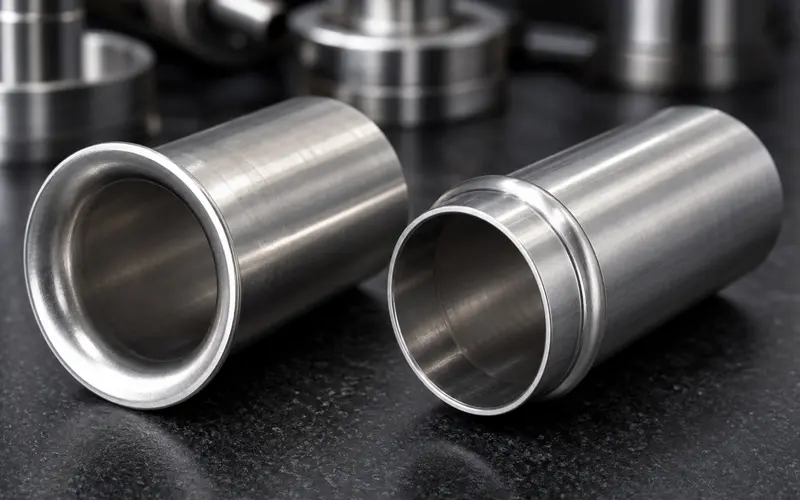
Many machines handle more than one process through interchangeable tooling. A single unit can often switch between flaring, beading, expanding, and reducing dies without a full changeover. This suits shops running several small-batch parts.
Yes. Most forming happens after bending, once the tube has its final shape. Segmented expansion and rotary tooling work well on bent tubes, since they apply force from inside the tube.
Soft, ductile metals like copper and aluminum form more easily than stainless steel. They also tolerate larger diameter changes before cracking, which is why HVAC and refrigeration tubing commonly use them.
A standard flare, at 37 or 45 degrees, angles the tube end just enough to seal against a compression fitting. Flanging takes that angle to a full 90 degrees, producing a flat, disc-like face meant for a bolted or welded joint instead of a compression seal. The two processes use similar tooling but serve different connection types.
There is no single best tube end forming process, only the process that fits a given joint, material, and diameter change. Expansion creates a slip-fit outer connection and thins the wall. Reduction creates a nested inner connection and thickens the wall. Flaring produces a pressure-tight metal-to-metal seal for compression fittings. Beading produces a mechanical stop that holds a hose in place under pressure or vibration. Matching the process to the actual joint requirement, rather than defaulting to whichever machine is already on the floor, keeps part count low and failure rates down.
Manufacturers can send tube drawings or sample parts to BOBO Machine’s engineering team for a specific expansion, reduction, flaring, or beading application. The team can then recommend the right tooling and machine setup.