Single Wall vs Double Wall Spiral Duct: Essential Guide for HVAC Manufacturers
Jump to section
Choosing between single-wall and double-wall spiral ducts changes a manufacturer’s costs, workflow, and markets.
Single-wall ducts are simple. They use one metal layer and a basic making process. They work great for basic HVAC systems that do not need insulation or noise control.
Double-wall ducts are more complex. They have three layers: an inner duct, insulation, and an outer shell. This design controls temperature and noise well, but it takes extra assembly and inspection steps.
The right choice depends on factory capabilities, customer demand, and budget. This guide breaks down the construction, costs, and production needs for both. It helps manufacturers choose the best option for their shop setup and project needs.
Single-wall and double-wall spiral ducts are round pipes. They have different structures and insulation. They also differ in production difficulty, temperature control, and noise reduction.
A single wall spiral duct is a round metal air duct. It is made from one sheet of metal shaped into a tube. A spiral seam holds the duct together. It can move supply air, return air, exhaust air, or ventilation air. It is lighter and cheaper than double wall duct, but it may need outside insulation for temperature or noise control.
A double-wall spiral duct is an insulated round air duct. It consists of three layers: an inner duct, insulation, and an outer metal shell. The insulation controls temperature and reduces noise, while the outer shell protects it and provides a clean look. Because it is pre-insulated, workers do not need to wrap the duct at the job site.
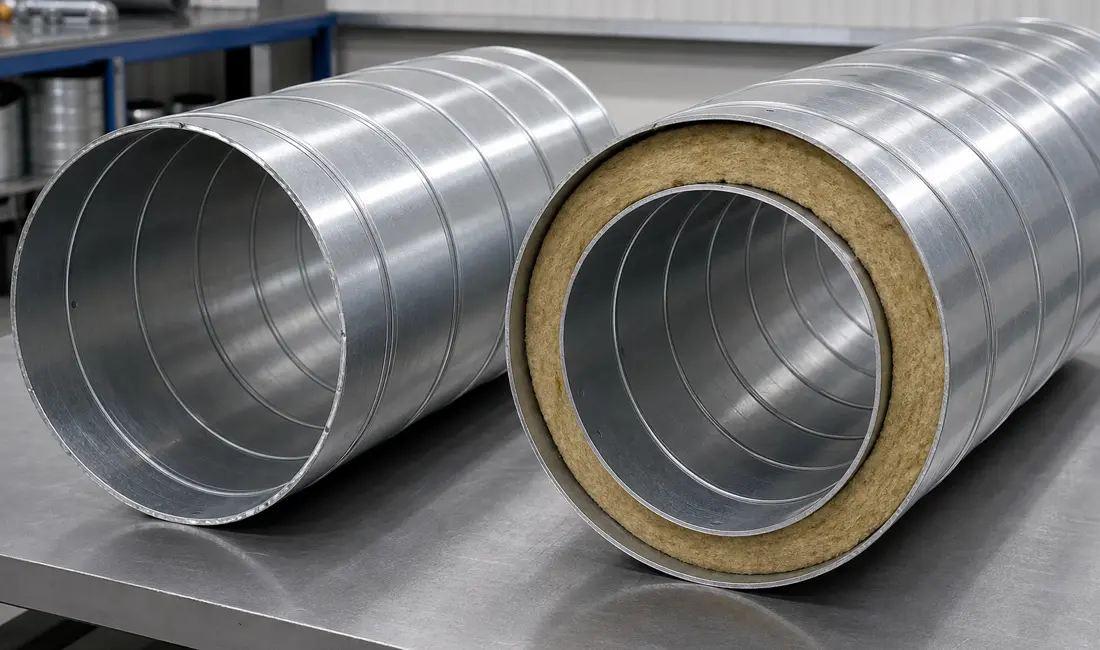
Single-wall ducts have one metal layer, while double-wall ducts have two metal layers with insulation in between.
Single wall spiral duct uses one cylindrical metal pipe. The metal forms a continuous spiral seam that creates the duct’s shape. Manufacturers can leave this single layer bare or add insulation separately when the project requires it.
Double wall spiral duct contains two separate metal pipes at different diameters. The smaller pipe fits inside the larger one. Insulation fills the space between the inner and outer walls.
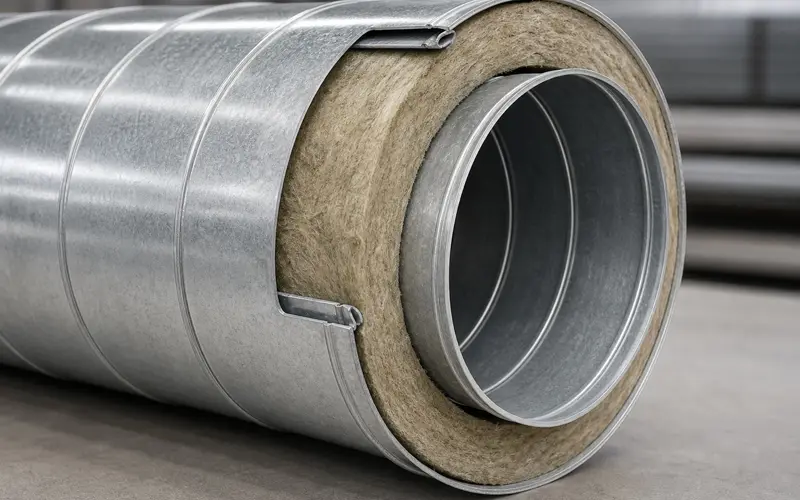
Double wall duct provides better built-in insulation because the insulation layer is part of the duct assembly. The inner liner helps protect the insulation from direct airflow. The outer shell helps protect the insulation from damage during handling and installation.
Single wall duct requires separate insulation steps when temperature control is needed. Installers may line the interior or wrap the exterior after manufacturing. Interior lining and external wrapping both require proper installation to avoid gaps or damage.
Double-wall construction controls condensation well. It works great for chilled air, heated air, and humid spaces. It is also perfect for large temperature differences. In these conditions, single-wall systems need extra insulation to prevent condensation.
Double wall spiral duct reduces noise better than basic single wall duct. The insulation layer between the two metal walls absorbs part of the sound vibration. Perforated inner walls can also help sound waves enter the insulation layer.
Single wall duct transmits more noise from air movement. Metal conducts sound vibration through the duct wall. Adding internal liner to single wall duct can improve acoustic performance, but double wall duct gives more built-in acoustic control.
HVAC systems with higher air velocity or noise-sensitive spaces may benefit from double wall duct. The dual-layer construction helps dampen airflow noise and vibration.
Single wall spiral duct costs less to manufacture. The production process requires fewer materials and simpler assembly steps. Manufacturers only form and seal one metal layer.
Double wall spiral duct requires more materials and labor. Production involves fabricating two separate metal shells, preparing insulation, and assembling the components. This multi-step process takes longer than single wall manufacturing.
However, double wall duct can reduce some installation work. Workers may not need to add separate external insulation in the field. The pre-insulated design can speed up installation when the project requires insulated ductwork.
Manufacturing single wall spiral duct is faster and cheaper than making double wall duct, but it may need extra insulation later.
Advantages
Single wall spiral duct uses less metal. It is easier and faster to make. It needs fewer production steps. The machine setup is simpler. The duct is lighter, so it is easier to move, store, and ship.
Quality checks are also easier because there is only one wall and one seam.
Disadvantages
Single wall duct does not have built-in insulation. It may need outside insulation for heat control or noise control. This can add extra work at the job site. It may also have a higher risk of condensation when temperatures change a lot. For projects that need better insulation or noise control, double wall duct may be a better choice.
Manufacturing double wall spiral duct can bring higher performance, but it costs more and takes longer to make.
Advantages
Double wall spiral duct has insulation built in. This can help control temperature and reduce noise. It also gives the duct a cleaner finished look. Contractors may not need to wrap insulation around it at the job site. Manufacturers can sell it as a higher-value product for projects with higher needs.
Disadvantages
Double wall duct uses more materials. It needs two metal layers and insulation, so it costs more to produce. The production process is slower and more complex. Workers must place the insulation correctly and align both metal walls. It also needs more careful quality checks, more storage space, and higher shipping planning.
Manufacturers should choose based on project requirements, budget, production capability, and insulation demand.
Single-wall spiral duct manufacturing is ideal for specific businesses. It makes sense for those targeting basic ventilation projects. It is also perfect for jobs with tight budgets. This duct consists of just one metal layer. Manufacturers typically use galvanized steel, stainless steel, aluminum, or color-coated steel.
Manufacturers should focus on single wall production when their market primarily includes:
Double wall spiral duct manufacturing is suitable for projects that need thermal insulation and noise reduction in one duct product. This type of duct includes an inner liner, an insulation layer, and an outer shell combined during production.
Manufacturers should consider double wall capabilities when targeting:
Offering both duct types lets manufacturers win more commercial and industrial contracts. This strategy is perfect for regions with varied construction needs, like warehouses and office buildings. It also allows factories to bid on large projects that require different ducts for different areas.
However, dual production increases complexity. It requires a flexible production plan, broader staff training, and more inventory management.
Key business advantages include:
Manufacturers should start with their main market’s duct type. They can add the second option later as customer demand and inquiries grow.

Is Double Wall Spiral Duct Always Better Than Single Wall Spiral Duct? No. Double-wall is better for insulation, noise reduction, or appearance. Single-wall is cheaper and perfectly sufficient for basic ventilation where temperature and noise are not concerns.
Is Single Wall Spiral Duct Always Uninsulated? No. It usually comes as bare metal, but workers can add insulation to the outside or line the inside on-site. Double-wall duct simply has the insulation built-in between two metal layers.
Can One Spiral Duct Machine Support Both Single Wall and Double Wall Duct Production? Yes. The machine can form the metal shells for both types. However, double-wall ducts require extra insulation, assembly, and inspection. Most factories produce them in separate batches to avoid frequent setup changes.